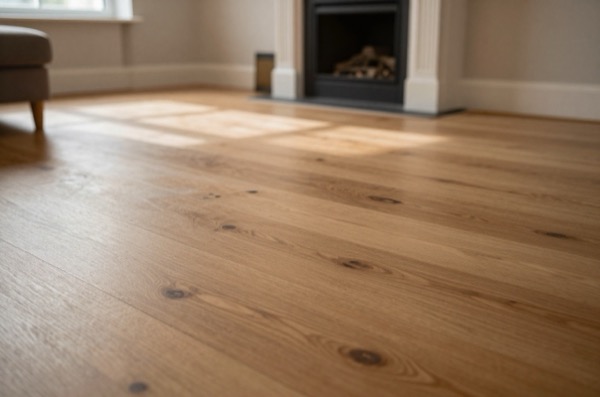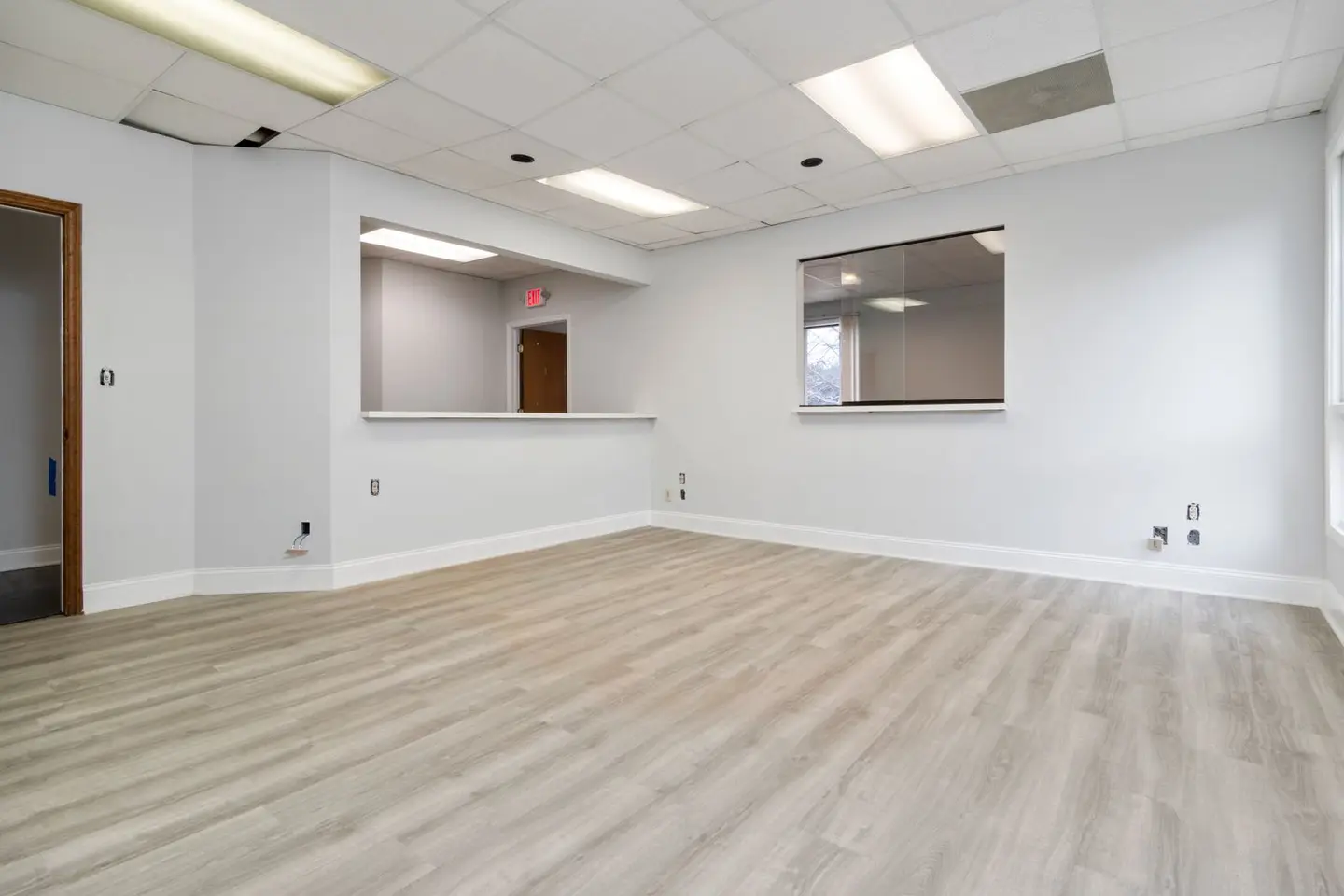
Choosing between tile and laminate is one of the most common flooring decisions in UK homes. Both are popular, both look sharp in the right setting, but they behave very differently underfoot, and the cost gap is real. This guide sets out honest 2026 price ranges so you can budget accurately before committing.
For most dry rooms, laminate wins on cost and speed. For kitchens, bathrooms, utility rooms, and anywhere water is likely, tile is the safer long-term bet. The right answer depends on the room, your budget, and how long you plan to stay.
Cost at a Glance
The table below covers typical UK ranges for materials and fitting as of mid-2026. Costs assume a straightforward rectangular room, no significant subfloor prep, and standard-format tiles or planks.
| Type | Material Cost | Fitting Cost | Total (Supplied & Fitted) |
|---|---|---|---|
| Budget laminate (7–8 mm AC3) | £5–£12/m² | £8–£14/m² | £13–£26/m² |
| Mid-range laminate (10–12 mm AC4) | £12–£22/m² | £10–£16/m² | £22–£38/m² |
| Premium laminate (12 mm+ AC5, waterproof) | £20–£35/m² | £12–£18/m² | £32–£53/m² |
| Budget ceramic floor tile (300×300 mm) | £8–£18/m² | £25–£40/m² | £33–£58/m² |
| Mid-range porcelain tile (600×600 mm) | £18–£40/m²1 | £30–£50/m² | £48–£90/m² |
| Large-format tile (900×900 mm+) | £30–£60/m² | £40–£65/m² | £70–£125/m² |
| Luxury vinyl tile (LVT) | £12–£32/m²2 | £10–£18/m² | £22–£50/m² |
All figures exclude VAT. Fitting costs include adhesive, grout or underlay, and basic edge trims.
For scale, a plain matt 600 × 600 mm porcelain floor tile was £18.00/m² ex VAT at a national builders’ merchant in September 2026, the bottom of the mid-range band.3
Why Tile Costs More to Fit
The labour cost gap is the single biggest surprise. A flooring fitter can often lay 15–25 m² of laminate in a day; tile work typically runs at 6–12 m² per day because you’re mixing adhesive, setting tiles individually, waiting for adhesive to go off, then grouting. Expect to pay a tiler £180–£280 per day in 2026, versus £150–£220/day for a laminate fitter.
Subfloor preparation also has a bigger impact with tile. Tiles need a solid, flat base: with any flex, the grout cracks. A screed patch or plyboard overlay can add £5–£15/m² to the bill, which rarely shows up in early quotes.
Laminate: What to Know
Modern laminate has improved enormously. Its surface wear resistance is graded into abrasion classes (AC ratings) under the European standard EN 13329.4 For domestic use, look for at least AC4 in high-traffic areas. The thickness (typically 7–12 mm) affects feel underfoot and acoustic performance.
Laminate is usually laid as a floating floor: it clicks together over a foam or combined underlay and is not glued down.4 This makes it fast to lay and easy to replace section by section if damaged. It cannot be refinished like solid wood.
Key limitations:
- Most standard laminate swells if water sits on it. Even AC4 boards can delaminate around leaking dishwashers or where condensation pools.
- Laminate can sound hollow without good underlay. Budget at least £3–£6/m² for a decent foam + acoustic underlay.
- In a flat, the lease often requires a specified acoustic underlay under hard floors, so check it before choosing a thin product. Part E of the Building Regulations sets sound standards for new and converted flats rather than for a floor replacement.5
Tile: What to Know
Porcelain and ceramic tiles are dense, inert, and can last 30–50 years with minimal maintenance. They’re the right choice for bathrooms, wet rooms, kitchens, and utility rooms. They also suit underfloor heating (UFH) well, thermal conductivity is far better than laminate.
Porcelain is denser and less porous than ceramic. For floor tiles, look for a PEI rating of at least III, which suits all domestic floors; IV and V are for heavier commercial traffic. Slip resistance is often rated on the German ramp scale from R9 to R13, where R13 is the least slippery.6 HSE cautions that surfaces rated R9, and in some instances R10, will be slippery in wet or greasy conditions, so for a kitchen or bathroom a pendulum test value (PTV) of 36 or more, which HSE classes as low slip potential, is a better guide.6
Key limitations:
- Cold and hard underfoot. Bare tile in a bedroom in January is not pleasant without UFH.
- Grout needs sealing and will discolour over time in kitchens. Epoxy grout reduces staining but costs more and is harder to apply.
- Cracked tiles are difficult to replace perfectly, tile batch variation means an exact match years later is unlikely.
Worked Example: 20 m² Living Room vs 8 m² Kitchen
Living room (20 m²), mid-range laminate:
- Material (AC4, 10 mm): 20 m² × £17 = £340
- Underlay: 20 m² × £4 = £80
- Fitting (1 day): £190
- Total: approximately £610 (ex. VAT)
Kitchen (8 m²), mid-range porcelain:
- Tiles: 8 m² × £28 = £224
- Adhesive + grout: £45
- Plyboard overlay (new build skip if solid slab): £70
- Fitting (1.5 days): £285
- Total: approximately £624 (ex. VAT)
The per-m² cost is higher for tile, but in a small kitchen the total is comparable. The payoff is durability, quality porcelain tiles in a kitchen should outlast the kitchen itself.
Which Rooms Suit Which Floor?
| Room | Recommended | Reason |
|---|---|---|
| Living room / lounge | Laminate or LVT | Warm, fast, cost-effective |
| Bedroom | Laminate or carpet | Soft, warm, budget-friendly |
| Kitchen | Porcelain tile or LVT | Water-resistant, hard-wearing |
| Bathroom / wet room | Porcelain tile | Fully waterproof, slip-rated |
| Hallway | Porcelain tile or LVT | Withstands heavy foot traffic |
| Conservatory | Porcelain tile | Handles temperature swings |
| Home gym | Rubber or LVT | Shock-absorbing; not laminate |
Don’t Overlook LVT
Luxury vinyl tile (LVT) sits in a middle ground that makes it attractive for many homes. Rigid-core LVT will not absorb water, swell or be damaged by it, and LVT is warm underfoot, quiet, and significantly cheaper to fit than ceramic tile.7 Quality LVT with a 0.55 mm wear layer is durable enough for most domestic use, and it can go over underfloor heating provided the heating is controlled so that the temperature beneath the flooring stays at or below 27°C.7
If you’re torn between tile and laminate specifically because of water risk, LVT is worth pricing: it often removes the dilemma.
Getting Quotes
When comparing fitters’ quotes, always check whether:
- Subfloor preparation is included (or costed separately)
- Disposal of old flooring is included
- Adhesive, grout, and trims are included in the tile quote
- Underlay is included in the laminate quote
- Movement joints and expansion gaps (needed over structural joints and at room perimeters, and often at doorways) are accounted for
A quote that appears low but excludes prep and materials can end up more expensive than a higher headline figure that covers everything.
Aim for at least two or three quotes. On larger jobs, the variation between trades on labour alone can run to several hundred pounds.
References (7)
Figures in this note were checked against the sources below on 2 October 2026. Superscript numbers in the text point to them. Every source the site cites, by topic.
- 1costsupplier figureSelco Builders Warehouse.RN-4BDTPQA price, true at 2026-09. Selco Builders Warehouse's published price for the item the cost register files as "porcelain floor tile, matt and polished, 300 x 600 to 600 x 1200 mm, supply only", which is the figure a cost footnote on this page points at.
- 2costsupplier figureSelco Builders Warehouse.RN-7SVJW5A price, true at 2026-09. Selco's product page for rigid core SPC click vinyl flooring with integrated underlay, sold by the pack with its coverage stated. A builders' merchant trade price rather than a retail one, which is the cheaper end of the same product.
- 3costsupplier figureSelco Builders Warehouse.RN-08HYNCA price, true at 2026-09. A national builders' merchant's product page for a plain matt 600 x 600 mm porcelain floor and wall tile, priced at £18.00 per square metre excluding VAT in September 2026.
- 4technicalsupplier figureAssociation of the European Producers of Laminate Flooring (EPLF), guidance.RN-U095ZSThe European laminate producers' association glossary; it explains that laminate abrasion resistance is tested and assigned to abrasion classes under EN 13329.
- 5technicalvery strongMinistry of Housing, Communities and Local Government.RN-35VE7WTable 0.1a sets separating element performance for dwellings: purpose built walls a minimum 45 dB DnT,w + Ctr, floors and stairs 45 dB airborne and a maximum 62 dB L'nT,w impact; where a dwelling is formed by material change of use the figures relax to 43 dB airborne and 64 dB impact. Table 0.2 sets the laboratory value for new internal walls and floors within a dwelling at a minimum 40 dB Rw. Requirement E2 covers internal walls between a bedroom or a room containing a WC and other rooms, and internal floors, but expressly does not apply to an internal wall containing a door, a wall separating an en suite toilet from its own bedroom, or existing walls and floors in a material change of use. Section 5 gives internal wall types A to D and internal floor types A to C, including timber or metal stud with plasterboard and mineral wool; paragraph 5.14 requires all gaps around internal walls to be filled.
- 6technicalvery strongHealth and Safety Executive, guidance.RN-2IWEP7HSE's guidance note behind every slip-resistance figure a flooring or paving note quotes, and the source that separates the two tests people conflate. Table 1 classifies slip potential from pendulum test values (PTV): 0 to 24 high, 25 to 35 moderate, 36 and above low. Table 2 gives the parallel Rz microroughness classification. It describes the HSL/UKSRG ramp CoF test, then deals with the German ramp tests separately: DIN 51097 uses barefoot operators with a soap solution and DIN 51130 uses heavily cleated EN ISO 20345 safety boots with motor oil, and HSE states it has reservations about both because neither uses contaminants representative of real workplaces and the way results are reported is a cause for concern. Table 3 sets the DIN 51130 R scale by slip angle: R9 6 to 10 degrees, R10 10 to 19, R11 19 to 27, R12 27 to 35, R13 above 35. It warns that R9 and sometimes R10 surfaces will be slippery when wet and that a single class covers a wide CoF range, R10 alone spanning 0.18 to 0.34, so an R number is not a substitute for a PTV. Note that BS 7976-2, the pendulum method, was withdrawn in February 2022, which makes this HSE page the right citation for the thresholds.
- 7technicalsupplier figureKarndean Designflooring, guidance.RN-JBQ7K8A leading LVT maker's UK installation guide for its rigid-core product, stating it will not absorb, swell or be damaged by water (a product fact).
-
Dune Matt Ivory Porcelain Floor & Wall Tile 300 x 600mm, Selco Builders Warehouse, accessed 2 October 2026. Priced at 2026-09, so no calibration is needed. selcobw.com
-
Luxury Rigid Click Silver Oak SPC Vinyl Flooring with Integrated Underlay 2.167m2, Selco Builders Warehouse, accessed 30 September 2026. Priced at 2026-09, so no calibration is needed. selcobw.com
-
Highbury Matt Grey Porcelain Floor & Wall Tile 600 x 600mm, Selco Builders Warehouse, accessed 2 October 2026. Priced at 2026-09 and left there. selcobw.com
-
Laminate A-Z, Association of the European Producers of Laminate Flooring (EPLF), accessed 30 September 2026. eplf.com
-
Approved Document E, Resistance to the passage of sound, 2003 edition incorporating 2004, 2010, 2013 and 2015 amendments, Ministry of Housing, Communities and Local Government, accessed 14 September 2026. assets.publishing.service.gov.uk
-
Assessing the slip resistance of flooring: a technical information sheet (GEIS2), Health and Safety Executive, accessed 30 September 2026. hse.gov.uk
-
Karndean Designflooring Rigid Core installation guidelines (UK), Karndean Designflooring, accessed 30 September 2026. karndean.com