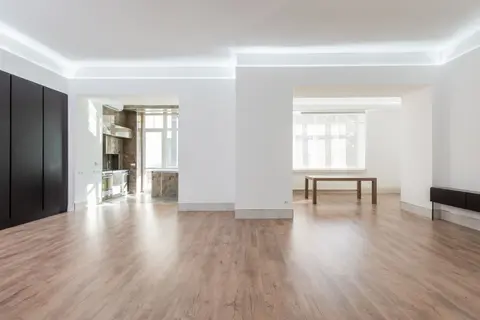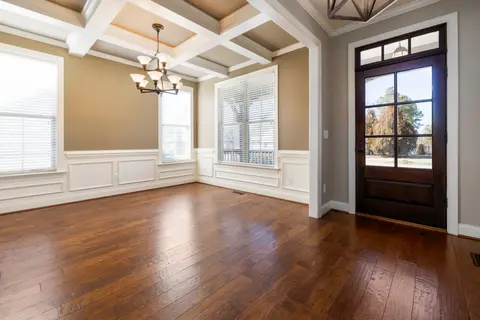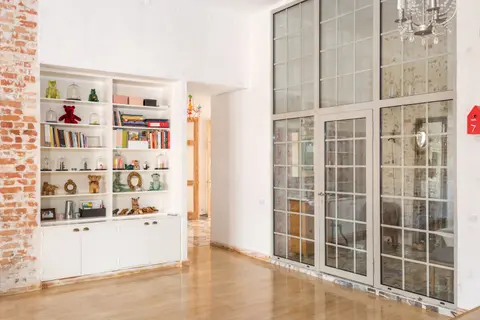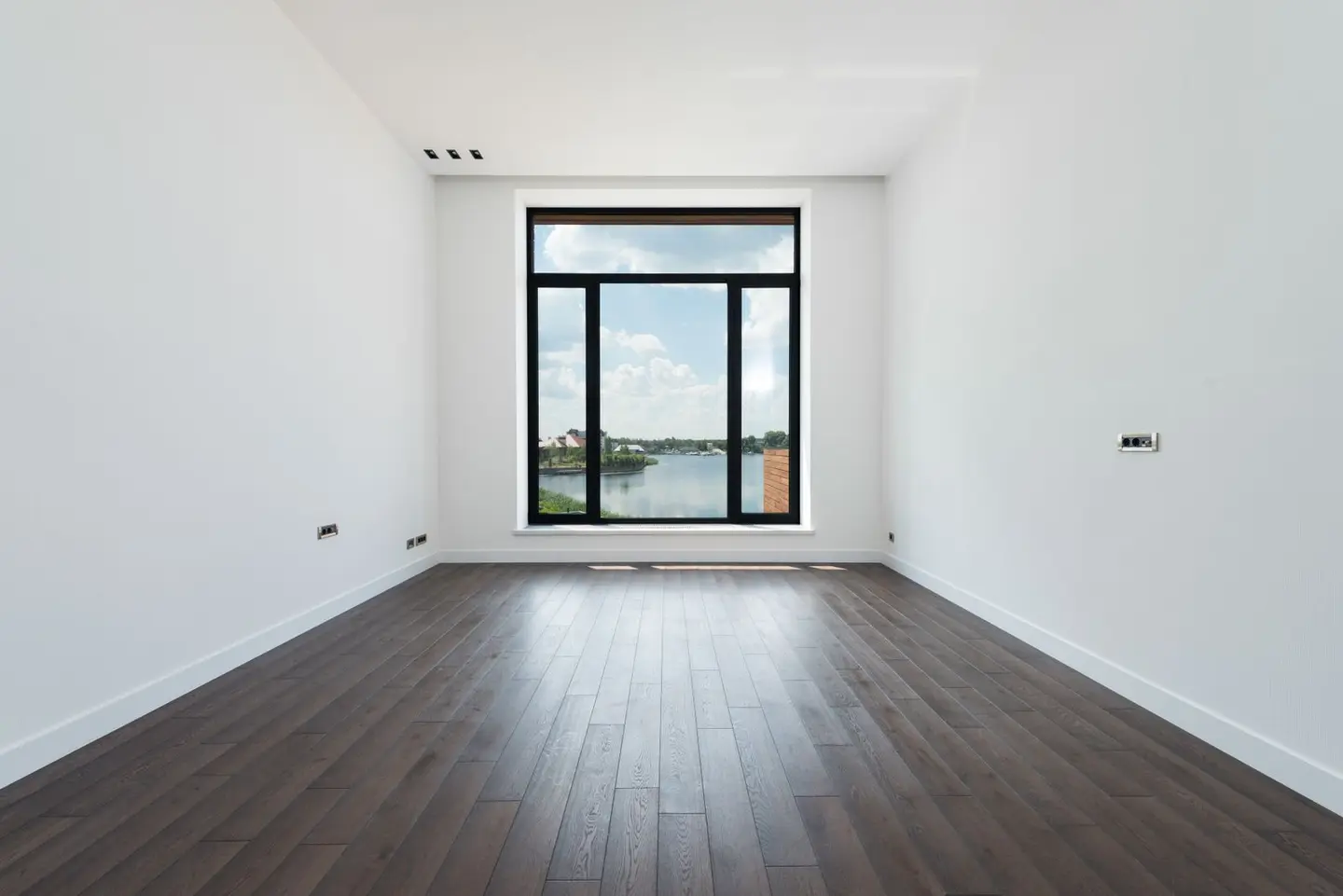
Laminate flooring remains one of the most popular flooring choices in UK homes, offering a wood-look finish at a fraction of the cost of engineered or solid timber. In 2026, materials range from £8 per m² for budget entry-level boards up to £35 per m² for premium, thick, textured planks, and fitting typically adds £10–£18 per m² for a professional installation. The wide price range reflects genuine differences in durability, acoustic performance, and appearance, so understanding the key specifications before buying saves both money and future regret.
How Laminate Flooring Works
A laminate plank is a multi-layer product. From bottom to top:
- Backing layer, stabilises the board and provides some moisture resistance
- HDF (High-Density Fibreboard) core, the structural element; density affects durability and sound deadening
- Decorative layer, a photographic image of wood, stone, or tile
- Wear layer (overlay), a clear aluminium oxide-impregnated layer that determines scratch and abrasion resistance
The wear layer’s thickness and specification is the single most important factor governing how long the floor lasts in real-world use.
AC Ratings Explained
Laminate flooring sold in the UK and Europe must be classified with a use class under EN ISO 10874: 21 to 23 for homes, 31 to 34 for commercial areas.1 Makers also quote an AC (Abrasion Class) rating from the laminate standard EN 13329, which tells you what level of foot traffic the floor is designed to withstand.1
| AC Rating | Intended Use | Typical Domestic Setting | Indicative Lifespan |
|---|---|---|---|
| AC1 | Light residential | Guest bedroom, wardrobe | 5–10 years |
| AC2 | General residential | Living room, bedroom | 10–15 years |
| AC3 | Heavy residential / light commercial | Kitchen, hallway | 15–20 years |
| AC4 | General commercial | Retail, office | 20–25 years in domestic use |
| AC5 | Heavy commercial | Hospitality, schools | 25+ years in domestic use |
For domestic use, AC3 is the practical minimum for hallways, kitchens, and living rooms. Bedrooms can tolerate AC2. AC4 and AC5 products are overkill for most homes but will outlast most ownership periods.
Thickness: Does It Matter?
Laminate planks typically come in 6 mm, 7 mm, 8 mm, 10 mm, and 12 mm thicknesses.
- 6–7 mm: feels hollow underfoot; only suitable for dry bedrooms on very flat subfloors
- 8 mm: the most common entry-to-mid level; adequate for most rooms
- 10 mm: noticeably more stable and quieter; often chosen for living rooms and kitchens
- 12 mm: premium feel, best acoustic performance; usually found in higher-end ranges
Thicker boards are more forgiving of minor subfloor irregularities and reduce impact sound transmission, relevant in flats or rooms above a downstairs space. For durability, though, the use class matters more than thickness: EGGER says thickness is not decisive provided the floor has the right use class for the room.1
Waterproof vs Water-Resistant Laminate
Traditional laminate is not waterproof. The HDF core swells when wet, causing boards to lift and buckle. “Water-resistant” laminate uses a moisture-repellent core treatment and sealed edges that resist occasional spills if wiped up promptly. “Waterproof laminate” uses a heavily treated HDF core and sealed joints, and is rated to resist standing water for a stated time; products with a WPC or SPC core are rigid vinyl rather than laminate.
For bathrooms, a full wet room, or areas prone to flooding, luxury vinyl plank (LVP/SPC) is a better choice than any laminate. For kitchens and utility rooms with occasional spills, a water-resistant AC3 laminate with a treated core is adequate.
Cost Breakdown
Materials (per m²)
| Tier | Price Range | Typical Spec |
|---|---|---|
| Budget | £8–£12/m² | 7–8 mm, AC2–AC3, basic emboss |
| Mid-range | £13–£22/m² | 8–10 mm, AC3, better texture and finish |
| Premium | £23–£35/m² | 10–12 mm, AC4, deep emboss, wide plank |
At the budget end, Selco, for example, lists Egger’s 7 mm AC3 Grey Avery Oak laminate at £22.44 including VAT for a 2.49 m² pack, about £9 per m².2
Add 10–15% for waste (cuts and offcuts), particularly in rooms with alcoves or diagonal laying patterns.
Underlay (per m²)
Underlay is almost always sold separately and affects acoustic performance, feel underfoot, and thermal resistance:
| Underlay Type | Cost per m² | Notes |
|---|---|---|
| Basic foam | £1.20–£3.00 | Adequate for bedrooms on timber floors3 |
| Combination underlay (DPM built in) | £3.00–£5.50 | Required over concrete; prevents moisture rising |
| Acoustic underlay | £4.00–£8.00 | Reduces impact noise; useful in flats |
| Underfloor heating compatible | £3.50–£6.50 | Low thermal resistance (≤ 0.15 m²K/W) |
Plain foam is the cheapest option: Selco, for example, sells a 2 mm white foam underlay at £18 for a 15 m² roll including VAT, about £1.20 per m².3
Labour (per m²)
Professional fitting in 2026 costs:
- Simple rectangular room: typically £10–£14/m² for labour
- Complex layout (bay windows, alcoves, diagonal): £14–£18/m²
- Minimum call-out for small areas: typically £150–£250
Most fitters charge separately for door-bar thresholds (£15–£30 each), skirting removal and refit (£8–£15 per linear metre), and subfloor preparation if needed.
Worked Example: 20 m² Living Room
| Item | Cost |
|---|---|
| 23 m² of 10 mm AC3 laminate at £18/m² | £414 |
| 23 m² of combination underlay at £4/m² | £92 |
| Professional fitting at £12/m² | £240 |
| 3 x door bars | £60 |
| Skirting removal and refit (15 lm) | £165 |
| Total | £971 |
Laminate vs Engineered Wood: Quick Comparison
| Factor | Laminate | Engineered Wood |
|---|---|---|
| Material cost | £8–£35/m² | £23–£44/m² (10–14 mm boards) |
| Appearance | Photographic image (very good) | Real wood surface |
| Water resistance | Poor–moderate | Moderate |
| Can be sanded? | No | Yes (1–3 times) |
| Underfloor heating | Compatible if thin core | Compatible |
| Lifespan | 10–25 years | 25–50+ years |
| Resale value perception | Moderate | Higher |
Engineered wood is worth the premium in living rooms and hallways where appearance and longevity matter. Laminate is a sound choice for children’s rooms, home offices, and rental properties where budget and robustness take priority.
How to Choose: A Practical Checklist
1. Identify the room’s use and traffic level. Hallways and kitchens need AC3 minimum. Bedrooms can use AC2.
2. Check the subfloor. Laminate needs a flat subfloor: EGGER, for example, allows no more than 2 mm of unevenness over 1 m.4 That is stricter than SR1, the tightest screed class in BS 8204, which allows 3 mm under a 2 m straightedge.5 Concrete floors need a DPM underlay.1 Timber floors may need noisy boards screwed down first.
3. Confirm underfloor heating compatibility. If you have UFH, choose an underlay with a combined thermal resistance (including the board) of no more than 0.15 m²K/W.1 Some manufacturers specify a maximum total tog rating.
4. Order with 10% waste. Always order more than the room’s net area, and keep a few spare planks from the same batch code for future repairs.
5. Let boards acclimatise. Stack unopened packs flat in the room for at least 48 hours before fitting, especially important in centrally heated homes, which are drier than warehouse storage conditions.4
6. Leave expansion gaps. Laminate expands and contracts with temperature and humidity. A gap around all fixed edges, covered by skirting or beading, is essential: EGGER, for example, asks for 8–10 mm, so follow your product’s instructions.4 Missing this is the most common cause of buckling.
References (5)
Figures in this note were checked against the sources below on 2 October 2026. Superscript numbers in the text point to them. Every source the site cites, by topic.
- 1technicalsupplier figureEGGER, guidance.RN-G07MHNEGGER flooring FAQ: laminate (EN 13329) marketed in Europe must carry an EN ISO 10874 use class, from 21 to 23 in homes and 31 to 34 in commercial areas.
- 2costsupplier figureSelco Builders Warehouse.RN-0UA97HA price, true at 2026-09. the retail price Selco Builders Warehouse publishes for Egger Grey Avery Oak 7mm Laminate Flooring 2.49m2, which is the supply figure the cost book records for this item
- 3costsupplier figureSelco Builders Warehouse.RN-WKYGB7A price, true at 2026-09. Selco's product page for a 2 mm, 15 m² roll of white foam flooring underlay, priced at £18.00 including VAT (£1.00 per m² ex VAT).
- 4technicalsupplier figureEGGER, guidance.RN-X5D0XCEGGER's laminate installation guide sets the subfloor flatness limit at no more than 2 mm of deviation over 1 m, with self-levelling compound for larger deviations.
- 5technicalgoodThe Concrete Society, guidance.RN-T4RJH9The Concrete Society's explanation of the straightedge method for measuring floor surface regularity, as set out in BS 8204. A 2 metre straightedge is laid on the surface and the maximum deviation beneath it recorded, which is how an SR1, SR2 or SR3 tolerance is actually checked. This is the test behind an argument about whether a screed is flat enough for the floor finish going on it.
-
Questions and answers about flooring, EGGER, accessed 29 September 2026. egger.com
-
Egger Grey Avery Oak 7mm Laminate Flooring 2.49m2, Selco Builders Warehouse, accessed 30 September 2026. Priced at 2026-09, so no calibration is needed. selcobw.com
-
White Foam Flooring Underlay 15m², Selco Builders Warehouse, accessed 30 September 2026. Priced at 2026-09 and left there. selcobw.com
-
How to Lay Laminate Flooring: A Step-by-step Guide, EGGER, accessed 29 September 2026. egger.com
-
Surface regularity – straightedge method, The Concrete Society, accessed 7 September 2026. concrete.org.uk