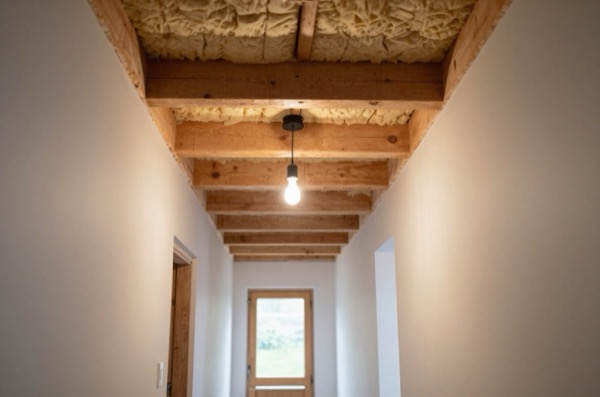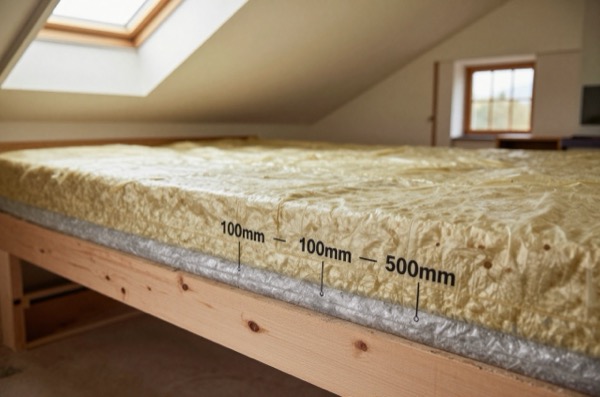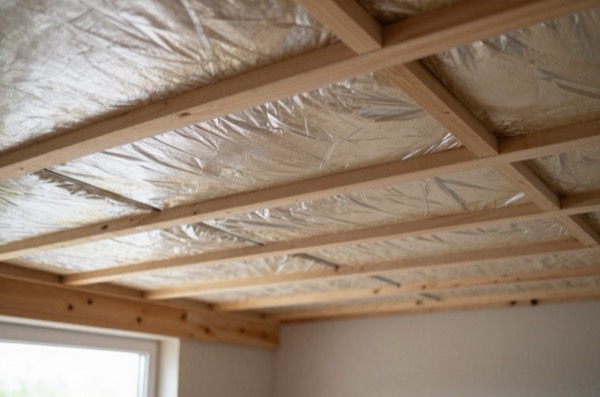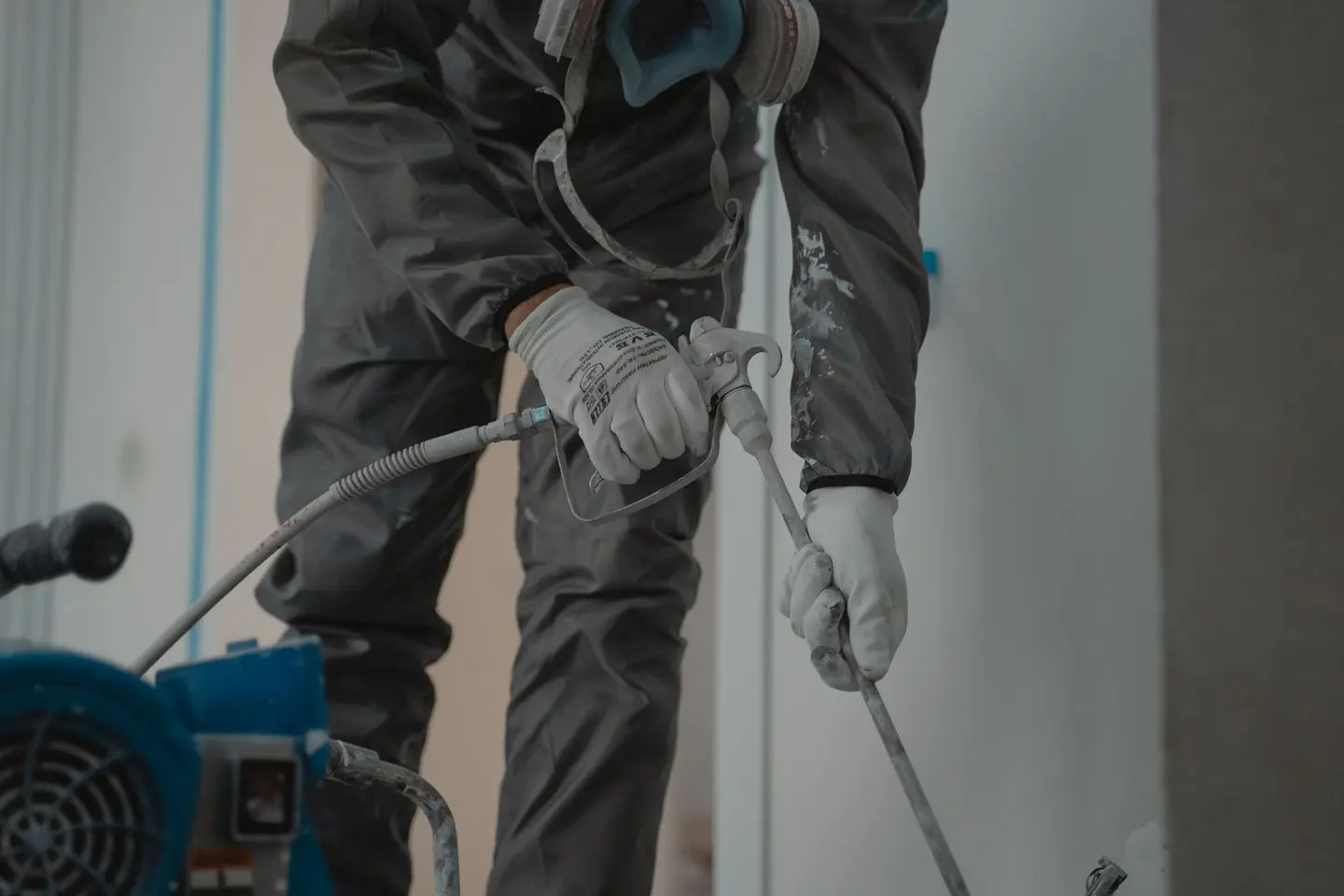
Spray polyurethane foam (SPF) insulation was heavily marketed in the UK, often through cold calls or unsolicited offers.1 The pitch was compelling: a contractor sprays foam directly onto roof timbers or between joists, it expands and sets, and the loft becomes thermally sealed in a single visit.
The reality has proved far more complicated. By the mid-2020s, spray foam has become one of the most contentious issues in UK residential property, not primarily because of how it performs thermally, but because of what it does to a property’s mortgageability and saleability. If you are considering having spray foam installed, or you’ve bought a property where it already exists, read this guide before making any decisions.
How Spray Foam Insulation Works
There are two distinct types of spray foam:
Open-cell spray foam (OCF) expands a great deal as it is sprayed and sets into a soft, spongy material. It is vapour-permeable and relatively easy to remove, but it provides less structural rigidity and lower thermal performance per millimetre.
Closed-cell spray foam (CCF) expands less and sets into a rigid, hard material with high compressive strength. It is far more resistant to water vapour, gives better thermal performance per millimetre, and bonds very strongly to whatever it contacts. In modelling for the Building Safety Regulator, closed-cell foam was given a thermal conductivity of 0.026 W/mK against 0.039 W/mK for open-cell, and a vapour resistance factor of about 61 against 3.3.2
The fundamental problem for UK housing is that many domestic installations sprayed foam, open-cell or closed-cell, directly onto the underside of the roof: the rafters, the underlay or sarking boards, and sometimes the tiles themselves.2 This:
- Makes it difficult or impossible to inspect the timber beneath without disturbing the foam1
- Can trap moisture and hide a roof leak, potentially causing concealed rot1
- Can mask pre-existing structural defects
- Cannot be removed without significant effort, cost, and risk of timber damage
Mortgage Lender Positions
This is the central issue for most homeowners. Many mainstream UK mortgage lenders will not lend on properties where spray foam has been applied to the roof structure, or will lend only once a specialist inspection report shows the timbers are sound. Research by the HomeOwners Alliance with the BBC found that only 25% of mortgage lenders, and no equity release providers, would lend where spray foam had been installed as a retrofit.3 Positions vary between lenders and change over time, so check with the lender directly before a valuation.1
The lenders’ main concerns are that a surveyor cannot see the condition of the timbers beneath the foam, and that some installations can trap moisture.3 A standard RICS homebuyer survey or mortgage valuation cannot confirm whether the hidden timbers are sound, rot-free, and correctly notched and fixed. From the lender’s perspective, they cannot adequately assess the security for the loan.
| Lender category | Typical position |
|---|---|
| High street banks | Decline or require specialist report + removal |
| Building societies (most) | Decline or require specialist report |
| Specialist/adverse credit lenders | May consider with enhanced survey; higher rates |
| Cash buyers | No restriction (but may renegotiate price) |
The practical consequence: a property with spray foam in the roof can be hard to sell to buyers who need a mortgage, and sellers often face either removing the foam or discounting the price to reflect the smaller pool of buyers.
Cost of Spray Foam Installation
Despite the risks, if you are committed to spray foam (perhaps in a non-residential building, a garage, or a property you own outright), here are realistic 2026 costs:
| Application | Foam type | Typical cost (installed, per m²) |
|---|---|---|
| Loft pitched roof timbers | Open-cell | £15 – £25 |
| Loft pitched roof timbers | Closed-cell | £20 – £35 |
| Flat roof (above deck) | Closed-cell | £25 – £45 |
| Garage/commercial unit walls | Closed-cell | £20 – £40 |
| Underfloor (crawl space) | Open-cell | £18 – £30 |
| Van/motorhome conversion | Closed-cell | £25 – £50 |
For a standard 3-bed semi-detached with a 55 m² loft floor, the sloping roof area to be sprayed is roughly 70 m², so at the rates above installation typically runs about £1,050–£1,750 for open-cell or £1,400–£2,450 for closed-cell. Some contractors offer loft-clearing and preparation as an extra.
Spray Foam Removal Costs
Removal is significantly more expensive than installation, and the result is often not a timber in the same condition as before. Closed-cell foam bonds chemically to timber and cannot be simply peeled off, it must be mechanically chipped and scraped, a process that is labour-intensive and often damages the timber surface. A structural survey afterwards is advisable to confirm the condition of the timber.
| Property size | Estimated removal cost (2026) |
|---|---|
| Small flat / 1-bed (limited loft area) | £600 – £1,200 |
| 2-bed terrace or semi | £900 – £2,000 |
| 3-bed semi-detached | £1,200 – £3,000 |
| 4-bed detached | £2,000 – £4,500 |
| Where structural timber damage found | £3,000 – £8,000+ |
The HomeOwners Alliance warns that removal is likely to cost thousands of pounds, more than the original installation, and that the whole roof may need replacing.4
After removal, a structural engineer or RICS surveyor should inspect the timbers and provide a report confirming their condition. This report, with confirmation of the removal, is typically what lenders and their valuers will want to see before reinstating a mortgage offer.
Removal is not always straightforward
Some foam installers applied foam over fragile or already-damaged sarking felt or boards. Removal in these cases can cause the existing underfelt to tear, requiring reroofing in addition to foam removal. Get a specialist assessment before instructing removal.
The RICS and Government Position
RICS (Royal Institution of Chartered Surveyors) publishes a consumer guide on spray foam insulation. It says a surveyor who finds spray foam during an inspection may request an independent specialist report, the results of which could affect their opinion of value.1 RICS does not prohibit spray foam, but it stresses that a timber roof structure covered with foam cannot be fully seen or inspected, and that concern underlies much of the lenders’ caution.1
Government grant schemes have funded spray foam: the Energy Company Obligation (ECO4) funds its installation for eligible households, and the Great British Insulation Scheme (GBIS) did the same until it closed on 31 March 2026.53 ECO4 itself has been extended to 31 December 2026.5 Research published by the Building Safety Regulator in March 2024 found the moisture risk to roof timbers was low when open-cell foam was applied in line with the guidance in BS 5250:2021, that an air and vapour control layer reduced the risk where foam met a high-resistance underlay, and that the highest risk came from spraying foam directly onto the roof covering.6 The House of Commons Library notes the government’s position that spray foam installed in line with the relevant standards should not need removing or stop a homeowner getting a mortgage.7
The Insulation Manufacturers Association (IMA) published a code of practice for installing spray foam in domestic roofs in May 2023, which says only installers trained and approved by the product’s manufacturer should apply it.8 Installation standards in the market have historically been inconsistent.
When Spray Foam Might Be Appropriate
There are legitimate uses for spray foam in residential and commercial contexts where the mortgage-ability concern doesn’t apply:
- Outbuildings, garages, and workshops, not mortgaged, so lender concerns irrelevant; closed-cell foam works well on concrete block walls and metal roofs
- Van, bus, and motorhome conversions, spray foam is commonly used for complex geometries
- Commercial and industrial roofing, applied to the top of flat roof decks under single-ply membranes, this is an established technique
- Below ground structures, spray foam on basement walls or retaining structures where standard board insulation is impractical
- Properties owned outright without mortgage, owner bears the risk; needs to be disclosed on sale
Even in these cases, confirm that no mortgage will ever be needed on the property before committing. Properties change hands, and a buyer’s lender, not the current owner, determines whether spray foam is acceptable at point of sale.
If You Already Have Spray Foam
Before selling: Disclose the presence of spray foam through your property information form (TA6) and your solicitor, and pass on the installation paperwork. Buyers can rely on the TA6 answers, and if you give misleading information the buyer may be able to claim compensation after completion.9 Consider commissioning a specialist report proactively, this demonstrates due diligence and may reduce the price discount expected by a cash buyer. The HomeOwners Alliance puts a specialist surveyor’s inspection of the roof and paperwork at around £500–£700.4
Before remortgaging: Contact your existing lender before instructing a valuation. If they are unwilling to remortgage without removal, you need to factor removal costs into your plans before instructing a surveyor (and paying their fee).
If you want to stay: If you have no plans to sell or remortgage, the thermal performance should continue for the life of the foam. The risk is the concealed moisture trap, if your roof covering is in good condition and there is no existing moisture ingress, the risk is reduced but not eliminated. Consider having a roofer inspect the external covering carefully and annually.
Key Questions to Ask Before Installing
- Will this affect my ability to sell or remortgage?
- Can the installer provide evidence of BBA, Kiwa or equivalent third-party certification for the specific foam product?
- Is the installer trained and approved by the foam’s manufacturer, and working to the IMA code of practice?
- Will a structural survey of the timbers be provided before foam is applied?
- What is the installer’s warranty, and is the company likely to still exist to honour it?
On the second question: UKAS suspended all of the BBA’s accreditation on 26 February 2026, and while that stands the BBA cannot issue new certificates under UKAS accreditation.10 UKAS says existing accredited certificates remain valid until their expiry date.10 Trading Standards guidance asks for the product to hold an independent test certificate from a recognised body, such as the BBA or Kiwa.11
If you cannot get satisfactory answers to all five, do not proceed with spray foam installation on a residential property.
References (11)
Figures in this note were checked against the sources below on 2 October 2026. Superscript numbers in the text point to them. Every source the site cites, by topic.
- 1technicalstrongRoyal Institution of Chartered Surveyors, guidance.RN-SDESVTThe RICS consumer guide on spray foam notes Trading Standards and media concern about cold calls and unsolicited offers to sell or remove spray foam.
- 2technicalvery strongMinistry of Housing, Communities and Local Government.RN-ISI2YI2024 government hygrothermal modelling assessment of sprayed foam on domestic timber roofs, and an unusually quotable secondary source for BS 5250:2021's prescriptive roof guidance. Risks are low only where an OPEN CELL, moisture permeable insulant is used with an air and vapour control layer on the warm side and a space left between insulation and underlay, ventilated from the eaves where a high resistance underlay is used. For a WARM pitched roof with a high resistance underlay such as bitumen felt: each ventilated void should be at least 25 mm deep, ventilated at high and low level, plus a 15 mm allowance for underlay drape, giving 25 + 15 = 40 mm. For a low resistance underlay, option 1 is an AVCL plus an unventilated counter batten air gap for air permeable coverings; option 2, where an AVCL is impracticable, follows the HR guidance. It also states plainly that official moisture guidance is Approved Document C, that AD C was last fully revised in 2004 with 2010 and 2013 amendments, and that AD C REFERENCES THE 2002 EDITION OF BS 5250, not the current 2021 edition. It names BS EN ISO 13788:2012 (the Glaser method) as the calculation method referenced by the 2002 edition, and notes the Glaser method may underestimate risk because it cannot simulate heat and liquid transport, unlike BS EN 15026:2007.
- 3technicalfairHomeOwners Alliance, guidance.RN-Q9LHGHThe HomeOwners Alliance reports its research with the BBC finding only 25% of mortgage lenders and no equity release providers would lend on homes with retrofitted spray foam.
- 4costfairHomeOwners Alliance, guidance.RN-Q66G5MA price, true at 2026-09. The spray foam roof insulation problem set out with numbers. The Property Care Association estimates as many as 250,000 UK homes have spray foam in the loft, after roughly 30 years on the market and a decade of grant driven growth. Lenders may decline or downvalue a property with it. A specialist surveyor's inspection of the roof, structure and paperwork costs £500 to £700. Removal runs about £40 per m2 per Checkatrade, before skips and disposal; a reader case is quoted where removal of open cell foam was priced at £17,000 against an original £12,000 installation. Warns about rogue removal firms and states the code expectation of a cooling off period of at least 14 days during which no install or removal should take place.
- 5technicalvery strongOfgem, guidance.RN-1ZVY7HOfgem's ECO4 delivery guidance version 4.0 records that ECO4 was extended by nine months to 31 December 2026, and gives GBIS as running to 31 March 2026.
- 6technicalvery strongBuilding Safety Regulator (GOV.UK), guidance.RN-XHKUD6GOV.UK publication page for the Building Safety Regulator's 28 March 2024 research on moisture risk of spray foam in timber pitched roofs, summarising low and high risk scenarios.
- 7technicalvery strongHouse of Commons Library, guidance.RN-G7QNC8A House of Commons Library briefing on spray foam insulation and mortgages in England. It summarises lender refusals, surveyors' inspection difficulties and the industry guidance issued since 2023.
- 8technicalfairInsulation Manufacturers Association, guidance.RN-FV16LZThe IMA's May 2023 industry code of practice for spray foam in domestic roofs, requiring manufacturer-trained and approved installers, surveys and a homeowner pack.
- 9technicalstrongThe Law Society, guidance.RN-ZZXPVKThe Law Society's TA6 explanatory notes tell sellers that buyers can rely on their answers and may claim compensation for misleading information.
- 10technicalstrongUnited Kingdom Accreditation Service, guidance.RN-TUN04MUKAS's statement confirms it suspended all scopes of the BBA's accreditation on 26 February 2026 and that the BBA cannot issue new accredited certificates meanwhile.
- 11technicalstrongBusiness Companion (Chartered Trading Standards Institute), guidance.RN-3XCF26Trading Standards' Business Companion guidance for spray foam installers says the product must hold an independent test certificate from a body such as the BBA or Kiwa.
-
Spray foam insulation: consumer guide, Royal Institution of Chartered Surveyors, accessed 30 September 2026. rics.org
-
Spray foam insulation applied to timber sloped roofs in dwellings, Building Safety Regulator, accessed 30 September 2026. assets.publishing.service.gov.uk
-
Government urged to tackle spray foam insulation mortgage problems, HomeOwners Alliance, accessed 30 September 2026. hoa.org.uk
-
Spray foam insulation warning to homeowners, HomeOwners Alliance, accessed 2 October 2026. Priced at 2026-09 and left there. hoa.org.uk
-
ECO4 Guidance: Delivery, version 4.0, Ofgem, accessed 30 September 2026. ofgem.gov.uk
-
Moisture risk of spray foam insulation applied to timber sloped roofs, Building Safety Regulator (GOV.UK), accessed 30 September 2026. gov.uk
-
Spray foam insulation and mortgages, House of Commons Library, accessed 2 October 2026. commonslibrary.parliament.uk
-
Code of practice for the installation of polyurethane spray foam (SPF) in domestic roofs, Issue 1, Insulation Manufacturers Association, accessed 30 September 2026. insulationmanufacturers.org.uk
-
TA6 (6th edition) (2025): explanatory notes for sellers and buyers, The Law Society, accessed 30 September 2026. lawsociety.org.uk
-
United Kingdom Accreditation Service statement on BBA suspension, United Kingdom Accreditation Service, accessed 30 September 2026. ukas.com
-
Installation of spray foam insulation: the legal requirements, Business Companion (Chartered Trading Standards Institute), accessed 30 September 2026. businesscompanion.info