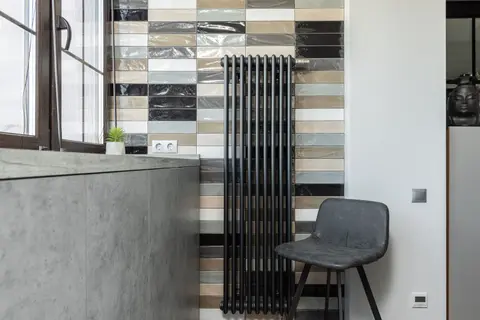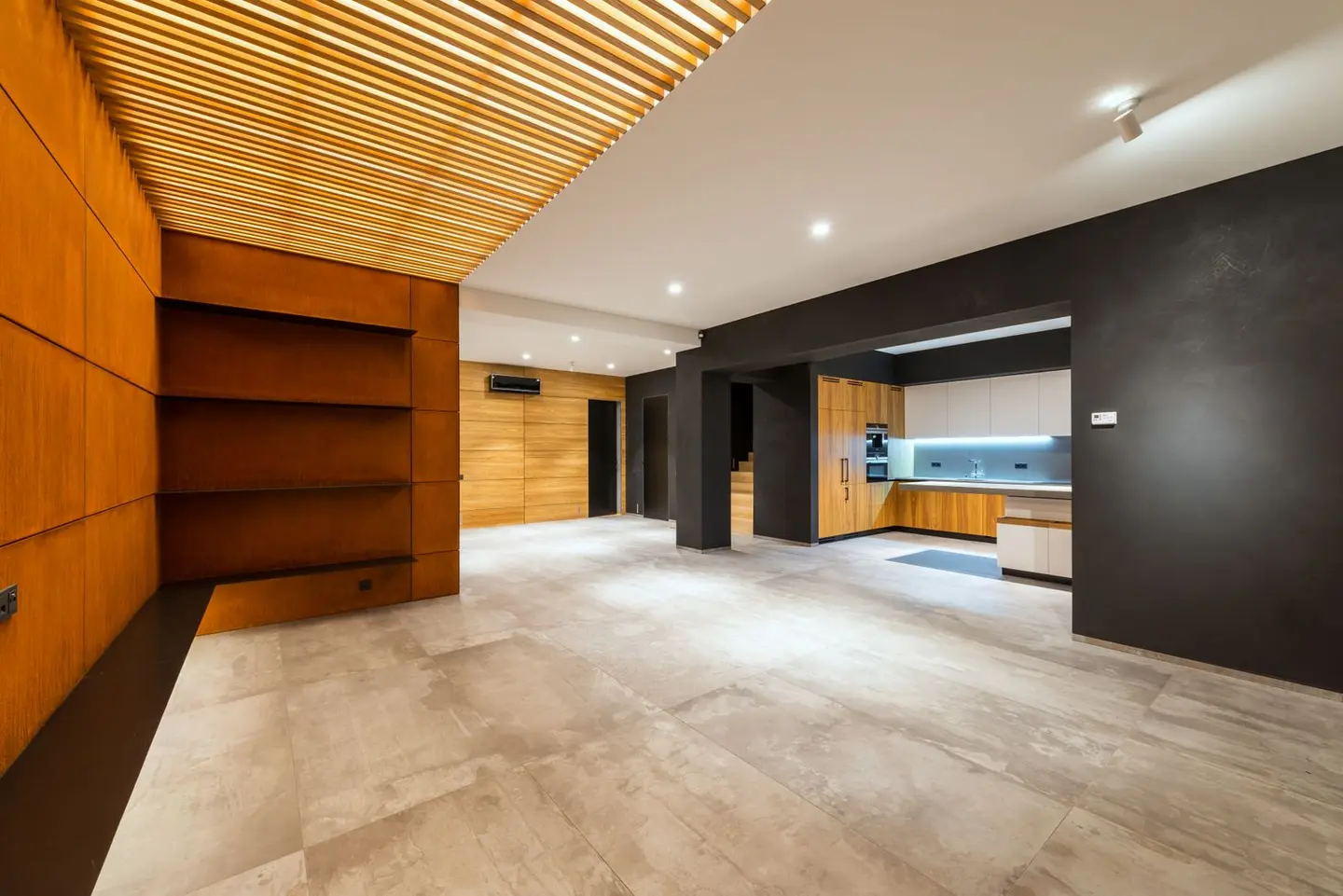
The single most common lighting mistake in UK homes is relying on one central pendant per room. The result is an even wash of mediocre light: too bright for relaxing, too flat for cooking, and lacking any atmosphere. A properly designed scheme uses three distinct layers, each doing a specific job, controlled separately so you can dial up the combination you need for any activity.
This guide explains the layered approach, the fittings that deliver each layer, the technical spec you actually need to know (lumens, colour temperature, IP ratings), and what to budget for a professional installation.
The Three Layers of Light
1. Ambient (General) Lighting
Ambient light fills the room with a base level of illumination, enough to navigate safely and carry out general tasks. In most rooms it comes from:
- Recessed LED downlights (most popular in new builds and renovations)
- A central pendant or flush ceiling fitting
- LED cove or coffer lighting (indirect, bounced off the ceiling)
As a rough guide, aim for 200–300 lux at worktop height in kitchens and bathrooms; 100–150 lux in living rooms and bedrooms.
2. Task Lighting
Task light is targeted, brighter, and positioned where you actually work. Examples:
- Under-cabinet strip lights in kitchens (directly illuminating the worktop)
- Bathroom mirror lights or lit cabinets
- Reading lamps at chair height, or bedside pendants
- Desk lamps in home offices
Task areas benefit from 300–500 lux and a colour temperature of 3,000–4,000 K (neutral white) to reduce eye strain.
3. Accent (Decorative) Lighting
Accent light adds depth, shadows and interest. It is dimmer than ambient and draws the eye to architecture or objects:
- Picture lights and artwork spots
- Shelf lighting inside alcoves
- External wall lights grazing brickwork
- LED plinth lights at floor level
Key Technical Terms
| Term | What It Means | Typical Value |
|---|---|---|
| Lumens (lm) | Total light output | About 470 lm matches an old 40 W bulb; about 800 lm matches 60 W |
| Watts (W) | Energy consumption | LED: 5–10 W per downlight; halogen equivalent: 50 W |
| Colour temperature (K) | Warmth/coolness of light | 2,700 K (warm white) for living rooms; 4,000 K for kitchens |
| CRI (Colour Rendering Index) | Accuracy of colour rendition | 80+ adequate; 90+ for kitchens, bathrooms, artwork |
| IP rating | Protection against dust/moisture | IPX4 minimum in bathroom zones 1 and 2 (IPX5 where water jets are likely); IPX7 in zone 0 |
| Beam angle | Spread of the beam | 25° = spotlight effect; 60° = wide wash |
Fitting Types and Where to Use Them
LED Recessed Downlights
The workhorse of modern UK lighting schemes. Available in adjustable and fixed versions; most accept GU10 lamps for easy replacement.
- Diameter: 68–95 mm cutout (check your ceiling void depth, 75 mm minimum needed for most fire-rated models)
- Fire-rated: normally specified where downlights are cut into a ceiling that has to resist fire, such as the ceiling under an upper floor or over a protected stair, because Approved Document B of the Building Regulations requires openings for services through fire-separating elements to be fire-stopped so their fire resistance is not impaired1
- Spacing: typically 1 m–1.5 m between fittings in a grid layout; place one fitting approximately 600 mm from the wall to wash the wall face
Pendants and Ceiling Roses
Best over dining tables (hang the bottom of the shade 750–900 mm above the table surface) and as decorative focal points.
LED Strip Lights
Flexible, self-adhesive, available in single-colour or RGB. Under kitchen cabinets, inside alcoves, or behind TVs as bias lighting. Specify strip wattage by metre (typically 10–20 W/m for good output).
Smart Lighting
Smart systems such as Philips Hue and IKEA’s Dirigera hub (both Zigbee-based) or Lutron Caséta (which uses Lutron’s own Clear Connect radio) allow scene-setting from a phone or voice assistant. Whole-house smart lighting typically adds £1,500–£5,000 or more to a project depending on scale and the chosen system.
Room-by-Room Guide
Kitchen
Use ambient downlights on the ceiling plus under-cabinet task strip at 4,000–5,000 K. An island deserves its own pendant row (3 pendants over a 1,500 mm island is a common rule of thumb). Colour rendering above CRI 90 is worth specifying so food looks appetising.
Living Room
Warm white (2,700–3,000 K) downlights or cove lighting for ambient; floor and table lamps for task; picture and shelf lighting for accent. A dimmer is essential, not optional. LED dimmers require compatible dimmable LED lamps (check the manufacturer’s compatibility list or the flicker will be noticeable).
Bathroom
Zone 0 (inside the bath or shower tray) needs fittings rated at least IPX7.2 Zone 1 (above the bath or shower tray, up to 2.25 m or the fixed shower head if higher) and zone 2 (a further 600 mm beyond zone 1) need at least IPX4, or IPX5 where fittings may be hit by water jets during cleaning.2 All circuits serving a bathroom must be protected by a 30 mA RCD under BS 7671.
Bedroom
Bedside reading lights save energy and avoid disturbing a partner. Avoid cool white in bedrooms: bright, blue-rich light in the evening can suppress melatonin and make it harder to fall asleep.
Typical UK Costs
| Item | Cost Range |
|---|---|
| Good-quality LED downlight (single fitting) | £8–£35 |
| Smart LED downlight | £20–£60 |
| Electrician to install downlights (per fitting, labour only) | £15–£35 |
| Pendant fitting and installation | £50–£300 |
| LED under-cabinet strip (per metre, supply & fit) | £25–£60 |
| Full kitchen lighting scheme (supply & install) | £400–£1,500 |
| Full living room scheme (supply & install) | £300–£900 |
| Smart home lighting system (whole house) | £1,500–£5,000+ |
Electrician day rates in the UK run at £250–£450 per day in 2026 (higher in London). Most single-room lighting projects take half a day to a full day.3
Planning Tips
- Decide on dimming first. Dimmer switches must be matched to LED lamp types; install dimmers before choosing lamps, not after.
- Draw a ceiling plan. Mark furniture positions, then locate downlights to avoid pendant clashes and ensure the grid avoids beams.
- Run conduit or trunking early. Adding lighting points after plastering is expensive, plan all circuits before first-fix.
- Use a registered electrician. Notifiable electrical work in England and Wales (which includes new lighting circuits) must either be carried out by a registered competent person who self-certifies it, or be notified to building control before it starts.4 Use an NICEIC or NAPIT registered contractor, and keep the BS 7671 electrical installation certificate and the Building Regulations compliance certificate they issue.
- Future-proof with 5-amp lamp sockets. Round-pin 5 A sockets wired to a switched lighting circuit let table and floor lamps come on from the wall switch by the door, and are common in quality UK new builds.
References (4)
Figures in this note were checked against the sources below on 30 September 2026. Superscript numbers in the text point to them. Every source the site cites, by topic.
- 1technicalvery strongMinistry of Housing, Communities and Local Government.RN-J0UZDBApproved Document B Volume 1, fire safety in dwellings, 2019 edition with the 2020, 2022 and 2025 amendments and the forthcoming 2026 and 2029 changes collated in. Covers means of warning and escape, internal fire spread through linings and structure, external fire spread and access for the fire service. This is the document behind escape window sizes, protected stairways, the 4.5 metre rule and the fire doors a loft conversion needs.
- 2technicalstrongNICEIC, guidance.RN-8VV8NHNICEIC's householder guide to BS 7671 bathroom rules. It defines zones 0, 1 and 2 and covers sockets, shaver sockets, switches and RCD protection.
- 3costvery strongOffice for National Statistics.RN-MMT1DOA price, true at 2026-01. The ASHE Table 14 dataset gives annual estimates of paid hours worked and earnings for UK employees by sex and by full-time or part-time status, broken down to four-digit Standard Occupational Classification, which is the level that isolates individual construction trades such as bricklayers, carpenters, plasterers and electricians. Released 23 October 2025 as the 2025 provisional edition (zip, about 10.7 MB), with revised and provisional editions back to 2017. A correction dated 19 December 2025 suppressed annual pay estimates for SOC 3312 police officers in some areas; construction occupations are unaffected.
- 4technicalvery strongMinistry of Housing, Communities and Local Government.RN-JYJ3I5The document that decides what electrical work a homeowner may legally do themselves, and the exact list of notifiable jobs. Regulation 12(6A), reproduced at paragraph 2.5, makes only three things notifiable: the installation of a new circuit, the replacement of a consumer unit, and any addition or alteration to existing circuits in a special location. Regulation 12(9) defines special location as, in a room containing a bath or shower, the zone extending vertically from finished floor level to 2.25 metres (or the shower head position if higher) and horizontally 600mm from the edge of the bath tub or shower tray. Paragraph 2.7 states that all other electrical installation work is not notifiable, namely additions and alterations to existing installations outside special locations, and replacements, repairs and maintenance anywhere. Paragraph 2.8 gives worked examples: a built-in cooker is not notifiable unless a new cooker circuit is needed, and connecting an electric gate or garage door to an existing isolator is not notifiable but running a new circuit from the consumer unit to that isolator is. Paragraph 2.2 confirms Part P reaches outdoor work including fixed garden lighting, pond pumps and outbuildings such as sheds, detached garages and domestic greenhouses. Notifiable work must be certified by self-certification by a registered competent person, third-party certification, or a building control body (paragraph 3.1), with the compliance certificate issued within 30 days (paragraph 3.4). Note that Approved Document P is a source of guidance rather than a ban: non-notifiable work still has to comply with BS 7671.
-
Approved Document B (fire safety) volume 1: Dwellings, 2019 edition incorporating 2020, 2022, 2025 and 2026 amendments, Ministry of Housing, Communities and Local Government, accessed 14 September 2026. assets.publishing.service.gov.uk
-
Bathrooms and electrics: what you need to know, NICEIC, accessed 30 September 2026. niceic.com
-
ASHE Table 14.6a, hourly pay excluding overtime by occupation, 2025 provisional, Office for National Statistics, accessed 17 September 2026. Priced at 2026-01, so no calibration is needed. ons.gov.uk
-
Approved Document P: Electrical safety - Dwellings (2013 edition), HM Government, accessed 30 September 2026. assets.publishing.service.gov.uk