Cork flooring costs between £15 and £55 per square metre for materials alone in the UK in 2026, depending on the product type and finish. Add professional installation at £15–£25/m² and you are looking at a fully fitted cost of roughly £33–£88/m², considerably less than solid hardwood, and overlapping the fitted prices of LVT and engineered wood.
For a typical 15m² living room or bedroom, expect to pay £495–£1,320 all in. The spread is wide because cork comes in several quite different product formats, glue-down tiles, floating click-lock planks, and compressed underlay, each with its own price point, installation method, and performance profile.
Cork Flooring Types
Glue-Down Cork Tiles
The traditional form. Cork tiles are cut from the bark of the cork oak tree, compressed and finished, then adhered directly to the sub-floor using a specialist adhesive. Sizes typically run 300×300 mm or 600×300 mm; thickness is usually 3–6 mm. They produce a seamless look when fitted well and are the most cost-effective format.
Supply cost: £15–£40/m²
Floating Cork Planks (Click-Lock)
A more modern product that bonds a cork wear layer to an HDF (high-density fibreboard) core with a click-lock edge profile, similar to laminate or floating LVT. The result is thicker (typically 10–12 mm) and more forgiving of minor sub-floor imperfections. Easier for DIY installation because no adhesive is required.
Supply cost: £20–£55/m²
Cork Underlay (Acoustic/Thermal)
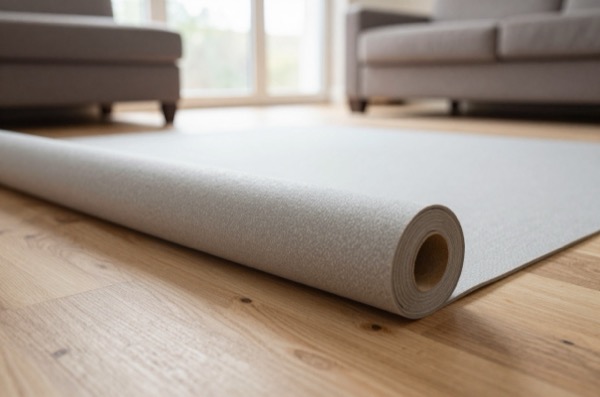
Compressed cork sheet sold as an underlay layer beneath laminate, LVT, or engineered wood rather than as a finished floor surface. Typically 2–6 mm thick; used primarily for acoustic dampening and thermal insulation. This is the cheapest cork product and is sometimes used in combination with other flooring types.
Supply cost: £4–£11/m²
In September 2026 B&Q listed a 2 mm cork underlay roll at £4 per m².1 A 6 mm natural cork roll sold through the same website cost £10.80 per m².2
Cost Breakdown Table (2026, UK)
| Product Type | Supply (£/m²) | Underlay (£/m²) | Fitting Labour (£/m²) | Total Installed (£/m²) |
|---|---|---|---|---|
| Glue-down cork tiles | £15–£40 | Not required | £18–£25 | £33–£65 |
| Floating cork planks | £20–£55 | £4–£11 | £15–£22 | £39–£88 |
| Cork underlay only | £4–£11 | - | £3–£5 | £7–£16 |
Prices are for supply and professional fit excluding VAT. Add 20% VAT for residential work.3 Sub-floor preparation is costed separately, see below.
What Drives the Price
Product quality and finish. Entry-level cork tiles from trade suppliers start at £15–£18/m² and have a factory-applied polyurethane seal. Premium ranges with enhanced UV coatings, embossed textures, or wider planks can reach £45–£55/m². On floating planks, check the maker’s use class and the finish: a floor rated for heavy domestic use will outlast a budget product in a busy room.
Room size. Flooring installation has setup costs (van, tools, waste disposal) that are distributed over the job. Small rooms (under 8m²) will typically attract a fitter’s minimum charge, often a half day at £90–£140, making the effective per-m² rate higher.
Sub-floor condition. Cork is more sensitive to sub-floor irregularities than most LVT products. One major cork maker asks for the sub-floor to be flat to within 3 mm over 2 m.4 Older solid concrete sub-floors often need a self-levelling compound (£8–£15/m²) before tiles can go down. Timber sub-floors may need sheet ply overlaid (£12–£20/m² for 12 mm ply, fitted) to eliminate springiness and movement.
Installation method. Glue-down tiles require adhesive application and careful alignment, so fitters typically charge slightly more per m² than for floating planks. Floating planks click together quickly, and an experienced fitter can lay 20–30m² per day; glue-down tiles are more likely 10–20m² per day.
Location. London and South East labour rates typically sit at the higher end, £20–£25/m² fitted. The Midlands and North tend to fall at £15–£20/m².
Typical Day Rates and Labour Costs
Flooring fitters in the UK charge either a day rate or a per-m² rate:
- Day rate: £180–£280/day (London and South East: £220–£280; rest of UK: £180–£230)
- Per-m² rate: £15–£25/m² fitted, depending on product and region
- Minimum charge: Most fitters have a half-day minimum of £90–£140
Labour alone for a 15m² room typically runs £225–£375.
Worked Example: 20m² Living Room
| Item | Qty | Unit Cost | Total |
|---|---|---|---|
| Floating cork planks (mid-range) | 22m² (inc. 10% waste) | £32/m² | £704 |
| Cork underlay | 22m² | £5/m² | £110 |
| Self-levelling compound (if needed) | 20m² | £10/m² | £200 |
| Fitting labour | 20m² | £18/m² | £360 |
| Door threshold strips (x2) | 2 | £15 each | £30 |
| Total | £1,404 |
Without sub-floor levelling (if the floor is already flat): £1,204. With high-spec planks at £50/m²: up to £1,800.
Subfloor Preparation
Cork will telegraph any movement, dips, or ridges in the substrate beneath it, more so than LVT, less so than ceramic tile. Key preparation steps:
- Concrete sub-floors: Check for damp with a moisture meter or hygrometer. One major cork maker asks for concrete to read below 75% relative humidity and for a polythene moisture barrier under its floating floors.4 Where damp is a risk, lay a damp-proof membrane first. Apply self-levelling compound where the floor is uneven.
- Timber sub-floors: Fix any loose floorboards or squeaking joists before laying. A 6 mm or 12 mm ply overlay (screwed at 300 mm centres) will reduce movement. Sand any high spots.
- Existing vinyl or tiles: Glue-down cork can sometimes be laid over stable existing vinyl if it is fully adhered and flat. Floating planks usually tolerate existing sheet vinyl well.
Preparation adds £0 (if in good condition) to £15–£20/m² in the worst cases.
Cork Flooring vs Other Options
| Flooring | Installed Cost (£/m²) | Warmth underfoot | Water resistance | Acoustic rating |
|---|---|---|---|---|
| Glue-down cork tiles | £33–£65 | Excellent | Low–Moderate | Excellent |
| Floating cork planks | £39–£88 | Very good | Moderate | Good |
| Laminate | £15–£405 | Poor | Low | Poor |
| LVT | £25–£70 | Good | Excellent | Moderate |
| Engineered wood | £40–£90 | Very good | Low–Moderate | Moderate |
| Carpet with underlay | £20–£60 | Excellent | Low | Excellent |
The laminate, LVT, engineered wood and carpet figures are a flooring fitter’s 2026 supplied-and-fitted ranges.5 The cork rows come from the cost breakdown above and exclude VAT.
Cork wins on: thermal comfort, noise absorption, softness underfoot (easier on joints), and sustainability credentials. The cork bark is harvested without felling the tree and can be stripped again about every nine years.6
Cork loses on: water resistance (tiles especially will swell and separate if persistently wet), long-term durability versus stone or quality LVT, and range of finishes compared to laminate or engineered wood.
Pros and Cons
Pros
- Warm and comfortable underfoot, noticeably softer than stone, tile, or hard laminate
- Good natural thermal and acoustic insulation; useful in flats above other occupants
- Sustainable source material, cork is a renewable, biodegradable product
- Hypoallergenic; does not trap dust or allergens the way carpet does
- Can be sanded and resealed (glue-down tiles only, if sufficiently thick)
Cons
- Susceptible to water damage, not suitable for bathrooms, wet rooms, or utility rooms with regular wet access
- Can be dented by heavy point loads (furniture legs, high heels); use felt pads
- UV fading is faster than hardwood, south-facing rooms may show discolouration within a few years
- Limited aesthetic range compared to LVT or engineered wood
- Floating planks can feel springy underfoot if sub-floor prep is insufficient
Practical Buying Tips
- Order 10% extra for cuts and waste; 15% for rooms with awkward angles or alcoves.
- Acclimatise the boards, leave them in the room for at least 48 hours before fitting so they adjust to the room’s humidity and temperature.4
- Check the use class on floating planks and choose one rated for heavy domestic use in hallways and kitchens.
- Look for factory-sealed products with polyurethane or acrylic top coats, site-applied finishes are possible on glue-down tiles but add cost and time.
- Avoid cork in bathrooms unless you are using specialist sealed tiles with completely watertight grout lines, and even then, it is not the first-choice material.
Is Cork Flooring Worth It in 2026?
At £33–£65/m² installed for glue-down tiles or £39–£88/m² for floating planks, cork is priced in much the same bracket as LVT and engineered wood. It offers a genuinely distinctive comfort profile, warm, quiet, and soft underfoot, that hard flooring cannot match without underfloor heating or acoustic underlay. For bedrooms, home offices, and living rooms on upper floors of flats, it is one of the better-value choices available.
The limitations are real and should not be dismissed: keep cork away from rooms with regular water exposure, protect it from heavy furniture without pads, and manage UV exposure in sunny rooms. Within those parameters, a quality cork floor fitted correctly will last 15–25 years.
References (6)
Figures in this note were checked against the sources below on 30 September 2026. Superscript numbers in the text point to them. Every source the site cites, by topic.
- 1costsupplier figureB&Q.RN-07C7CWA price, true at 2026-09. B&Q product page for a 2 mm cork underlay roll covering 10 m², priced at £40, or £4 per m², including VAT. It sets the bottom of the cork underlay supply range.
- 2costsupplier figureB&Q.RN-94DVC8A price, true at 2026-09. B&Q marketplace listing for a 6 mm natural cork roll sold as flooring underlay, at £107.99 for 10 m² (£10.80 per m²) including VAT. It sets the top of the cork underlay supply range.
- 3technicalvery strongHM Revenue & Customs (GOV.UK), guidance.RN-4W7T33Sets the three UK VAT rates: standard 20% on most goods and services, reduced 5% on some goods and services such as children's car seats and home energy, and zero 0% on zero-rated goods such as most food and children's clothes. The standard rate rose to 20% on 4 January 2011 from 17.5%. Some supplies are exempt rather than rated, including postage stamps and financial and property transactions. This is the reference for converting a merchant's ex-VAT trade quote into the figure a homeowner actually pays.
- 4technicalsupplier figureWicanders (Amorim Cork Flooring), guidance.RN-L6NY1IInstallation FAQ from Wicanders, the cork flooring brand of Amorim. It states the sub-floor flatness tolerance for its cork floors: no more than 3 mm variation over 2 m.
- 5costsupplier figureCountryLife Flooring.RN-E1Z1X4A price, true at 2026. CountryLife Flooring publishing its own price guidance for this work. A trade supplier writing about what it charges is evidence of the market rate and not a quotation, and the cost book treats it as one figure among several rather than on its own
- 6technicalsupplier figureCorticeira Amorim, guidance.RN-VKD3LLExplainer from Corticeira Amorim, the largest cork processor. It confirms that cork bark is harvested every nine years without the cork oak being felled.
-
Volden 2mm Cork Laminate & wood Underlay roll, 10m², B&Q, accessed 30 September 2026. Priced at 2026-09 and left there. diy.com
-
Cork Roll - 6mm - 10m2 (107.63 sqft) - UK Brand - Natural Acoustic & Thermal Insulation for Floors, Walls and Crafts, B&Q, accessed 30 September 2026. Priced at 2026-09 and left there. diy.com
-
VAT rates, HM Revenue and Customs, accessed 10 September 2026. gov.uk
-
FAQs, Wicanders (Amorim Cork Flooring), accessed 30 September 2026. wicanders.com
-
Flooring Cost Guide 2026, Prices Per m2 (UK), CountryLife Flooring, accessed 15 September 2026. Priced at 2026, so no calibration is needed. countrylifeflooring.co.uk
-
What is it: Cork, Corticeira Amorim, accessed 30 September 2026. amorim.com