Ask any experienced builder about their best jobs and they describe the same client: clear about what they want, quick to decide, easy to reach, pays on the nail. Ask about the nightmares and it’s drip-fed changes, vanishing decisions and late payments. The relationship is the project, and it’s the one part you control completely. This pillar maps how to run it.
Before anyone starts: the brief
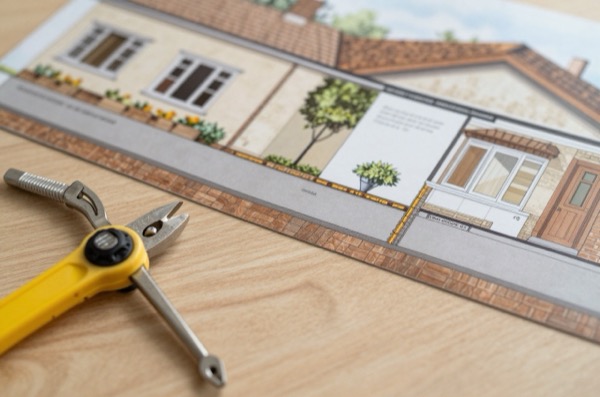
A good brief is the cheapest project insurance there is. Before pricing, a builder should receive: drawings if you have them, a room-by-room scope in plain English, the finishes you’ve already chosen, and the things you haven’t decided flagged as provisional. Vague briefs produce vague quotes, and vague quotes produce extras. Our vetting guide covers choosing the builder; the briefing guide in this series covers what to hand them.
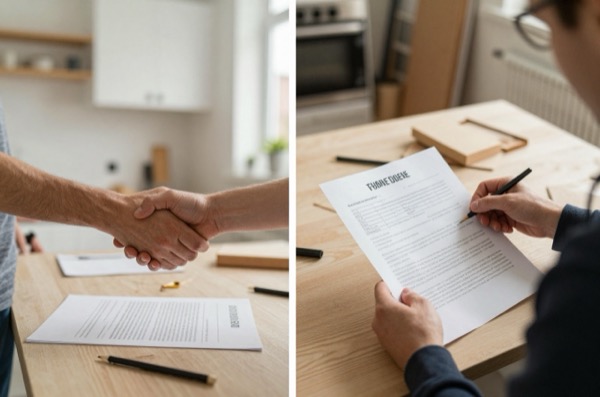
Get the commercial structure right at the same time, day rate versus fixed price suits different jobs, and the contract should record whichever you pick.
Site etiquette: the unwritten rules
None of this is contractual; all of it affects the speed, mood and goodwill of your job.
- Tea and coffee, never obligatory, always remembered. A kettle, mugs and milk left available beats playing waiter five times a day.
- Toilet access, agree it before day one, not when someone asks. Toilets and washing facilities are a legal minimum on every construction site under the CDM Regulations 2015, which on most house jobs means agreeing that the trades can use one of yours.1 On bigger jobs a hired portable site toilet (roughly £50–£70 a week plus VAT, with servicing extra) removes the issue entirely.
- Parking, in London this is the single biggest daily friction. Sort permits or bay suspensions well before start day: Camden, for example, asks for suspensions to be booked at least 17 days ahead.2 An hour circling for parking is an hour off your job, every day.
- Access and keys, decide early whether the builder holds a key. Most do on longer jobs; if you’re not comfortable, be there reliably at 8am.
- Kids and pets, a site is not childproof from day one. Keep both clear of work areas; tell the team about escape-artist cats before the front door spends a week open.
- Radio, smoking, boots, say what you can live with once, at the start, pleasantly. Builders respect clear house rules and resent moving targets.
Communication that prevents disputes
Three habits do most of the work:
- One channel. Agree where decisions live, usually one WhatsApp thread or email chain. Decisions made verbally get confirmed there in a line: “As discussed, sockets moved to 6, not 4. £180 extra agreed.”
- A weekly ten minutes. A standing Friday walk-round: what happened, what’s next week, what decisions the builder needs from you and by when. Late client decisions are one of the commonest causes of programme drift.
- A site diary. Two lines a day and photos of anything about to be covered up. If a dispute ever comes, this is gold; if it doesn’t, it’s the story of your build.
Money habits
Pay valuations promptly, nothing sours a job faster than chasing money, and slow payers go to the bottom of every subcontractor’s list. Pay against work done, in arrears, with a small retention; and pay properly, with invoices. Cash-in-hand discounts cost you your paper trail, your warranty position and the protection a card payment gives, a bad trade for 10%. Citizens Advice says to pay by debit or credit card if you can, or by bank transfer, and not in cash.3 Paying by credit card for work costing between £100.01 and £30,000 also lets you claim from the card provider under section 75 if something goes wrong.3
When something’s wrong
Raise it early, in person first, specifically, and without an audience. “Can we look at the bathroom tiling together, the setting-out doesn’t look right to me” gets defects fixed; a week of silence followed by a list of grievances gets defensiveness. Almost every builder fixes almost everything raised this way, because the alternative, losing the balance and the review, is worse. If the professional route fails, escalate through the dispute process rather than by shouting: the paper trail you built above is exactly what wins there.
And if the relationship genuinely breaks down, end it formally, there’s a right way to part with a builder mid-project that protects your money and your programme, covered in this series.
The professionals around the builder
A builder is rarely the only person you hire. Before anyone starts, comparing building quotes like for like is what makes a fixed price mean something. Knowing the difference between a structural surveyor and a structural engineer saves paying for the wrong report, and the building survey level you choose decides how much of the existing house you understand before work is priced on it. Work on or near a shared wall may need a party wall surveyor, a difficult application may justify a planning consultant, and on larger jobs a quantity surveyor can cost the scheme before the builder does. If you plan to coordinate the trades yourself, project managing your own renovation sets out what that role involves.
In this series
The detailed guides behind this page, in the order a project meets them:
- How to Brief a Builder: Writing a Scope of Works
- Tradesperson Etiquette: What Builders Wish You Knew
- Communicating With Your Builder: Systems That Work
- Paying Trades Cash in Hand: The Real Risks
- Day Rate vs Fixed Price: Which to Agree for Building Work
- Keeping Neighbours Onside During Building Work
- Cowboy Builders: Warning Signs Before & During a Job
- How to Complain to a Builder (and Get It Fixed)
- Replacing a Builder Mid-Project: How to Do It Safely
References (3)
Figures in this note were checked against the sources below on 30 September 2026. Superscript numbers in the text point to them. Every source the site cites, by topic.
- 1technicalvery strongThe National Archives, guidance.RN-8N9L39Schedule 2 of CDM 2015, the minimum welfare facilities required on construction sites, including toilets, washing facilities and drinking water.
- 2technicalstrong locallyCamden Council, guidance.RN-Y63P3LCamden Council's page on booking a parking bay suspension, for example for building work or a move: book at least 17 days ahead, with a short notice charge for later bookings and trade permits as an alternative.
- 3technicalfairCitizens Advice, guidance.RN-IED4GGCitizens Advice sets out six steps for a homeowner before work starts: check if you need permission or approval, find good traders, get quotes before deciding, check that you and your trader have insurance, get a written contract, and know what to do if there are problems. Advice applies to England, with separate versions for Northern Ireland, Scotland and Wales. It names the professional registers to search: a planning consultant on the Royal Town Planning Institute website, a surveyor on the RICS website and an architect on the Architects Registration Board website. Warns that without the permission or approval needed you might be fined, prosecuted, made to put things right or undo the work, and may have problems selling later. Confirms planning permission is usually needed to build something new such as an annexe, to make a major change such as an extension, or to change the use of a building.
-
The Construction (Design and Management) Regulations 2015, Schedule 2: Minimum welfare facilities required for construction sites, legislation.gov.uk, accessed 30 September 2026. legislation.gov.uk
-
Parking bay suspensions, Camden Council, accessed 30 September 2026. camden.gov.uk
-
Before you get work done on your home, Citizens Advice, accessed 30 September 2026. citizensadvice.org.uk