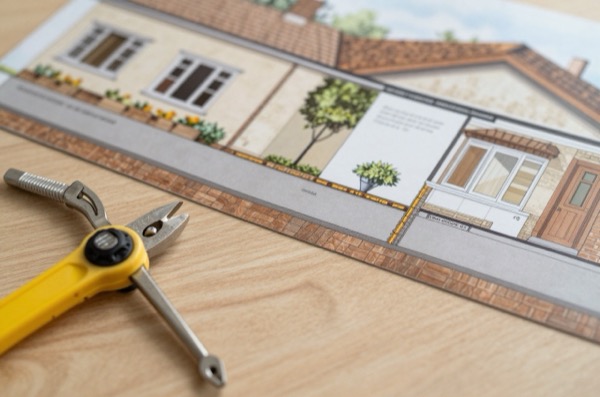
Taking on the project management of your own renovation is one of the most effective ways to reduce costs, but only if you do it properly. Done well, self-management saves the coordination margin, often 10–15%, that a professional project manager or main contractor would add. Done poorly, it leads to trades standing idle, costly rework, and a project that drags on for months beyond schedule.
This guide covers what project managing actually involves, when it makes sense, and how to do it methodically.
What Project Managing Actually Means
When a main contractor runs a project, the PM function includes:
- Procuring, scheduling, and paying subcontractors
- Managing the construction programme day to day
- Ordering materials and managing deliveries
- Inspecting work quality at each stage
- Handling problems (bad weather, a trade pulling out, materials delayed)
- Administering the contract, issuing payment certificates, managing variations
- Liaising with the architect, structural engineer, and building control
If you take this on yourself, every one of these tasks lands on your desk. It is genuinely a part-time job for most domestic projects. Budget 15–25 hours per week during the active build phase for a medium-sized project such as an extension or full refurbishment.
One thing does not land on your desk, and it is worth knowing which. Under the Construction (Design and Management) Regulations 2015 you are a domestic client, defined by HSE as an individual having construction work done on their own home, or a family member’s home, other than as part of a business.1 A domestic client’s client duties do not disappear, they transfer: to the contractor on a single-contractor project, or to the principal contractor where there is more than one contractor, unless you have a written agreement with the principal designer for them to take the duties instead.2 If you make no appointments, the designer in control of the pre-construction phase becomes the principal designer by default and the contractor in control of the build becomes the principal contractor.2 So managing the programme is yours; the legal health and safety client role is not, and no trade should tell you otherwise.
Notification is a separate question. A project has to be notified to HSE only if it is scheduled to last longer than 30 working days and have more than 20 workers on site at once at any point, or to exceed 500 person days.3 Most domestic extensions and refurbishments fall below both thresholds, though a long build with a large team can pass 500 person days.
When Self-Management Works
Self-management suits you if:
- You have some construction knowledge (you understand the basic trade sequence)
- You have time to be available, or can be reached quickly, during working hours
- The project is not excessively complex (no unusual structural challenges, not listed building or conservation area)
- You are comfortable with conflict when a trade’s work is not up to standard
It is less appropriate if the project involves deep structural work, a very tight programme, or if you are working full-time with limited availability. A professional project manager often becomes good value on larger projects, roughly £150,000 and up, or those with significant technical risk. Be aware that engaging several trades directly makes you a client with more than one contractor, which is the case where the principal contractor picks up your CDM duties.2
The Trade Sequence: Getting It Right
The single biggest risk in self-management is getting the trade sequence wrong, which causes costly idle time and potentially requires rework. The standard sequence for a major renovation or extension is:
| Phase | Trades involved | Key dependencies |
|---|---|---|
| Groundworks & structure | Groundworker, structural steelwork, bricklayer | Structural engineer sign-off before floors poured |
| Roofing & weathertightening | Roofer, window installer | Must be watertight before internal trades start |
| First fix | Electrician, plumber, carpenter | Before walls are plastered |
| Plastering | Plasterer | After all first fix is complete |
| Second fix | Electrician, plumber, carpenter | After plastering, once the plaster has hardened |
| Tiling & floor laying | Tiler, floor layer | After second fix |
| Decoration | Painter & decorator | Last trade in most rooms, once plaster is thoroughly dry |
| Snagging | All trades | Final inspection before retention released |
A common mistake is booking decorators before the plaster is thoroughly dry, which can take weeks in cold or damp conditions, or before tiling is complete. Each mistake typically adds a return visit (charged at day rates) and sometimes requires rework.
Building Your Programme
Create a simple programme before any trade starts. A spreadsheet is sufficient; you do not need specialist software. For each phase:
- Start date and end date
- Who is responsible (trade name and contact)
- Dependencies (what must be complete before they can start)
- Key material delivery dates
Build in float, extra time for the unexpected. On a 16-week project, build in 2–3 weeks of contingency. Float is not wasted time; it is insurance against a trade running a week over or materials arriving late.
Typical durations for common project phases (mid-size extension, 2026):
| Phase | Typical duration |
|---|---|
| Groundworks and foundations | 2–4 weeks |
| Brick/block shell to plate | 3–6 weeks |
| Roof structure and covering | 1–2 weeks |
| First fix (electrics, plumbing, carpentry) | 2–3 weeks |
| Plastering and drying | 3–5 weeks (inc. drying time) |
| Second fix and fitting out | 2–4 weeks |
| Decoration and finishing | 1–3 weeks |
Managing Day Rates and Payments
When engaging individual trades directly (rather than through a main contractor), you will typically agree either a fixed price for the entire job or a day rate. Day rates in 2026 run approximately:
| Trade | Day rate (ex. VAT, excl. London) | London uplift |
|---|---|---|
| General builder | £200–£3204 | +20–35% |
| Electrician | £250–£4005 | +20–30% |
| Plumber | £250–£400 | +20–30% |
| Plasterer | £200–£300 | +15–25% |
| Tiler | £180–£280 | +15–25% |
| Carpenter/joiner | £200–£320 | +20–30% |
Fix prices where possible rather than relying on day rates. Day rates expose you to programme risk: if work takes longer than expected, you pay more. If you do agree day rates, require daily or weekly written updates on progress against the agreed programme.
Keep a contingency budget of 10–15% of the total project cost for unforeseen items (hidden rot behind a wall, a soil pipe in an unexpected location, a specification upgrade you decide to make mid-project).
Site Records and Documentation
Keep a site diary. A brief daily note (a few lines plus photos) takes five minutes and can be invaluable if a dispute arises. Record:
- Who was on site
- What work was carried out
- Any decisions made or changes agreed
- Any issues that arose
Photograph work before it is covered up, reinforcement before concrete is poured, pipe runs before walls are plastered, joist positions before floors are laid. These photographs are evidence if a query arises later and can help building control if work has been covered before an inspection.
Build building control into the programme as well. Work cannot start until at least two days have passed since building control was given notice of the start.6 The authority can also require you to notify it when specified stages of the work are reached, and set a period during which that work must not be covered up.6
Confirm all variations (changes to the original scope) in writing before the trade proceeds. A variation agreed verbally is almost impossible to dispute later. A one-line email, “Agreed today to change the kitchen window from 1200mm to 1800mm wide, variation cost £480 + VAT”, is all that is needed.
Dealing With Problems
No renovation runs without problems. The skill is responding quickly and proportionately.
A trade pulls out mid-project: Contact your other trades to see if anyone can step in, and search the Federation of Master Builders or TrustMark, the Government Endorsed Quality Scheme for work in and around the home, for replacements.7 The programme will take a hit; notify your other trades early so they can adjust their own programmes.
Work fails a building control inspection: Do not panic. Building control officers are there to help as much as to inspect. Understand precisely what the issue is, agree a remediation plan with the inspector, and carry out the fix before re-inspection. Do not cut corners to pass an inspection, the consequences of defective structure or services are serious.
Costs are running over: Call a programme review. Work out whether the overspend is in materials, labour, or variations. If it is variations, work you asked for that was not in the original scope, accept this is a cost of changed requirements. If it is labour running over estimate without changes in scope, have a frank conversation with the contractor and refer to the agreed programme.
Self-managing a renovation rewards preparation and calm, methodical decision-making. The homeowners who struggle are invariably those who underinvest in planning and try to improvise on the fly. Invest the time upfront, in a solid brief, a realistic programme, and vetted trades, and the management phase becomes significantly more manageable.
References (7)
Figures in this note were checked against the sources below on 30 September 2026. Superscript numbers in the text point to them. Every source the site cites, by topic.
- 1technicalvery strongHealth and Safety Executive, guidance.RN-D7GLU7HSE page (updated 7 October 2025) defining a domestic client under CDM 2015 as any individual having construction work done on their own home or a family member's home that is not part of a business. On a single-contractor project the contractor automatically takes on the client's legal duties; where there is more than one contractor the principal contractor takes them on, unless the client makes a written agreement for the designer to act as principal designer.
- 2technicalvery strongThe National Archives, legislation.RN-MEXGZNRegulation 7 of CDM 2015, application to domestic clients. A homeowner's client duties pass automatically to the contractor where there is one contractor, to the principal contractor where there is more than one, or to the principal designer under a written agreement. This is the provision that means a householder does not personally carry CDM duties, and it is also why appointing several trades directly quietly makes somebody the principal contractor.
- 3technicalvery strongThe National Archives, legislation.RN-3XA3FCRegulation 6 of CDM 2015, notification. A project is notifiable to HSE if the construction work is scheduled to last more than 30 working days with more than 20 workers at any one time, or to exceed 500 person days. Below those thresholds no F10 notification is needed, which is why almost no domestic job is notifiable and why a contractor asking for one on a house extension is usually mistaken.
- 4costgoodCISRS.RN-RZNJD5A price, true at 2026-07. CISRS, the scaffolding industry's training scheme, reporting the CIJC pay settlement. Useful as a dated confirmation of when a rate took effect; the rates themselves come from the CIJC promulgation, which is the agreement rather than a report of it.
- 5costvery strongOffice for National Statistics.RN-MMT1DOA price, true at 2025-03. The ASHE Table 14 dataset gives annual estimates of paid hours worked and earnings for UK employees by sex and by full-time or part-time status, broken down to four-digit Standard Occupational Classification, which is the level that isolates individual construction trades such as bricklayers, carpenters, plasterers and electricians. Released 23 October 2025 as the 2025 provisional edition (zip, about 10.7 MB), with revised and provisional editions back to 2017. A correction dated 19 December 2025 suppressed annual pay estimates for SOC 3312 police officers in some areas; construction occupations are unaffected.
- 6technicalvery strongThe National Archives (legislation.gov.uk), legislation.RN-6CCBA1Regulation 16(1) bars starting building work until notice of intention to start has been given to the relevant authority and at least two days have elapsed since the end of the day the notice was given. Regulation 16(3) lets the authority serve written notice requiring notification when a specified stage is reached, and may set a period before or after the work within which to notify and a period during which the work must not be covered up; under 16(3A) and 16(3B) a stage may only be specified if the authority intends to inspect it, based on its assessment of the risk of a breach. Regulation 16(3C) requires notice that work has commenced within five days of commencement, with a rejection notice possible within four weeks (16(3E)), deemed commencement if no rejection is given (16(3F)), and an appeal to the First-tier Tribunal within 21 relevant days (16(3H)) on grounds of error of fact, error of law, unreasonableness or failure to follow procedure. Regulation 16(4) requires notice within five days of completion.
- 7technicalstrongTrustMark.RN-ZGS3SNTrustMark is the government endorsed quality scheme for work in and around the home, endorsed by the Department for Energy Security and Net Zero and the Department for Business and Trade. It vets registered businesses against required standards and holds ISO 9001, ISO 27001 and Cyber Essentials accreditation. Registration is the marker to check for grant-funded energy efficiency work, so a note about a subsidised loft insulation installer should point readers here rather than to a lead generation directory.
-
Domestic clients: roles and responsibilities, Health and Safety Executive, accessed 9 September 2026. hse.gov.uk
-
The Construction (Design and Management) Regulations 2015, regulation 7: application to domestic clients, legislation.gov.uk, accessed 9 September 2026. legislation.gov.uk
-
The Construction (Design and Management) Regulations 2015, regulation 6: notification, legislation.gov.uk, accessed 9 September 2026. legislation.gov.uk
-
New CIJC pay rates confirmed for construction industry from 20 July 2026, CISRS / CIJC, accessed 15 September 2026. Priced at 2026-07, so no calibration is needed. cisrs.org.uk
-
Annual Survey of Hours and Earnings 2025, Table 14.6a, SOC 5321, Office for National Statistics, accessed 16 September 2026. Priced at 2025-03, so no calibration is needed. ons.gov.uk
-
The Building Regulations 2010, regulation 16: notices of start and completion of certain stages of work, The National Archives, accessed 30 September 2026. legislation.gov.uk
-
TrustMark, TrustMark, accessed 30 September 2026. trustmark.org.uk