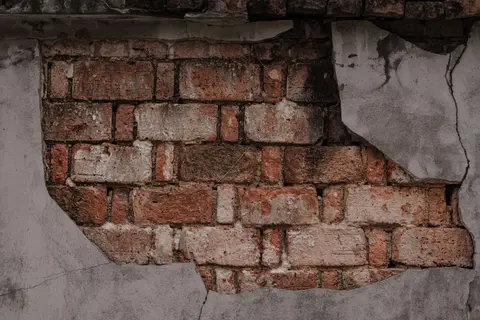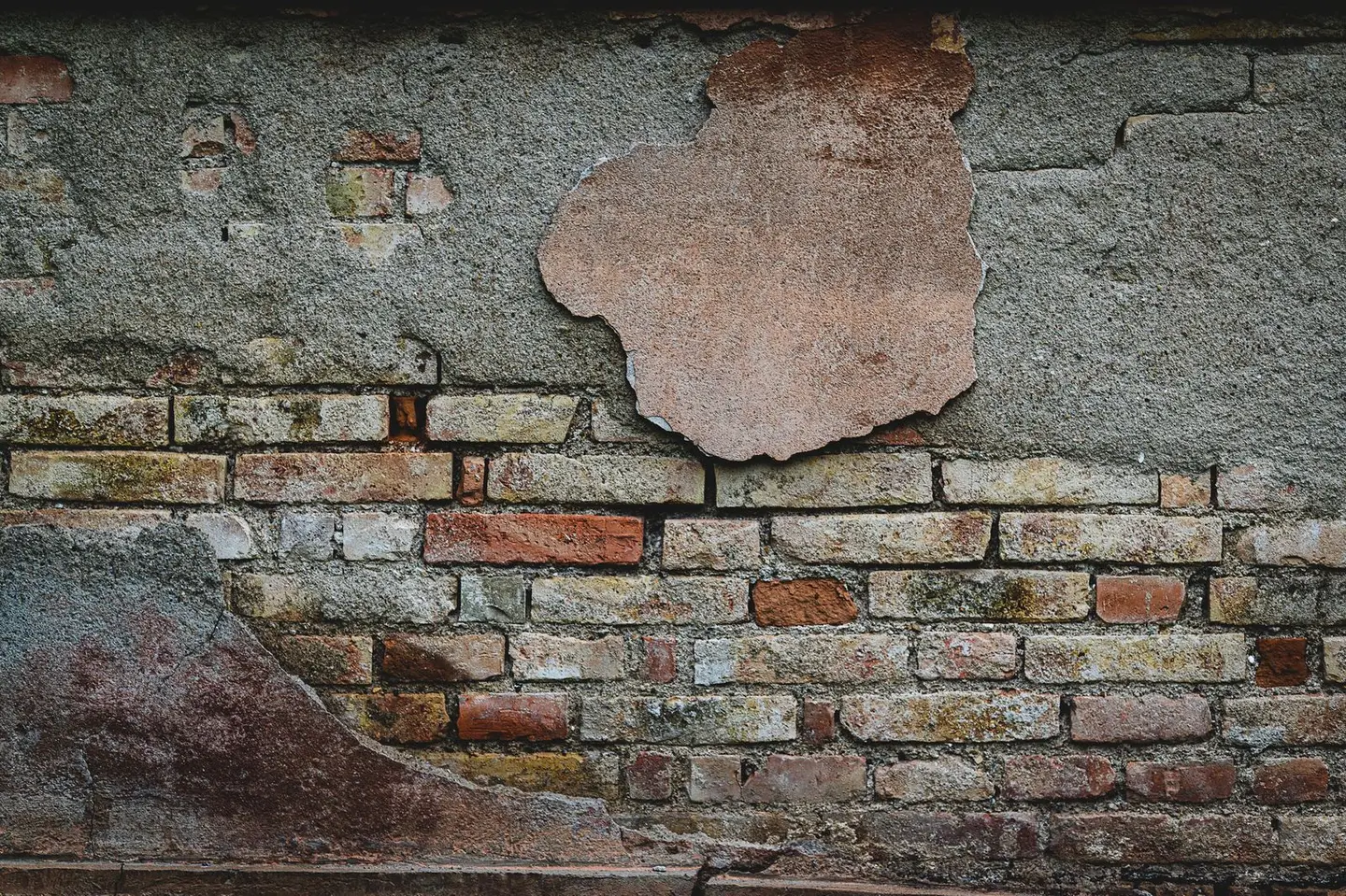
Spalling bricks, where the face of the brick flakes, crumbles, or breaks away, is one of the most common external wall problems on older UK properties. Left untreated, it allows water into the wall, accelerates further deterioration, and can eventually compromise the structural integrity of the leaf. The good news is that spalling brickwork is usually repairable without replacing an entire wall.1
Depending on the extent, repair costs range from £200–£600 for spot repointing and a handful of brick replacements, to £2,500–£6,000+ for a severely affected elevation.
Why Bricks Spall
Understanding the cause is essential before specifying the repair, fix the spalling without addressing the root cause and it will return.
| Cause | Description | Remedy |
|---|---|---|
| Frost action | Water absorbed into brick freezes and expands, fracturing the face | Replace affected bricks; investigate why bricks are staying wet |
| Cement pointing | Hard cement mortar (cement:sand 1:3) traps moisture in the brick, which spalls | Hack out cement pointing; repoint with lime mortar |
| Rising or penetrating damp | Persistent moisture saturation weakens brick | Fix drainage, damp-proof course or pointing; then replace bricks |
| Inappropriate brick type | Soft internal bricks used externally | Replace with hard-fired external-grade brick |
| Blown render | Render traps moisture that spalls the brick when it escapes | Remove render; dry out; repoint or render correctly |
| Chemical attack | Sulfate attack on mortar; acid rain on soft brick | Repoint with sulfate-resistant mortar |
Historic England notes that spalling of soft brick usually happens when moisture trapped in the wall freezes, which is why the source of the damp has to be fixed as well as the damaged bricks.2
Choosing the Right Repair Method
Repointing alone, raking out old mortar and applying fresh mortar at the correct lime content, is the first step and sufficient where bricks are structurally intact but just weathered. Much spalling on pre-1920 properties is linked to hard cement pointing applied in later repairs. Raking this out and replacing with a softer NHL (natural hydraulic lime) mortar stops the moisture trap and allows the wall to breathe.2
Brick replacement is needed where:
- The brick face has fallen away or the brick is crumbling
- The brick is hollow when tapped (indicating it has delaminated internally)
- Water is visibly tracking through the face
Consolidants (brick-hardening resins applied by spray or brush) can temporarily stabilise softening bricks and are occasionally used in specialist conservation work. They are not a permanent solution for actively spalling bricks but extend the life of marginally soft ones.
Brick slips (thin face tiles cut from matching bricks) can cover shallow surface spalling where the brick body is still sound, used when the whole brick cannot be removed easily (e.g., in cavity walls or where reinforcing runs behind). A skilled bricklayer fixes slips with specialist adhesive and repoints around them.
Cost Per Brick and Per M²
| Repair Type | Cost Per Brick | Notes |
|---|---|---|
| Individual brick cut out and replace | £25–£60/brick | Includes mortar, matching brick, labour |
| Brick slip repair | £15–£35/brick | Where full removal is not possible |
| Repointing only | £25–£60/m² | Lime mortar; labour intensive; excludes hacking out hard cement pointing |
| Consolidant application | £15–£30/m² | Labour + materials; temporary measure |
Matching bricks is a significant cost and effort driver. New bricks rarely match aged Victorian or Edwardian stock in colour, texture or size. Imperial bricks are generally larger than the modern metric brick of 215 × 102.5 × 65 mm: they are commonly about 228 mm long and 108 mm wide, with heights from 50 mm to 80 mm depending on where and when they were made.3 Salvage yards are the best source for matching period bricks, and reclaimed imperial bricks typically cost about 80p–£1.50 each, with rarer types costing more.4
Worked Example: Repairing a Gable End
Scenario: 15 m² gable end with cement pointing causing spalling across 30% of the face.
| Item | Cost |
|---|---|
| Scaffold for access (2 weeks) | £400–£800 |
| Rake out all cement pointing (15 m²) | £600–£900 |
| Repoint with NHL 3.5 lime mortar (15 m² at £25–£60/m²) | £375–£900 |
| Replace 25 spalled bricks (cut out, source salvage, lay) | £625–£1,500 |
| Total | £2,000–£4,100 |
Scaffold dominates small jobs: scaffolding to a typical two-storey gable end often costs £400–£800 for two weeks, with additional weekly hire charges thereafter. Batching repairs to maximise scaffold time makes economic sense.
Lime vs Cement Mortar: The Critical Choice
Using cement mortar (1:3 mix) on pre-1920s brickwork is one of the most common and damaging mistakes in UK property maintenance.5 Old soft bricks, especially London Stock, Gault clay or handmade varieties, were designed to work with soft lime mortars that sacrificed themselves slowly (the “sacrificial joint” principle) rather than trapping moisture in the brick.6
Typical starting mixes for period brickwork (a lime specialist, or an analysis of the original mortar, should set the final specification):
- Sheltered location, moderately absorptive brick: NHL 2 or lime putty mortar, 1:2.5 (lime:sharp sand)
- Exposed location or harder brick: NHL 3.5, 1:3 or 1:2.5
- Very exposed (chimneys, copings, below DPC): NHL 5, 1:3
Never use ready-mixed cement mortar (grey bag mix) on pre-1920 brickwork.
Building Regulations and Planning
Standard maintenance and repair of brickwork does not require planning permission or Building Regulations approval. Where 25 per cent or more of the external leaf of a wall is rebuilt, though, the regulations would normally apply and the thermal insulation would normally have to be improved.7 Also note:
- Listed buildings: repointing or brick replacement requires Listed Building Consent if it would affect the building’s character as a building of special architectural or historic interest; even like-for-like repair should be discussed with the conservation officer.8
- Conservation areas: repairs visible from a public highway may attract scrutiny; match materials to the original closely.
- External wall insulation: if you’re considering adding EWI as part of a wider repair project, it will normally need Building Regulations sign-off and potentially planning permission.7
Finding a Specialist
Lime repointing and period brickwork repair requires a mason or bricklayer experienced with historic materials, not a general builder who applies cement mortar by default.1 Look for:
- A bricklayer or mason who can show recent lime repointing and brick repair on buildings of a similar age
- Names from the Society for the Protection of Ancient Buildings (SPAB), whose free technical advice line can suggest professionals, contractors and specialists9
Get at least three quotes specifying lime mortar type, sand source, and whether they will match the original mortar analysis if the property is listed.
References (9)
Figures in this note were checked against the sources below on 30 September 2026. Superscript numbers in the text point to them. Every source the site cites, by topic.
- 1technicalvery strongHistoric England, guidance.RN-Y1SE0KHistoric England's homeowner advice on repairing walls of older homes. It warns that modern impervious materials such as cement-based fillings lock moisture into old walls and speed their decay.
- 2technicalvery strongHistoric England, guidance.RN-NM90UWHistoric England's technical advice on traditional masonry: impermeable cement mortar keeps moisture in the masonry and drives salt damage, while weaker porous lime mortar lets walls dry.
- 3technicalsupplier figureImperial Bricks, guidance.RN-S6H5GEA brick maker's guide to imperial and metric brick sizes; it gives the metric brick as 215 x 102.5 x 65 mm and imperial bricks as about 228 x 108 mm with heights of 50 to 80 mm.
- 4costsupplier figureReclaimed Brick Company.RN-R9LIZ1A price, true at 2026-09. A reclamation supplier's page on reclaimed imperial bricks for matching period brickwork; it states the typical price per reclaimed imperial brick.
- 5technicalvery strongHistoric England, guidance.RN-3JA55JHistoric England's best-practice guidance on repointing older brick and stone walls, which warns that unsuitable repointing harms the durability of masonry and that only affected areas usually need it.
- 6technicalvery strongHistoric England, guidance.RN-4FMMUQHistoric England technical guidance on repairing traditional masonry; it describes lime mortar joints as a sacrificial layer that lets the whole wall dry out and needs routine maintenance.
- 7technicalvery strongPlanning Portal, guidance.RN-ERBGVFThe Planning Portal's guidance on Building Regulations for external wall work; it sets the 25 per cent threshold at which rebuilding, re-rendering or re-cladding a wall becomes controlled work needing an insulation upgrade.
- 8technicalvery strongThe National Archives (legislation.gov.uk), legislation.RN-XN22L9The provision that decides when listed building consent is actually needed, and the answer to the common overstatement that any alteration to a listed building requires consent. Section 7(1): 'no person shall execute or cause to be executed any works for the demolition of a listed building or for its alteration or extension in any manner which would affect its character as a building of special architectural or historic interest, unless the works are authorised under section 8.' The trigger is therefore effect on character as a building of special architectural or historic interest, not alteration as such, so work with no effect on that character falls outside the restriction. Section 7(2) makes subsection (1) subject to section 33(1) of the Planning Act 2008, which excludes the requirement for other consents where development consent is required. Authorisation itself comes from section 8.
- 9technicalfairThe Society for the Protection of Ancient Buildings, guidance.RN-10YNBKThe SPAB's page for its free technical advice line on old buildings; it confirms the line covers repointing and can suggest names of professionals, contractors and specialists.
-
Repairing Walls of an Older Home, Historic England, accessed 30 September 2026. historicengland.org.uk
-
Masonry Buildings, Historic England, accessed 30 September 2026. historicengland.org.uk
-
What you need to know about imperial brick sizes, Imperial Bricks, accessed 30 September 2026. imperialbricks.co.uk
-
Imperial Bricks, Reclaimed Brick Company, accessed 30 September 2026. Priced at 2026-09 and left there. reclaimedbrickcompany.co.uk
-
Repointing Brick and Stone Walls: Guidelines for Best Practice, Historic England, accessed 30 September 2026. historicengland.org.uk
-
Repair, Historic England, accessed 30 September 2026. historicengland.org.uk
-
Is building regulations approval needed for work to external walls?, Planning Portal, accessed 30 September 2026. planningportal.co.uk
-
Planning (Listed Buildings and Conservation Areas) Act 1990, section 7, legislation.gov.uk, accessed 30 September 2026. legislation.gov.uk
-
Technical Advice Line, The Society for the Protection of Ancient Buildings, accessed 30 September 2026. spab.org.uk