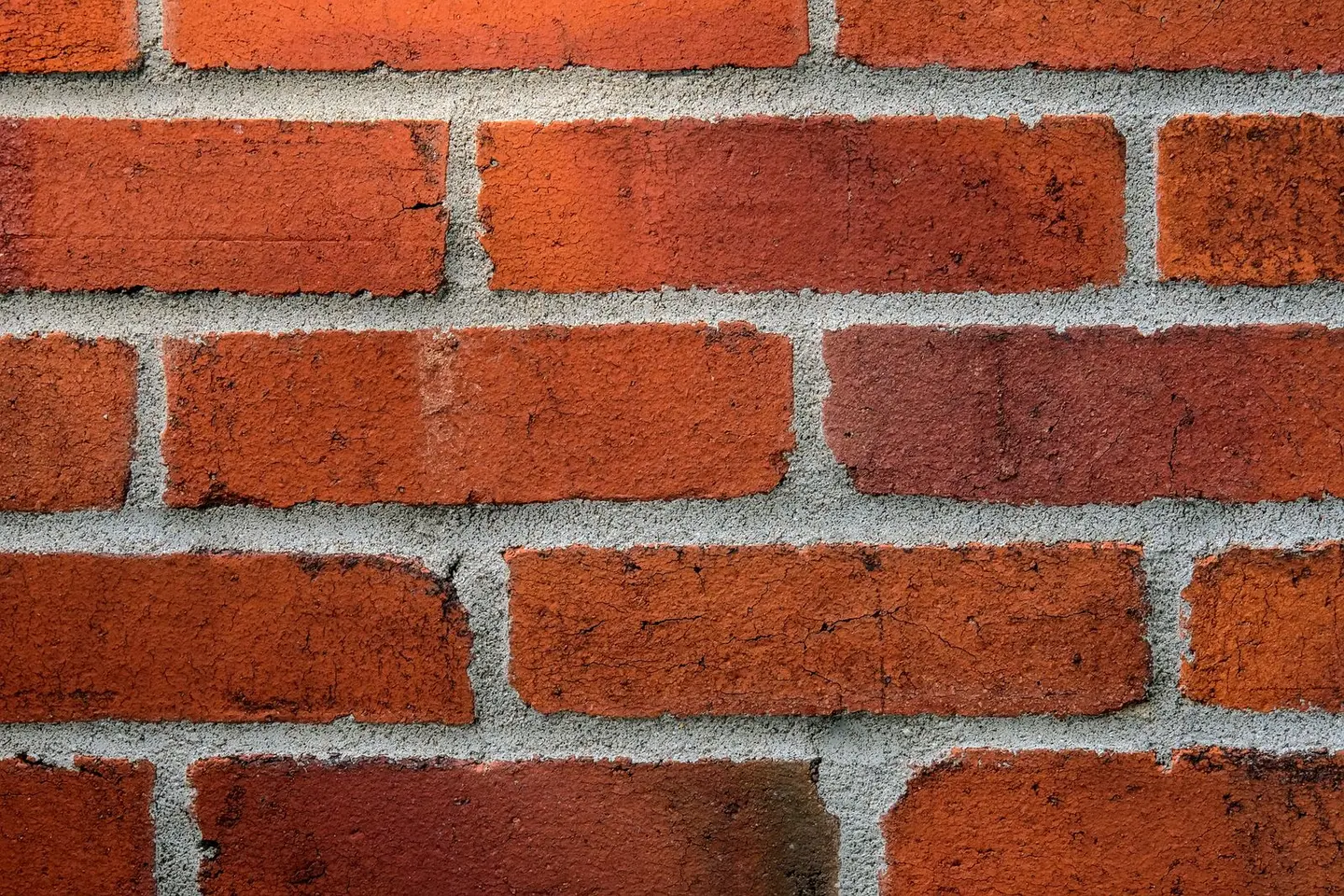
Mortar is the unsung component of masonry. Get the mix wrong, too strong or too weak, and the wall pays for it: rigid, high-cement mortars crack bricks under thermal movement; lean, crumbly mixes allow water penetration and early freeze-thaw failure. The UK mortar designation system is simple once you understand it, but it is often misunderstood on site. This guide explains the designations, the constituent ratios, what each mortar is used for, and 2026 costs for ready-mix versus site-batched options.
The Mortar Designation System
UK mortar for masonry is specified to BS EN 998-2:2016 (factory-made masonry mortars) and by performance or recipe in line with BS EN 1996-1-1 (Eurocode 6). Older British Standards, such as the withdrawn BS 5628-3, set out the traditional mortar designations (i), (ii), (iii) and (iv); the M-classes of BS EN 998-2 have taken their place, with rendering and plastering mortars covered by BS EN 998-1, but the old designations are still referenced in older drawings and specs.1 The modern designations use M-class numbers corresponding to 28-day compressive strength in N/mm²:1
| M Class | Old Designation | 28-day Strength | Notes |
|---|---|---|---|
| M12 | (i) | ≥ 12 N/mm² | Very strong, specialist structural masonry, DPC courses |
| M6 | (ii) | ≥ 6 N/mm² | Exposed, below DPC, engineering brick |
| M4 | (iii) | ≥ 4 N/mm² | General above-DPC brickwork and blockwork, most common |
| M2 | (iv) | ≥ 2 N/mm² | Sheltered softer bricks, lime-rich mixes |
A golden rule: mortar should never be significantly stronger than the masonry units it bonds.2 A 15 N/mm² mortar with a 20 N/mm² facing brick will not fail structurally, but any thermal or foundation movement will crack the bricks rather than the mortar joints, and repointing is far cheaper than replacing bricks.
Cement:Lime:Sand Mix Ratios
Traditional site-mixed mortars combine Portland cement (CEM I or II), hydrated lime (to BS EN 459-1) and washed building sand. Lime improves workability and water retention, and makes the mortar more flexible, so small early movements are taken up without excessive hairline cracking.3
| Designation | Cement : Lime : Sand (volume) | Cement : Sand with air-entraining plasticiser (volume) |
|---|---|---|
| M12 (i) | 1 : 0–0.25 : 3 | Not given |
| M6 (ii) | 1 : 0.5 : 4–4.5 | 1 : 3–4 |
| M4 (iii) | 1 : 1 : 5–6 | 1 : 5–6 |
| M2 (iv) | 1 : 2 : 8–9 | 1 : 7–8 |
All of these proportions are by volume, from the Mortar Industry Association’s table of prescribed masonry mortars.1
The lime content increases significantly as strength decreases. An M2 mix at 1:2:9 contains more lime than cement by volume, it is essentially a lime mortar with a cement gauge, and it is specified for very soft, handmade or historic bricks.
Where masonry cement (BS EN 413-1) is used instead of Portland + lime, the ratio simplifies to cement:sand only, because the plasticiser is built in. The ratio depends on which kind of masonry cement it is:
| Designation | Masonry cement with inorganic filler : sand | Masonry cement containing lime : sand |
|---|---|---|
| M6 | 1 : 2.5–3.5 | 1 : 3 |
| M4 | 1 : 4–5 | 1 : 3.5–4 |
| M2 | 1 : 5.5–6.5 | 1 : 4.5 |
These are the prescribed proportions by volume in the Mortar Industry Association’s specification table.1
Which Mortar for Which Application
Below DPC, in ground, manholes and drainage: M6 or M12. The high cement content resists moisture and frost. Where the ground contains high levels of sulfate, as London clay can, use a sulfate-resisting cement with a low tricalcium aluminate content.3
Engineering brick DPC courses (two-course integral DPC): M12, cement:lime:sand 1:0 to 0.25:3.4 Dense, impermeable joint that complements the engineering brick’s low water absorption.
Above-DPC general brickwork, sheltered and moderate exposure: M4, 1:1:6, or 1:4 to 5 with a filler-type masonry cement.1 This covers most domestic walls in the UK’s central and southern regions. Approved Document A’s rules for masonry walls designed without calculation ask for M4 mortar (designation (iii)) or an equivalent or stronger mix.5
Exposed locations, parapets, chimneys, retaining walls above ground: M6, 1:0.5:4 to 4.5.4 A 1:0.25:3 mix is designation (i), or M12, and is stronger than M6 rather than an alternative to it.1 The bricks themselves should be frost resistant, rated F2 under BS EN 771-1.4 The Brick Development Association treats chimneys, garden walls and retaining walls as severely exposed to frost wherever they are built.4
Concrete blockwork inner leaf: M4 or M6. Aircrete blocks are often softer than the facing bricks on the outer leaf; use M4 for aircrete to maintain the strength differential. Never use M12 with standard 3.6 N/mm² aircrete: the mortar would be more than three times as strong as the block.6
Pointing and repointing: Match (or go one designation lower than) the original mortar. Repointing mortar that is harder or less permeable than the brick stops moisture leaving through the joints, so it moves through the bricks instead and accelerates spalling.2 Houses built before the early 20th century were almost always laid in lime mortar, so Victorian brickwork should usually be repointed in a lime mortar, such as a natural hydraulic lime (NHL) mix, rather than a cement-rich one.2
Lightweight blockwork, render background: M4, with a first coat applied as a spatterdash if suction is high.
Ready-Mix Mortar vs Site-Mixed
Ready-mix / pre-bagged mortar comes in two forms:
- Dry pre-bagged (cement + sand + plasticiser pre-blended): add water on site. Available in M4 and M6 designations. Convenient for small quantities; consistent batching; no lime required.
- Factory-made mortar for larger sites: either wet retarded ready-to-use mortar, delivered ready mixed and usable for the period of retardation the maker states (usually about 36 hours), or dry mortar stored in a silo on site and mixed with water as needed.3 Both are made under factory production control, so quality is highly consistent.
| Supply Route | Pros | Cons | Cost (2026, per 25 kg bag) |
|---|---|---|---|
| Dry pre-bagged M4 | Convenient, no batching errors | Higher unit cost, bag waste | £11–£16 |
| Dry pre-bagged M6 | Same benefits, stronger | Higher unit cost | £11–£16 |
| Site-mixed (CEM I + lime + sand) | Low material cost, fully controllable | Requires accurate gauging; quality depends on batcher | Sand ~£60–£80/tonne; cement ~£7.50/bag; hydrated lime ~£20/bag |
| Silo / retarded ready-mix | Factory QC, no downtime, no mixing | Set-up cost, minimum quantities | ~£120–£160/tonne delivered |
The bagged mortar prices in the table are retail shelf prices including VAT. B&Q lists Tarmac Multipurpose Mortar at £10.97 for a 25 kg bag, about £0.44 per kg.7 Wickes lists Blue Circle Quality Assured Mortar Mix at £12.90 for a 20 kg bag, about £0.65 per kg, or roughly £16 for 25 kg.8 For site mixing, B&Q lists Blue Circle General Purpose Grey Cement at £7.50 for a 25 kg bag.9 TradePoint lists Blue Circle hydrated lime at £20.15 for a 25 kg bag.1011
For most domestic projects (repointing, extensions, new-build up to 20 m² of walling), dry pre-bagged is most practical. For a housebuilder or self-builder mixing large quantities, site-batching is cheaper provided a gauge box or volumetric mixer is used rather than shovel counts, which are notoriously inaccurate.
Coverage: A 25 kg bag of ready-mixed mortar goes less far than people expect. Tarmac gives its 25 kg multipurpose mortar as laying 25 standard bricks (stretcher bond) or 20 standard blocks, so a square metre of half-brick wall, about 60 bricks, takes two to three bags.7
Colour and Aesthetics
Joint colour affects the appearance of a wall significantly. Most pre-bagged mortars are grey (CEM I) or off-white (white Portland or masonry cement with limestone filler). Pigments to BS EN 12878 can be added on site, at the dose the pigment maker gives by weight of cement, to produce buffs, reds, blacks or greens.3 White Portland cement base gives cleaner, more saturated pigment colours.
Pale or white mortars make brickwork appear airier; dark mortars emphasise brick coursing and can make pale bricks look heavier. For conservation or listed building work, consult the local authority’s conservation officer, natural hydraulic lime (NHL) mortars without Portland cement are often required.
Key Standards
- BS EN 998-2:2016, Specification for masonry mortars (factory-made)
- BS EN 1996-1-1 (Eurocode 6), Design of masonry structures, mortar designation definitions
- BS EN 459-1:2015, Building limes (hydrated lime specification)
- BS EN 413-1:2011, Masonry cement
- BS 8000-3:2020, Workmanship on construction sites: masonry, mixing and application (the 2001 edition was withdrawn in 2020)12
- NHBC Standards Chapter 6.1, External masonry walls, including NHBC’s mortar requirements for new homes
- Building Regulations Approved Document A, whose rules for masonry walls designed without calculation call for M4 mortar or stronger5
The ‘one shovel’ site habit
The most common cause of inconsistent mortar on site is volume batching by shovel count: how much sand a shovel holds varies a great deal with the operative and with how the heap has settled. For any work that will be visible or structurally loaded, use a gauge box (a simple wooden frame of known volume) or a volumetric mixer with calibrated hoppers.
The rules in this note are those that apply in England. Scotland, Wales and Northern Ireland have their own building standards and permitted development rights.
References (12)
Figures in this note were checked against the sources below on 2 October 2026. Superscript numbers in the text point to them. Every source the site cites, by topic.
- 1technicalgoodMineral Products Association, Mortar Industry Association, guidance.RN-5WJ1KNThe mortar industry's own learning text on specifying masonry mortar. Its Table 1 sets out the prescribed mixes by volume for each mortar designation, (i) to (iv) and M12 down to M2, for cement:lime:sand and for masonry cement:sand.
- 2technicalvery strongLABC, guidance.RN-4TIKSZLABC's repointing guidance: pre-20th-century homes almost always used lime mortar, and cement-rich mixes harder than the masonry can damage the bricks.
- 3technicalgoodBrick Development Association, guidance.RN-V8F5KJThe Brick Development Association's 2023 guide to mortar for brickwork. It says sulfate-resisting cement with reduced tricalcium aluminate should be used in exposed walls and where soils hold high sulfate levels, such as London clay.
- 4technicalgoodBrick Development Association, guidance.RN-HPFDEFThe Brick Development Association's 2023 guide to severely exposed brickwork. Its details show engineering bricks laid in M12 mortar below ground and for at least two courses above, and give M12 as 1:¼:3.
- 5technicalvery strongMinistry of Housing, Communities and Local Government (GOV.UK).RN-Z6AXUWThe full Approved Document A PDF, which carries the deemed-to-satisfy tables a domestic project is checked against. Section 2E covers foundations of plain concrete: paragraph 2E3 gives the recommended minimum widths of strip foundations in Table 10, keyed to ground type and total load of loadbearing walling per linear metre. Table 10 sets, for rock (not inferior to sandstone, limestone or firm chalk, requiring at least a pneumatic or mechanically operated pick to excavate), a width equal to the width of the wall at every load. For medium dense gravel or sand (requires a pick to excavate, a 50mm square wooden peg hard to drive beyond 150mm) and for stiff clay or stiff sandy clay (can be indented slightly by the thumb), the minimum widths are 250mm at 20 kN per linear metre, 300mm at 30, 400mm at 40, 500mm at 50, 600mm at 60 and 650mm at 70. Firm clay and firm sandy clay (thumb makes an impression easily) start at 300mm. The document also covers minimum depth of strip foundations, wall thickness rules for residential buildings up to three storeys (paragraph 2C10 covers internal loadbearing walls in brickwork or blockwork), buttressing, lateral support by floors and at roof level, interruption of lateral support, wall cladding in Section 3, and Section 5 on reducing sensitivity to disproportionate collapse with the building consequence classes.
- 6technicalsupplier figureH+H UK, a data sheet.RN-5KTFKZCelcon Standard Grade aircrete block, product code S. Compressive strength 3.6 N/mm2, thermal conductivity 0.15 W/mK, dry density 600 kg/m3. UKCA marked with separate certificates by product and thickness, including SCP100, SCP140, SCP150, SRC075, SRC100, SRC140, SRC150 and SRC215, so the range runs from a 75 mm to a 215 mm block. Supporting technical data sheets on the page cover fire resistance (TSD01), masonry movement (TSD02), characteristic strength of masonry (TSD03), U-values (TSD04, July 2026), fixings (TSD20), block weights (TSD43), external render (TSD45), sound and Robust Details (TSD57) and mortar yields (TSD62). BBA certificate 01/3816 Sheet 1.
- 7technicalsupplier figureB&Q, guidance.RN-HISKPPB&Q product page for Tarmac's 25 kg multipurpose ready-mixed mortar, giving the maker's coverage: 25 standard bricks, 20 standard blocks with a 10 mm joint, or 1.25 m2 of render at 10 mm.
- 8costsupplier figureWickes.RN-6H1K2QA price, true at 2026-09. Wickes product page for a 20 kg bag of Blue Circle ready-mixed mortar. It shows the shelf price including VAT and the price per kilogram, excluding delivery.
- 9costsupplier figureB&Q.RN-PFBRZDA price, true at 2026-09. B&Q's product page for a 25 kg bag of Blue Circle general purpose cement sold by B&Q itself, with its September 2026 shelf price, the DIY store side of the cement row.
- 10costsupplier figureTradePoint.RN-JUN3FVA price, true at 2026-09. TradePoint's product page for a 25 kg bag of Blue Circle Hydralime hydrated lime, priced at £20.15 including VAT, with a 1:1:5–6 cement:lime:sand mortar recipe.
- 11costsupplier figureSelco Builders Warehouse.RN-NV5IM3A price, true at 2026-09. Selco Builders Warehouse's published price for the item the cost register files as "polymer modified render basecoat, 20 to 25 kg bag, supply only", which is the figure a cost footnote on this page points at.
- 12technicalstrongBSI, a standard.RN-5VWPRLBS 8000-3:2020, Workmanship on construction sites. Masonry. Code of practice, the British Standard code of practice, cited for the workmanship it specifies rather than for any price
-
Specifications, MPA Mortar Learning Text 09, Mineral Products Association, Mortar Industry Association, accessed 13 September 2026. mortar.org.uk
-
Getting to the point about repointing brickwork, LABC, accessed 30 September 2026. labc.co.uk
-
Mortar for Brickwork: Technical Guide, Brick Development Association, accessed 30 September 2026. brick.org.uk
-
Severely Exposed Brickwork: Technical Guide, Brick Development Association, accessed 30 September 2026. brick.org.uk
-
Approved Document A: Structure (2004 edition incorporating 2010 and 2013 amendments), HM Government, accessed 30 September 2026. assets.publishing.service.gov.uk
-
Celcon Blocks: Standard Grade, H+H UK, accessed 30 September 2026. hhcelcon.co.uk
-
Tarmac Multipurpose Mortar, 25kg Bag, Ready mixed, B&Q, accessed 29 September 2026. diy.com
-
Blue Circle Quality Assured Mortar Mix - 20kg, Wickes, accessed 30 September 2026. Priced at 2026-09 and left there. wickes.co.uk
-
Blue Circle General Purpose Grey Cement, 25kg Bag, B&Q, accessed 2 October 2026. Priced at 2026-09 and left there. diy.com
-
Blue Circle Hydrated lime, 25kg Bag, TradePoint, accessed 2 October 2026. Priced at 2026-09 and left there. trade-point.co.uk
-
Johnstone’s Trade Stormshield Render Basecoat 25kg, Selco Builders Warehouse, accessed 2 October 2026. Priced at 2026-09, so no calibration is needed. selcobw.com
-
BS 8000-3:2020 Workmanship on construction sites - Masonry. Code of practice, British Standards Institution (BSI), accessed 30 September 2026. knowledge.bsigroup.com