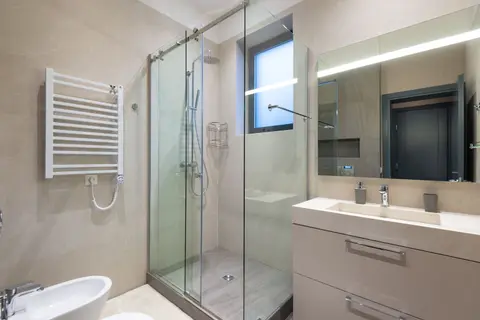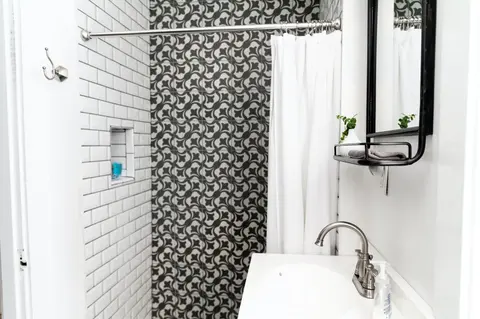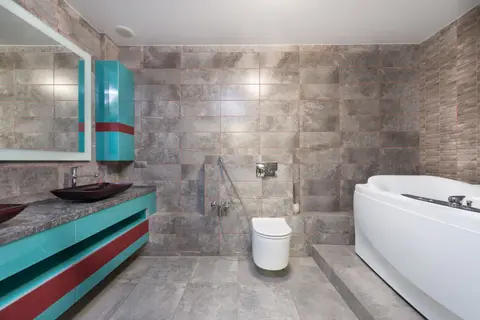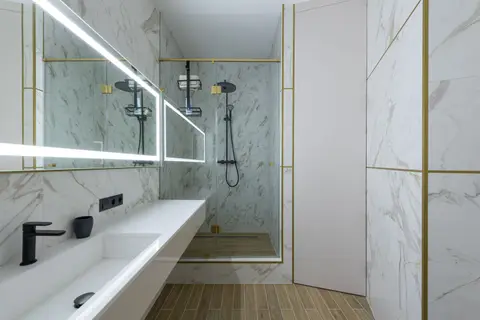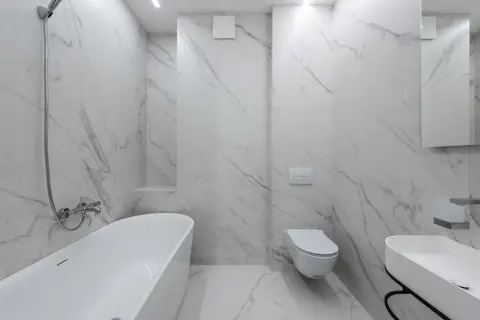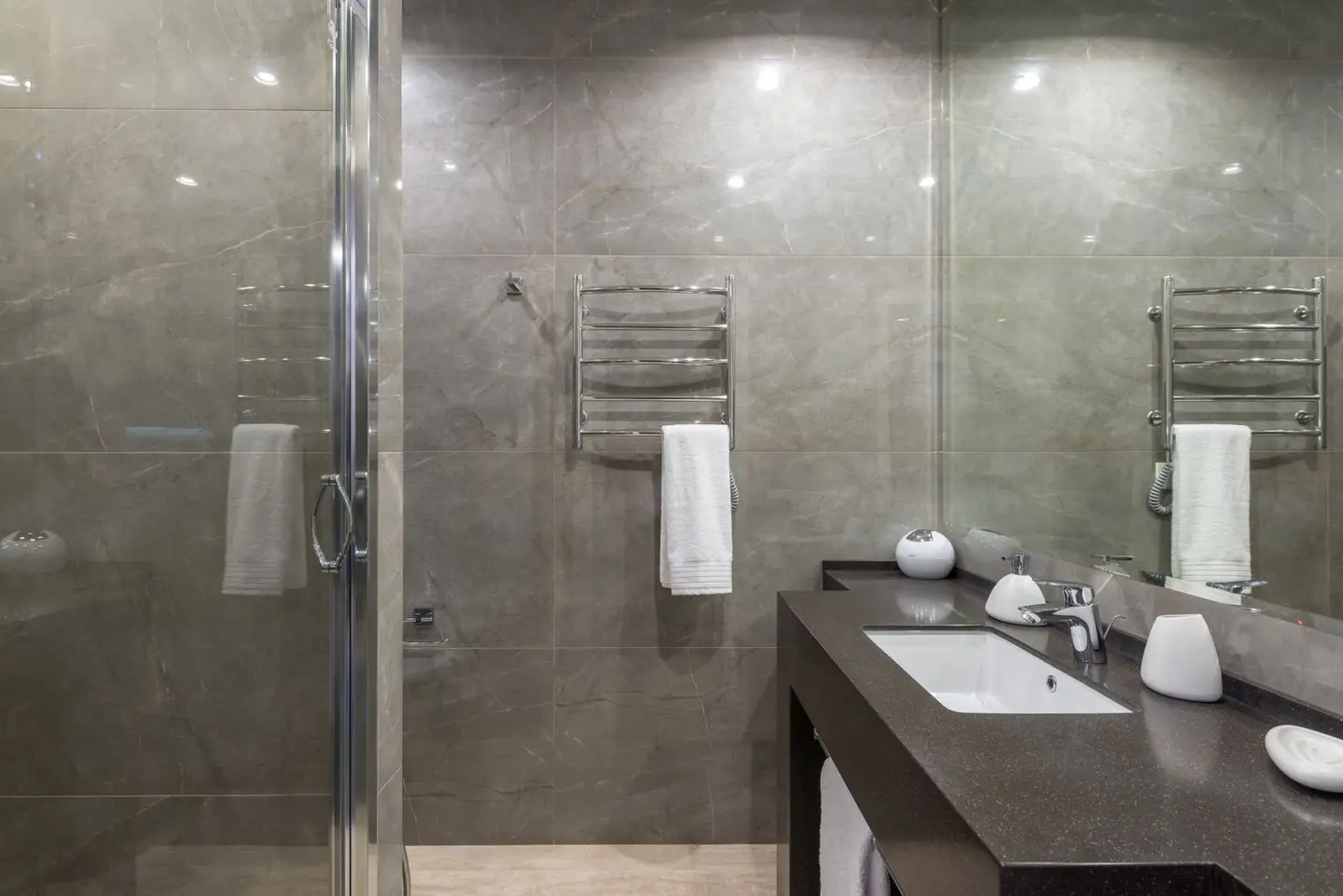
If you have arrived here searching for “shower pan replacement cost,” you are likely looking for what is known in the UK as a shower tray, the base unit that sits beneath the shower enclosure and channels water to the waste. The term “shower pan” is standard American English; in Britain and Ireland you will hear shower tray, shower base, or (for fully tiled level-access floors) wet room former. The advice below uses UK terminology throughout.
A like-for-like shower tray swap, removing the old tray and fitting a new one of the same footprint, typically costs £380–£1,100 all-in (supply and labour), depending mainly on the tray material. If you are changing size, converting to a wet room, or the existing drainage requires alteration, expect to pay more.
What Drives the Cost?
Several factors determine how much you will pay:
- Tray material, acrylic is cheapest; stone resin and ceramic add cost but last longer and feel more solid underfoot.
- Tray size, a 700 × 700 mm tray is cheaper than a 1,200 × 900 mm version both to buy and to fit (heavier, more access disruption).
- Whether drainage needs moving, if the new tray waste aligns with the existing soil stack or branch pipe, installation is straightforward. Moving drainage adds plumbing time and potential floor work.
- Tiling, a like-for-like swap that reuses existing wall tiles is relatively quick. Any tile removal, re-tanking, or retiling adds significantly to the bill.
- Access and condition, ground-floor installations over timber joists may require cutting a joist bay to reach the trap. Upper-floor bathrooms can mean access from below as well.
Shower Tray Supply Costs (2026 UK)
| Tray type | Typical size | Supply cost |
|---|---|---|
| Low-profile acrylic | 800 × 800 mm | £80–£200 |
| Stone resin (slate-effect or smooth) | 900 × 900 mm | £200–£500 |
| Ceramic / fireclay | 900 × 800 mm | £150–£400 |
| Wet room former (tile-over) | 1,200 × 900 mm | £300–£7001 |
Acrylic trays are the most widely fitted: lightweight, warm to the touch, and simple to replace. Stone resin trays are heavier and feel more premium, the solid, non-flex surface is less likely to creak or dip over time. A wet room former (sometimes called a tile backer tray) is a rigid foam board with a pre-formed fall; the installer tiles directly over it to create a seamless, level-access wet floor.
Labour Costs: Plumber Day Rates (2026 UK)
A plumber or bathroom fitter in the UK currently charges in the region of £270–£350 per day outside London and £300–£425 in London. The removal and fitting alone take one to three hours, but taking the enclosure off and refitting it, bedding the new tray and resealing mean most fitters price a tray swap as at least a day’s work, and sealant cure time means the shower is not usable until the following day.2
Expect labour for a straightforward swap to cost £300–£600, with the higher end applying to larger or heavier stone resin trays, older bathrooms where the existing tray is bedded in sand and cement, or cases where access is awkward.
Total Cost: Like-for-Like Replacement
For the most common scenario, removing an existing 800 × 800 mm or 900 × 900 mm tray and fitting a new one of the same size with no drainage movement:
| Scenario | Supply | Labour | Total |
|---|---|---|---|
| Budget acrylic, 800 × 800 mm | £80–£150 | £300–£400 | £380–£550 |
| Mid-range acrylic, 900 × 900 mm | £120–£200 | £300–£450 | £420–£650 |
| Stone resin, 900 × 900 mm | £200–£500 | £350–£600 | £550–£1,100 |
| Wet room former, 1,200 × 900 mm | £300–£700 | £400–£700 | £700–£1,400 |
Worked example: A homeowner in the Midlands replaces a cracked 900 × 900 mm acrylic tray with a like-for-like stone resin unit. The tray costs £280 supply. A local plumber charges £300 for a day’s labour (removal, new waste fitting, silicone seal, and test). Total: £580.
Full Wet Room Conversion Cost
If you are moving from an enclosed shower tray to a fully tanked, tiled wet room floor, the cost rises substantially. The floor must be waterproofed (tanked) to comply with good practice and to satisfy insurers; wall tanking behind the shower zone is standard best practice even where not explicitly required by Part H of the Building Regulations.
Converting the shower area to a wet room floor, with a tiled floor, drainage channel, and tanked walls but no new suite or full-room refit, typically costs £1,500–£4,000, depending on room size, drain type, whether walls need replastering before tiling, and tile specification.
Signs You Need to Replace Your Shower Tray
- Cracking or crazing, spider-web cracks on an acrylic tray indicate the base support has failed or the tray has been overloaded; cracks will worsen and eventually leak.
- Discolouration that will not clean, yellowing or staining that cannot be removed with standard cleaners suggests the gel coat has broken down; replacement is usually more practical than refinishing.
- Flexi-seal failure, if the silicone between the tray and wall tiles is lifting, cracking, or going black with mould repeatedly (having been reapplied more than once), it often indicates the tray is flexing on its frame. A rigid stone resin replacement or better bed support can solve this permanently.
- Leaking waste, a persistent drip through the ceiling below, or damp under the bathroom floor, often points to a failed trap or a cracked tray base that is directing water away from the waste outlet.
- Physical damage, chips and cracks from dropped objects may be cosmetic on stone resin but structurally significant on acrylic.
DIY vs Professional Installation
Swapping a like-for-like acrylic tray is technically within reach for a competent DIYer: lift out the old tray, place the new one on adjustable feet (or a mortar bed), connect the new waste to the existing trap, and seal around the perimeter. However:
- Drainage connections should be checked by a qualified plumber if there is any doubt about trap depth, pipe fall, or compliance with Part H of the Building Regulations. Approved Document H sets a shower trap at 40 mm diameter with a 50 mm depth of water seal, reducible to 38 mm only where the appliance discharges directly to a gully, and puts the flattest gradient for an unventilated branch discharge pipe at 18 mm fall per metre.3 Low-profile trays are where this bites: the shallower the tray, the less room there is under it for a compliant trap.
- Wet room formers require careful waterproofing to manufacturer’s specification, typically a tanking membrane bonded to the board and extending up the walls, before tiling. Skipping or rushing tanking is a common cause of concealed water damage.
- Heavy stone resin trays (some weigh 30–50 kg) require two people to handle safely and a fully prepared, level bed before positioning.
- If you are moving a waste outlet, that work falls under Part H of the Building Regulations and must be carried out to the required standard (and notified if it involves new drainage).
For most homeowners, the cost saving of DIY is modest relative to the cost of putting right a leak that has caused ceiling damage or structural dampness. A professional installation also gives you recourse if something goes wrong.
When to Retile vs Just Swap the Tray
If the wall tiles around the tray perimeter are in good condition, a skilled bathroom fitter can often remove the tray and replace it without disturbing the tiles, by cutting the silicone seal carefully and lifting the tray clear. This assumes the new tray is the same size and the tiles do not extend underneath the tray lip.
If the tiles are chipped, stained, or poorly adhered, or if you are changing the tray size, retiling is the better option. Budget for wall tiling at £25–£60 per m² for labour, plus tile supply costs.
Building Regulations: What You Need to Know
Replacing a shower tray like-for-like is typically not notifiable under Part H, provided no drainage layout is altered. However:
- Any alteration to the waste pipe routing, trap depth, or connection to a shared stack may require a Building Regulations application (Part H, Drainage and Waste Disposal). GOV.UK’s own list of notifiable work puts “install a bathroom that will involve plumbing” squarely in the approval column, so the moment a tray swap turns into a bathroom refit with new pipework, assume you are in the system.4
- Wet room conversions that involve new drainage channels connected to the soil stack should be discussed with your local authority building control or a registered building control approver, which is what the private route has been called since the 2024 building control reforms.5
- Waterproofing (tanking) is not a formal Building Regulations requirement for shower trays in its own right. The code to name in a specification is BS 5385-4, the part of the tiling series that covers tiling in special conditions including wet areas.6 It is also what most building warranties and any competent installer will expect to see.
- Where the work is in an upstairs bathroom above habitable rooms, good waterproofing practice is especially important: even minor seepage can cause significant damage to ceilings and joists below.
Choosing the Right Tray for Your Bathroom
A 900 × 900 mm stone resin tray is the most popular upgrade choice for homeowners replacing a worn acrylic unit, it offers durability, a solid feel, and a relatively straightforward installation. If you are converting to a wet room or want a linear drain and seamless tiled floor, a wet room former is the correct starting point.
For tight en suites, a 800 × 800 mm low-profile acrylic tray remains the most practical option: affordable, easy to fit, and widely available in standard sizes that align with existing enclosures.
Get Two Quotes
Because shower tray labour costs vary significantly by region and by whether the plumber is also a bathroom fitter (some plumbers will not tile; some bathroom fitters will not connect to soil stacks), get at least two quotes, and check whether each quote includes the waste fitting, silicone, and any access panels required to reach the trap.
The rules in this note are those that apply in England. Scotland, Wales and Northern Ireland have their own building standards and permitted development rights.
References (6)
Figures in this note were checked against the sources below on 30 September 2026. Superscript numbers in the text point to them. Every source the site cites, by topic.
- 1costsupplier figureWickes.RN-H28VAEA price, true at 2026-09. the retail price Wickes publishes for Linear 30mm Wetroom Shower Tray with Centre Drain Level Access 1200 X 900mm, which is the supply figure the cost book records for this item
- 2costsupplier figureBathroom Mountain.RN-Z7PZHZA price, true at 2026. A bathroom retailer's guide to what the labour alone costs on a bathroom fit, with a day rate for the trades involved, a regional breakdown, a labour-only whole-job figure by bathroom size, and how many days each size takes. A retailer explaining the cost of the work it does not sell, so it has no direct interest in the labour figure being high or low, but it is guidance rather than its own price list.
- 3technicalvery strongMinistry of Housing, Communities and Local Government.RN-SM6TRWThe statutory source for soakaway design and the discharge hierarchy every garden drainage note should state. Requirement H3(3) lists the order of priority for rainwater discharge: (a) an adequate soakaway or other adequate infiltration system, or where not reasonably practicable (b) a watercourse, or where not reasonably practicable (c) a sewer. Paragraph 3.25 bars infiltration devices within 5 metres of a building or road, in ground where the water table reaches the bottom of the device at any time of year, too close to other drainage fields or soakaways, or where contamination could pollute groundwater. Paragraph 3.26: soakaways serving less than 100 square metres are generally square or circular pits filled with rubble or lined with dry-jointed masonry or perforated ring units. Paragraph 3.27: design to a return period of once in ten years, and for small soakaways serving 25 square metres or less a design rainfall of 10mm in 5 minutes may be assumed as the worst case. Paragraph 3.28 requires percolation tests to derive the infiltration rate, and paragraph 3.30 sends larger soakaways to BS EN 752-4 or BRE Digest 365 Soakaway design. Paragraphs 2.10 to 2.12 cover pervious paving over a granular storage reservoir and warn against its use where sediment or oil spillage would block the pores. For foul drainage, paragraph 2.33 sets a minimum 75mm internal diameter, or 100mm for a WC, and Table 6 gives minimum gradients of 1 in 40 for 75mm and 100mm at peak flows under 1 litre per second.
- 4technicalvery strongGOV.UK, guidance.RN-81EIUNThe government's own list of alterations that need building regulations approval, and the page to cite when a reader asks whether a bathroom or kitchen refit is notifiable. Works listed as needing approval include installing a bathroom that will involve plumbing, changing electrics near a bath or shower, replacing a fuse box and connected electrics, replacing windows and doors, replacing roof coverings, installing or replacing a heating system, adding radiators to an existing heating system, and installing fixed air conditioning. Emergency repairs to a boiler or heating system do not need approval in advance, though specific rules then apply. Approval may be obtained from a local authority building control department, a private registered building control approver, or, for higher-risk residential buildings, the Building Safety Regulator. The page states the practical consequence bluntly: without approval you will not have the certificates of compliance you may need when you want to sell your home. Note that a like-for-like bathroom refit with no new plumbing, no drainage change and no work in the electrical zones is not on the list.
- 5technicalvery strongBuilding Safety Regulator / HSE (GOV.UK), a government page.RN-4MO9NSThe GOV.UK collection that gathers every register and rule for building control in England and Wales after the Building Safety Act 2022 reforms, last updated 23 July 2026. For individuals it holds the guidance on registering as a building inspector, the professional codes and standards they must meet, and the misconduct and disciplinary procedures. For organisations it holds registration as a building control approver, the assessment criteria, operational standards reporting, inspection procedures, professional conduct expectations, and the contraventions and criminal offences that apply. Crucially it hosts the searchable registers for registered building inspectors and registered building control approvers across England and Wales, which is how a homeowner verifies that the private firm signing off their extension is currently registered rather than trading on a lapsed approved-inspector reputation.
- 6technicalgoodThe Tile Association (TTA).RN-YL820LThe tiling trade's own list of the standards a specification should name, and the fastest way to check whether a quotation cites the right one. Design and installation: BS 5385-1 internal wall tiling in normal conditions, BS 5385-2 external wall tiling, BS 5385-3 internal and external ceramic and mosaic, natural stone and terrazzo flooring and internal agglomerated stone flooring, BS 5385-4 tiling in special conditions. Waterproofing and grout: BS EN 14891 liquid-applied water impermeable products for use beneath ceramic tiling bonded with adhesives, which is the wet room tanking standard, and BS EN 13888 grout for tiles. Slip resistance: BS 7932 determination of the unpolished and polished pendulum test value of surfacing units. Base preparation: BS 8000-9 cementitious levelling screeds and wearing screeds, BS 8000-8 plasterboard partitions and dry linings, BS 8000-16 sealing joints using sealants. Tile specification: BS EN 14411 ceramic tiles definitions and classification, and the BS EN ISO 10545 series parts 1 to 16 of test methods. Natural stone and terrazzo: BS EN 12057 modular tiles, BS EN 13748-1 and -2 terrazzo tiles for internal and external use, BS EN 14157 determination of abrasion resistance. Accessibility: BS 8300.
-
Linear 30mm Wetroom Shower Tray with Centre Drain Level Access 1200 X 900mm, Wickes, accessed 16 September 2026. Priced at 2026-09, so no calibration is needed. wickes.co.uk
-
Labour-Only Bathroom Fitting Costs: Pricing, Tasks, and Timeframes, Bathroom Mountain, accessed 30 September 2026. Priced at 2026, so no calibration is needed. bathroommountain.co.uk
-
Approved Document H, Drainage and waste disposal, 2015 edition, HM Government, accessed 10 September 2026. assets.publishing.service.gov.uk
-
Building regulations approval, GOV.UK, accessed 10 September 2026. gov.uk
-
Building control bodies and registered building inspectors, GOV.UK, accessed 10 September 2026. gov.uk
-
Relevant standards - The Tile Association, The Tile Association, accessed 10 September 2026. tiles.org.uk