Damp is one of the most misdiagnosed and commercially exploited problems in UK property. The term covers at least three distinct mechanisms, rising damp, penetrating damp, and condensation, each with different causes, different physical signatures, and different remedies. Getting the diagnosis right saves thousands of pounds in unnecessary treatment.
This guide focuses on the two external-moisture types: rising damp and penetrating damp.
Types of Damp: A Brief Overview
Before distinguishing rising from penetrating, it helps to understand the three broad categories:
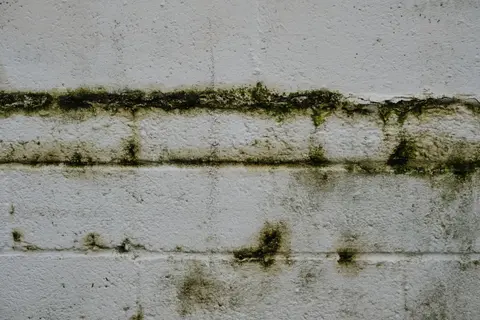
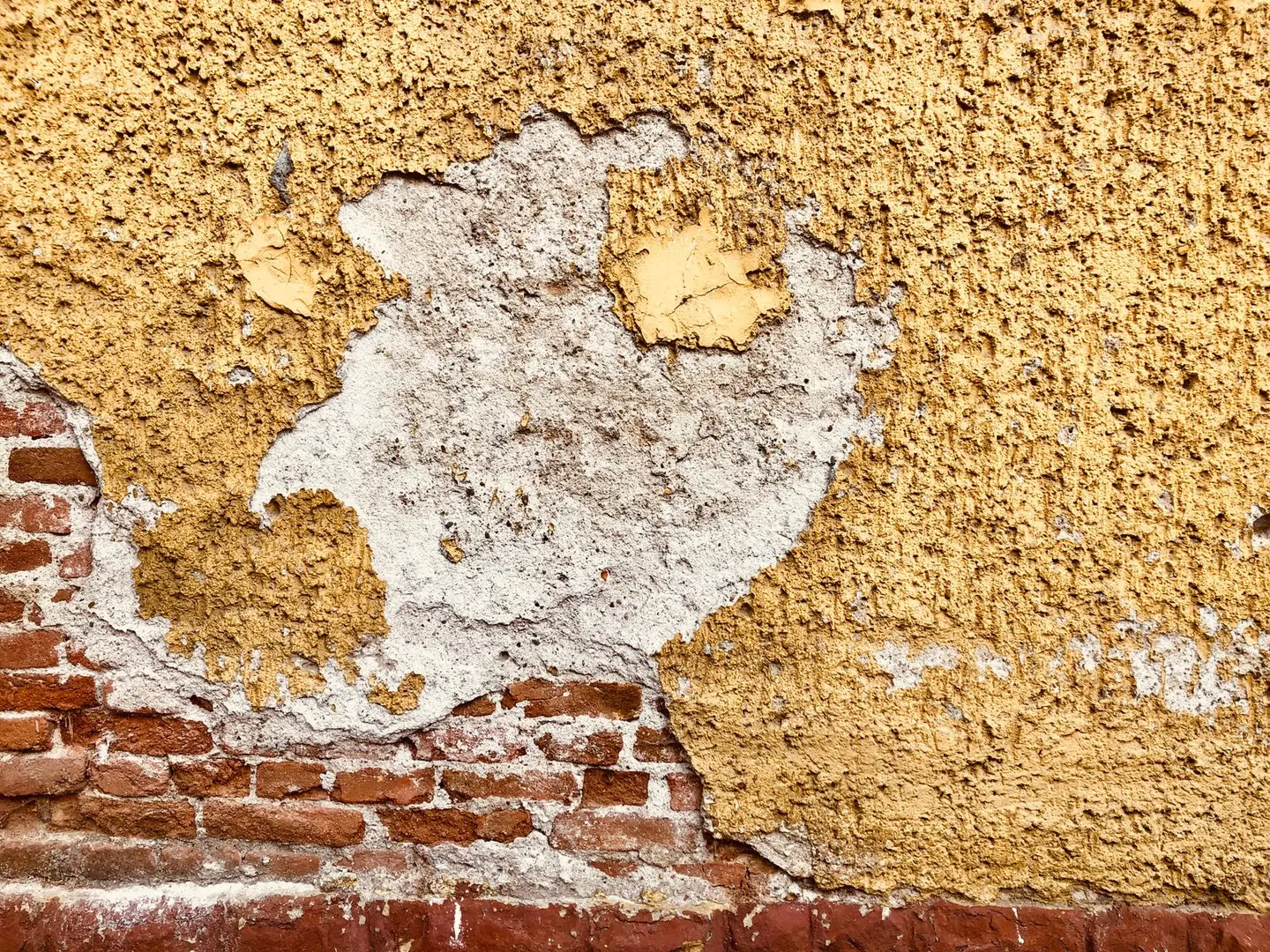
Rising damp is groundwater being drawn upward through a masonry wall by capillary action. It is confined to the lower part of walls (typically up to about 1 metre above the skirting) and leaves characteristic white salt deposits (efflorescence) and a tide mark at the highest point of moisture travel.1
Penetrating damp is water entering through the fabric of the building, through walls, roofs, around window or door frames, or at junctions between different materials. It can appear at any height and is directly related to weather events or defects in the building envelope.
Condensation is moisture from internal air depositing on cold surfaces. It typically appears in corners, on external walls, and around thermal bridges. It is the most common form of damp in UK properties but is frequently misattributed to rising or penetrating damp.2
How to Tell Rising Damp from Penetrating Damp
Distinguishing between the two is not always straightforward, but there are consistent physical indicators for each.
| Indicator | Rising damp | Penetrating damp |
|---|---|---|
| Height on wall | Typically up to about 1 m above the skirting | Any height; often follows rain |
| Salt deposits (efflorescence) | Yes, white crystalline deposits at tide mark | Occasional but not characteristic |
| Tide mark | Usually present, horizontal band | Less common; follows water path |
| Pattern after rain | No clear correlation | Worsens during or after rain |
| Internal plaster condition | Damaged, hollow, blistering low down | Damaged where water enters; may track downward |
| Floor condition | Often damp/damaged at base of wall | Usually dry unless water has tracked to floor |
| Timber at DPC level | May be affected (skirtings, floor joists) | Less commonly involved |
| Season | Present year-round; worse in wet periods | Strongly weather-dependent |
The tide mark test is useful: true rising damp leaves a horizontal band at the top of moisture travel, often with efflorescence at or just below the mark. Penetrating damp tends to form irregular patches or vertical runs associated with a specific defect (a cracked render, a blocked cavity, a failed flashing).
The meter test: A professional surveyor uses a protimeter or similar moisture meter. Crucially, the meter test alone cannot distinguish rising damp from penetrating damp or even from hygroscopic salts (which retain moisture and give false readings long after the original damp source is fixed). A credible survey uses the meter as one tool among several.3
Causes of Rising Damp
Rising damp occurs when:
- No damp proof course (DPC) exists. Many properties built before the late nineteenth century lack a DPC, and some have only an early slate course that has cracked.
- The DPC has been bridged. External render, raised soil levels, added paving, or a garden bed raised above the DPC level allows moisture to bypass it.
- The DPC has failed. This is much rarer than often claimed: RICS says failure of an original damp-proof course is extremely rare, so rule out bridging and other sources first.3
- The cavity has been bridged. Mortar droppings or rubble at the base of the cavity, or debris lodged on the cavity wall ties, can carry moisture across to the inner leaf.3 This is technically a form of lateral moisture transfer rather than true rising damp but presents similarly.
DPC heights in UK construction: Approved Document C, the official guidance on Building Regulations Part C, says a DPC in an external wall should be at least 150 mm above the adjoining ground.4 In older homes without a DPC, the threshold for rising damp correlates roughly with the internal floor level and the external ground level relative to it.
Causes of Penetrating Damp
Penetrating damp has many more entry points than rising damp. The most common causes in UK housing:
- Cracked or spalled external render, particularly on 1960s–1980s sand-cement render on older masonry
- Defective pointing, eroded or cracked mortar joints in brick or stone walls
- Failed window or door seals, silicone or mastic seals around frames degrade with age and need periodic renewal3
- Blocked or defective cavity trays, above lintels, at window heads, where cavities are bridged
- Roof defects, cracked tiles, failed flashing at chimney stacks, parapet walls, and abutments
- Blocked or overflowing gutters and downpipes, particularly common and often overlooked
- Flat roof defects, blistered felt, failed upstands, poor drainage falls
- Porous masonry, solid-wall Victorian and Edwardian brick that has been repointed with hard cement mortar, trapping moisture in the brickwork
Fixes for Rising Damp
Chemical DPC is the most widely used modern remedy.5 A water-repellent material, today usually a cream inserted by hand rather than a fluid injected under pressure, is placed in a line of holes drilled along a mortar course, typically about 120 mm apart, where it cures to form a water-repellent zone through the wall.5 It does not create a physical barrier; it works by making the masonry hydrophobic.
- Supply + labour for chemical injection DPC: typically £60–£90 per linear metre of wall
- A typical terraced house ground floor perimeter: 25–35 linear metres
- Total chemical DPC: about £1,500–£3,200 for the injection alone (25–35 m at £60–£90 per metre); re-plastering is extra
After treatment: the salt-contaminated plaster is removed and the wall replastered using a specially formulated salt-resistant plaster, not ordinary gypsum plaster; the wall itself can take many months to dry out fully.6 The replastering is essential, existing plaster is saturated with hygroscopic salts that will continue to attract moisture from the air even after the rising damp is treated.
Physical DPC installation: inserting a polyethylene or slate DPC by saw-cutting a slot through the mortar course. More disruptive and considerably more expensive than chemical injection, but creates a true physical barrier. Rarely used in occupied homes.
Addressing bridging: often the simplest and most effective intervention. Lowering external soil or paving levels to 150 mm below DPC costs very little (labour only, typically £200–£600) and removes the cause without any chemical treatment at all.
Fixes for Penetrating Damp
Penetrating damp fixes are specific to the defect causing the entry. A competent diagnosis identifies the entry point; the remedy then follows.
| Common cause | Typical fix | Cost range (2026) |
|---|---|---|
| Cracked render on external wall | Hack off and re-render (silicone render or lime render) | £30–£60/m² |
| Eroded pointing | Repointing with appropriate lime or hydraulic lime mortar | £30–£50/m² |
| Failed window/door seals | Re-seal with neutral-cure silicone | £10–£30 per opening |
| Blocked cavity tray | Clear debris; install/replace tray, requires scaffold | £400–£1,200 per location |
| Roof tile defect | Replace tiles, rebed ridge, re-flash chimney | £300–£1,500 depending on scope |
| Failed flat roof membrane | Flat roof replacement or overlay | £50–£120/m²7 |
| Blocked gutter | Clear and repair | £80–£200 |
| Overflowing downpipe / cracked drainpipe | Replace section | £100–£300 |
Penetrating damp is almost always cheaper to fix than rising damp because it involves repairing a specific defect rather than treating a systemic condition. The expensive interventions, replacing render on a whole elevation, rebuilding a parapet, are the exception, not the rule.
Costs of Damp Treatment (UK 2026)
| Scope | Cost range |
|---|---|
| Chemical injection DPC, 10 linear metres | £600–£900 |
| Chemical injection DPC, full perimeter of terraced house | £1,500–£3,200 |
| Replastering damp-affected room (1 room, salt-resistant plaster) | £800–£2,000 |
| External repointing (front elevation, 2-bed semi) | £1,200–£2,500 |
| Re-render front elevation with silicone render | £3,500–£8,000 |
| Roof flash repair (one chimney stack) | £400–£900 |
| Full professional damp survey (RICS surveyor) | £250–£500 |
These are 2026 UK figures; London and South East rates typically run noticeably higher.
The Problem with Specialist Damp Surveys
Damp-proofing companies that offer free surveys have a financial incentive to diagnose conditions that require their services.3 Rising damp in particular is often misdiagnosed, when the actual cause is condensation or penetrating damp from a straightforward defect.2
What to do instead:
- Get an independent survey from an RICS building surveyor (around £250–£500), asking for an inspection that complies with the 2022 Joint Position Statement on damp, before engaging any treatment company.3
- If you must use a specialist, get three quotes. Require a written diagnosis that explains exactly what evidence they found, not just a treatment recommendation.
- Start with the simple checks: blocked gutters, raised soil levels, failed pointing or render, fix these first and reassess in one winter season.
- Use a hygrometer to assess indoor humidity. If relative humidity is consistently above 65%, condensation is likely contributing regardless of what else is happening.
Building Regulations and Damp
Damp treatment itself does not typically require Building Regulations approval, but related work often does:
- Replacing windows in England is building work that must meet the Building Regulations; an installer registered with a competent person scheme such as FENSA or CERTASS can self-certify it, otherwise building control must be involved.8
- Structural work (underpinning, rebuilding walls, installing lintels) is building work that must meet Part A (Structure), and underpinning is expressly listed as building work in the Regulations.9
- Roofing work does not normally need a building control application if less than 50 per cent of the roof, and less than 25 per cent of the whole building envelope, is affected; beyond that, approval is needed.10
If you are selling a property, keep records of any damp treatment guarantees and associated building work. Specialist damp treatment guarantees (typically 10–30 years) are only as good as the company behind them unless they are insurance-backed. A structural repair or well-specified re-render is more durable than a chemical treatment warranty.
References (10)
Figures in this note were checked against the sources below on 30 September 2026. Superscript numbers in the text point to them. Every source the site cites, by topic.
- 1technicalgoodProperty Care Association, guidance.RN-I1FTBRProperty Care Association homeowner guidance on the signs of rising damp. It says the staining typically rises to about 1 metre above the skirting, with salt-stained plaster.
- 2technicalvery strongDepartment for Levelling Up, Housing and Communities and UK Health Security Agency (gov.uk), guidance.RN-D2PRMRThe government's own classification of damp types and the single best citation for the point that damp is a building fault, not a housekeeping failure. Damp is defined as the build up of moisture in a property, and four types are named: condensation, where moisture generated inside the home cools and condenses onto colder parts; penetrating damp, where water gets in from outside due to defects; rising damp, where moisture from the ground rises up through parts of the building; and traumatic damp, caused by leaking waste and heating pipes or overflowing baths and sinks. The health effects predominantly affect the airways and lungs and include cough, wheeze, shortness of breath, airway infections including aspergillosis and worsening of asthma, and can cause serious illness and in the most severe cases death. Children, older people, people with pre-existing health conditions or weakened immune systems, pregnant women and people with mental health conditions are most at risk. The guidance states plainly that it is totally unreasonable to blame damp and mould in the home on lifestyle choices. It was written in response to the coroner's report on the death of two-year-old Awaab Ishak in December 2020 from a severe respiratory infection caused by prolonged exposure to damp and mould in his home.
- 3technicalstrongRICS, guidance.RN-TEVT92RICS consumer guide to damp and mould. It warns against diagnosis by damp meter alone and recommends an independent inspection that complies with the 2022 Joint Position Statement.
- 4technicalvery strongMinistry of Housing, Communities and Local Government.RN-NPO8FJThe statutory figures behind a damp diagnosis, and the numbers to quote when a note explains why ground levels or a bridged damp proof course cause rising damp. Paragraph 5.2 requires that in an external wall the damp-proof course should be at least 150mm above the level of the adjoining ground (Diagram 8) unless part of the building protects the wall, and that in an external cavity wall the cavity should be taken down at least 225mm below the level of the lowest damp-proof course, or a damp-proof tray provided (Diagram 9a). For suspended timber ground floors it requires a ventilated air space of at least 75mm from the ground covering to the underside of any wall-plates and at least 150mm to the underside of the suspended timber floor or insulation, with ventilation openings on two opposing external walls of not less than 1,500mm2 per metre run of external wall or 500mm2 per square metre of floor area, whichever is greater; for suspended concrete floors the clear ventilated space is at least 150mm with the same opening sizes. Section 2.39 onwards covers radon, referring to BRE Report BR 211 for protective measures. The 2013 edition was published on 3 September 2013 with changes in effect from 1 October 2013.
- 5technicalgoodProperty Care Association, guidance.RN-0Y9W9PThe Property Care Association's guidance on treating rising damp. It lists bridging by raised ground levels, render or cavity debris as causes, and explains capillary rise and salt accumulation.
- 6technicalgoodProperty Care Association, guidance.RN-KJ25R8Property Care Association homeowner guidance on treating rising damp. It says salt-contaminated plaster is normally removed and reinstated with specially formulated salt-resistant plaster.
- 7costsupplier figureWickes.RN-BVWJKYA price, true at 2026-09. the retail price Wickes publishes for Restec 2020 Flexitec GRP Roofing Kit 10m2, which is the supply figure the cost book records for this item
- 8technicalvery strongPlanning Portal, guidance.RN-33F8DPThe Planning Portal on building regulations for doors and windows: since 1 April 2002 the regulations have applied to all replacement glazing, covering thermal performance, safety glazing, means of escape and ventilation. That 2002 date is the one that matters at sale, because it is when a FENSA certificate or a building regulations notice started being expected for replacement windows.
- 9technicalvery strongThe National Archives, legislation.RN-ZCMRHVRegulation 3 of the Building Regulations 2010, the meaning of building work. Lists what counts: erecting or extending a building, providing or extending a controlled service or fitting, material alteration, work required by a material change of use, and inserting insulation into a cavity wall. If a job is not on this list it is not building work, so this is the first place to check whether approval is needed at all.
- 10technicalvery strongPlanning Portal, guidance.RN-HGKY9FThe Planning Portal on building regulations for work to an existing pitched or flat roof: when repair and re-cover are notifiable, structural alteration, and the thermal upgrade trigger. The general page that sits behind the more specific re-roofing and thermal element pages.
-
What rising damp looks like, Property Care Association, accessed 30 September 2026. property-care.org
-
Understanding and addressing the health risks of damp and mould in the home, UK Health Security Agency and Ministry of Housing, Communities and Local Government, accessed 30 September 2026. gov.uk
-
Damp and mould, RICS, accessed 30 September 2026. rics.org
-
Approved Document C, Site preparation and resistance to contaminants and moisture, 2004 edition incorporating 2010 and 2013 amendments, Ministry of Housing, Communities and Local Government, accessed 14 September 2026. assets.publishing.service.gov.uk
-
Rising damp treatment: guidance for professionals, Property Care Association, accessed 30 September 2026. property-care.org
-
Rising damp treatment, Property Care Association, accessed 30 September 2026. property-care.org
-
Restec 2020 Flexitec GRP Roofing Kit 10m2, Wickes, accessed 30 September 2026. Priced at 2026-09, so no calibration is needed. wickes.co.uk
-
Doors and windows: building regulations, Planning Portal, accessed 30 September 2026. planningportal.co.uk
-
The Building Regulations 2010, regulation 3: Meaning of building work, The National Archives, accessed 30 September 2026. legislation.gov.uk
-
Building Regulations: Work to an existing roof, Planning Portal, accessed 30 September 2026. planningportal.co.uk