Replastering is one of those jobs that unlocks everything else, you cannot paint, tile, or wallpaper properly onto a crumbling or patchy wall. The cost varies considerably depending on whether you need a simple skim coat to freshen the surface or a complete strip-and-replaster back to brick.
For a typical single bedroom (roughly 30–35 m² of wall and ceiling after windows and doors), expect to pay roughly £800–£1,620 for a full replaster or £230–£550 for a skim coat, using the rates below. Ceilings add cost because the work is slower and more demanding. The sections below break down the process, pricing and what you should realistically allow for drying before decorating.
Skim Coat vs Full Replaster
Understanding the difference between these two is the most important decision in any plastering job.
Skim coat (also called finish plaster or setting coat) applies a thin layer, typically 2–3 mm, of finishing plaster over an existing sound substrate. This is the right approach when the underlying browning coat or plasterboard is structurally intact but the surface is tired, cracked at hairline level, or textured in a way you want to smooth. It is faster and cheaper than starting from scratch.
Full replaster (or base coat + finish) involves hacking off the existing plaster back to the masonry or lath, applying a 10–15 mm backing coat (sand-and-cement render or a gypsum backing plaster such as browning or Hardwall), letting it partially set, then applying the 2–3 mm finish skim on top. This is necessary when plaster is hollow (tap it, a dull thud rather than a ring indicates debonding), when there is active damp behind the plaster, or when the existing substrate is lath and horsehair from a Victorian property that has reached the end of its life.
Plasterboard and skim is a third route common in modern renovations: dot-and-dab or batten-fix 12.5 mm plasterboard sheets to the wall, tape the joints, then skim the entire surface. This is faster than base-coat plastering, more thermally stable, and often the method of choice where walls are uneven or damp-proofing has been applied behind a membrane.
Plastering Cost per m²
The table below shows typical 2026 UK rates from a sole-trader or small firm plasterer. London and South East rates run 20–30% above these figures; Yorkshire, the Midlands and Wales tend to sit at the lower end.
| Work type | Low (£/m²) | Typical (£/m²) | High (£/m²) |
|---|---|---|---|
| Skim coat (walls) | £7 | £10 | £15 |
| Skim coat (ceiling) | £9 | £13 | £18 |
| Full replaster, walls (base + skim) | £25 | £33 | £45 |
| Full replaster, ceiling | £32 | £40 | £50 |
| Plasterboard, tape and skim (per m²) | £22 | £30 | £40 |
| Patching (per patch, up to 0.5 m²) | £60 | £90 | £150 |
These rates are supply-and-fix, including materials. Labour usually makes up most of the total; the plasterer’s materials (bonding agent, base coat, finish plaster, beads) make up the rest.
Room-by-room cost guide
The figures below assume a standard ceiling height of 2.4 m and UK average wall areas after deducting windows and doors.
| Room | Approximate wall + ceiling area | Skim cost (estimate) | Full replaster (estimate) |
|---|---|---|---|
| Single bedroom | 30–35 m² | £230–£550 | £800–£1,620 |
| Double bedroom | 40–48 m² | £300–£760 | £1,070–£2,220 |
| Living room | 50–65 m² | £380–£1,020 | £1,340–£3,010 |
| Kitchen (walls only to dado) | 15–20 m² | £110–£300 | £380–£900 |
| Bathroom | 20–28 m² | £150–£440 | £540–£1,300 |
The estimates multiply each area by the low and high rates in the table above, taking about a quarter of each room’s area as ceiling (the kitchen row is walls only).
Stairwells and hallways with high ceilings or restricted access attract a premium, add 15–25% for difficult access or work above 3 m.
The Replastering Process
Knowing what a competent plasterer should do helps you manage the job and spot shortcuts.
Preparation
Sound preparation adds a day but saves problems later. The plasterer should:
- Hack off loose, hollow, or failing plaster and remove to a firm edge (not just patch over)
- Remove all nails, old fixings, and wire
- Apply a bonding primer suited to the background (Thistle Bond-it or the plaster maker’s equivalent), following the maker’s instructions on dilution and drying before the base coat; skipping this step on porous or painted surfaces is a common cause of plaster delamination
- Set galvanised corner beads and angle beads at all external corners and around reveals; these should be plumb and level, not eyeballed
Base coat (browning or bonding coat)
Applied at 10–12 mm thickness in one or two passes, scratched with a devilling float to create a key, then left for the surface to firm up. On dense concrete or engineering brick, a bonding coat (Thistle Bonding Coat or equivalent) is used rather than a standard backing plaster such as browning because it adheres to low-suction surfaces.
Finish coat (skim)
Thistle MultiFinish or Finishing Plaster is the industry standard. It goes on at 2–3 mm in two thin passes, the first to fill the scratch marks, the second trowelled to a smooth finish with gradual pressure. Polishing with a damp brush as the plaster firms up produces the mirror-flat finish that takes emulsion cleanly.
Quality checks
A competent skim should be:
- Flat under a 2 m straight edge: new-home warranty standards allow only a few millimetres of deviation, for example ±5 mm in LABC Warranty’s technical manual1
- Free of trowel marks, pitting, or cat scratches
- Consistent thickness at the edges and around beads
Drying Times Before Decorating
This is where homeowners frequently come unstuck. Fresh plaster is dark and patchy while wet and dries to an even, lighter colour (a pale pink with most gypsum finishing plasters). Painting over wet plaster traps moisture and causes paint to peel.
| Plaster type | Minimum drying time | Conditions |
|---|---|---|
| Skim coat (2–3 mm) | 3–5 days | 18–20°C, low humidity, ventilated |
| Base coat + skim (12–15 mm total) | 5–10 days | As above |
| Plasterboard, taped and skimmed | 4–7 days | As above |
| Large volumes (living room full replaster) | Up to 4 weeks | Fully cured for solvent-based products |
Accelerating drying with a fan heater set directly on fresh plaster causes surface cracking, the outside dries too fast while the inside is still wet. The correct approach is good background heat (16–20°C) and ventilation, with a fan heater set to the far side of the room. A dehumidifier can also help speed drying safely.
A mist coat, emulsion diluted 70:30 with water, applied once the plaster has dried to an even, light colour creates a porous first layer that binds without sealing. Apply two full coats of finish emulsion after that.
What to Watch Out For
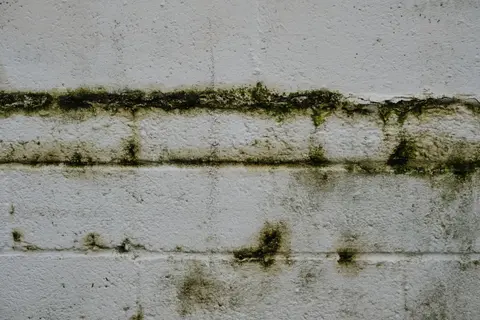
Damp behind the plaster: if the existing plaster failed because of rising damp or penetrating damp, replastering over the same surface will fail again within 2–3 years. Address the source first, DPC injection, tanking, or cavity drainage, before replastering.
Cold external walls: plaster on uninsulated solid-wall external elevations can suffer thermal bridging condensation. Consider insulated plasterboard (dot-and-dab with 25–50 mm PIR backing) on cold external walls to push the dew point outward. Hacking the plaster off more than half of an external wall back to the masonry counts as renovating a thermal element under Approved Document L, and the whole wall should then be improved to at least 0.30 W/m²K where that is technically, functionally and economically feasible.2 A lesser standard may be appropriate if meeting it would reduce the room’s floor area by more than 5%.2
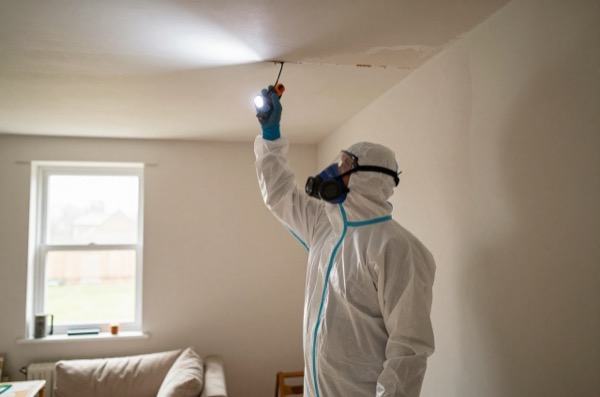
Asbestos-containing textured coatings: Artex and other textured finishes applied before 2000 may contain asbestos.3 Do not sand or scrape without testing, an asbestos survey costs £150–£300 and is money well spent. Plastering over intact artex (rather than removing it) is a safe alternative.
Suction variation: old brick walls with patches of cement render absorb water at different rates, causing patchy drying. Ask the plasterer how they intend to control suction, bonding agents and PVA are the standard solution.
Getting Quotes
Get at least three quotes and ask each plasterer to specify whether they are quoting skim or full replaster, how they intend to prepare the substrate, and what materials they plan to use. A vague quote covering only “plastering a bedroom” without these specifics makes it impossible to compare prices or hold the contractor to quality standards.
Reputable plasterers are often booked several weeks in advance. If someone is available next week for a keen price, ask why.
Day rates for plasterers run £200–£300 per person per day in the Midlands and North, and £280–£400 in London and the South East. A competent plasterer can skim an average bedroom in half a day and base-coat-and-skim the same room in a full day to a day and a half.
References (3)
Figures in this note were checked against the sources below on 30 September 2026. Superscript numbers in the text point to them. Every source the site cites, by topic.
- 1technicalvery strongLABC Warranty, guidance.RN-611OEWNew-home warranty technical manual section on tolerances, giving the flatness limit for plastered and dry-lined walls and ceilings under a 2 m straight edge.
- 2technicalvery strongMinistry of Housing, Communities and Local Government.RN-L0FCJXThe in-force U-value tables a DIY insulation or door note must quote, with the exact numbers. Table 4.2, limiting U-values for new fabric elements in existing dwellings, sets roof 0.15, wall 0.18, floor 0.18, swimming pool basin 0.25, window 1.4 or Window Energy Rating Band B minimum, rooflight 2.2, doors with more than 60 per cent of the internal face glazed 1.4 or Doorset Energy Rating Band C minimum, and other doors 1.4 or Doorset Energy Rating Band B minimum. Table 4.3, for existing elements, gives a roof threshold of 0.35 and an improved value of 0.16, which is the figure a loft insulation note needs: paragraph 4.12 says a retained element whose U-value is higher than the column (a) threshold, for example through a loft or garage conversion, should be upgraded to the column (b) value. Paragraph 4.13 allows a lesser upgrade only where the improved value is not technically or functionally feasible or would not achieve a simple payback of 15 years or less. Paragraph 4.8 requires a replacement element to be no worse than the one it replaces as well as meeting Table 4.2. Paragraph 4.10 gives the heritage exception: where character must be maintained, a centre pane U-value of no more than 1.2 or low-emissivity secondary glazing. Note 9 records that the timber window concession of 1.6 or Band C ended on 14 June 2023. The 2021 edition came into force on 15 June 2022; a 2026 edition exists at https://assets.publishing.service.gov.uk/media/69c122a6cfa346b9d4704a55/ADL1_2026.pdf.
- 3technicalvery strongHealth and Safety Executive, guidance.RN-AE0RHQThe sheet every other asbestos essentials task sheet tells you to read first, and the right citation for a DIY note that touches pre-2000 fabric. It states that large amounts of asbestos were used in new and refurbished buildings before 2000, that blue (crocidolite) and brown (amosite) asbestos were banned by law in 1985 and manufacture and supply of all asbestos was banned by the end of 1999, and that existing asbestos articles may stay in use until the end of their service life. It names the diseases as mesothelioma, lung cancer and asbestosis, with a latency of 15 to 60 years, incurable and often fatal. It divides the work: higher-risk work with sprayed coatings, loose asbestos, lagging, insulation and asbestos insulating board, apart from some very limited-duration AIB work, requires an HSE-licensed contractor, while the task sheets cover non-licensed work only if done exactly as described. The trades listed as most likely to disturb asbestos include electricians, joiners, plumbers, gas fitters, roofers, plasterers, painters and decorators, which is precisely the DIY work a how-to note describes.
-
Technical Manual Version 10, Section 1: Tolerances, LABC Warranty, accessed 30 September 2026. labcwarranty.co.uk
-
Approved Document L, Conservation of fuel and power, Volume 1: Dwellings, 2021 edition incorporating 2023 amendments, HM Government, accessed 29 September 2026. assets.publishing.service.gov.uk
-
a0 Introduction to asbestos essentials: non-licensed tasks, Health and Safety Executive, accessed 30 September 2026. hse.gov.uk