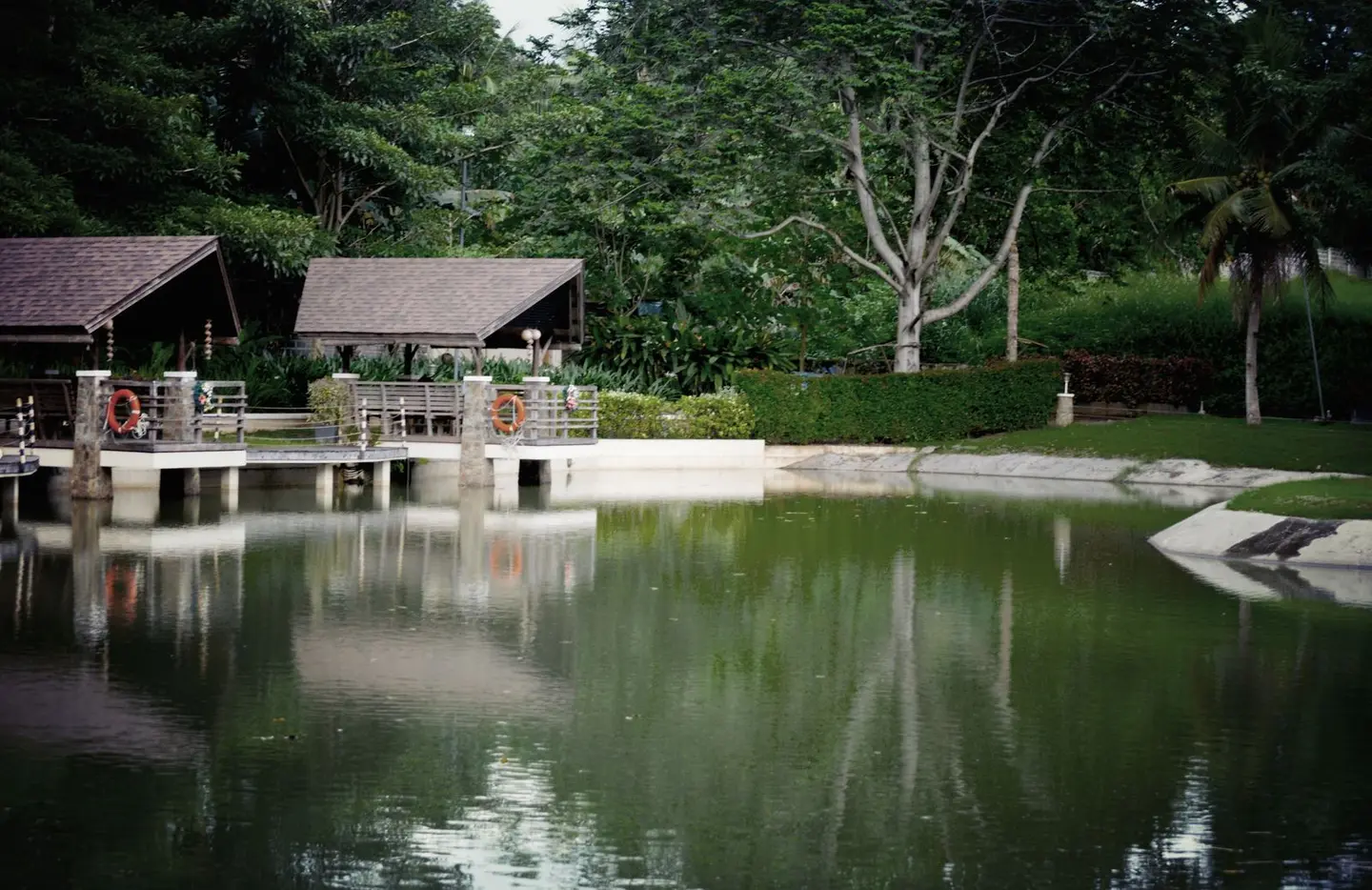
Pond fibreglassing, applying a GRP (glass reinforced plastic, laid up with polyester resin) coating directly to an existing or newly dug pond, costs between £800 and £5,500 in the UK, depending on size and complexity. It is increasingly preferred over traditional butyl rubber liners because the cured surface is rigid, seamless, and commonly expected to last 30 years or more with minimal maintenance.
For a typical garden pond with 10–15m² of surface to line (roughly 3.5m x 2.5m and 500mm deep), most homeowners pay between £1,400 and £2,500 for a professionally applied GRP lining including preparation, materials, and finishing. That figure sits above the cost of a butyl liner fitted by a landscaper, but the lifespan and repairability of GRP mean the long-term cost of ownership is typically lower.
Cost by Pond Size
The table below covers typical 2026 supply-and-fit prices for a new GRP lining applied to a pond of standard shape (roughly rectangular or oval with gentle curves). Irregular shapes, steep walls, or integrated waterfalls add to the labour element.
| Pond Size | Surface Area | Supply + Fit (GRP) | DIY Materials Only |
|---|---|---|---|
| Small | Up to 5m² | £800–£1,400 | £90–£300 |
| Medium | 5–15m² | £1,400–£3,000 | £290–£540 (8m² to 15m² kits) |
| Large | 15–30m² | £3,000–£5,500 | £500–£1,070 |
| Extra large | 30m²+ | £5,500+ (POA) | £1,070+ |
Prices are for the GRP lining work itself and assume the pond shell is already in reasonable condition. Excavation, brickwork, concrete base, or removal of an existing butyl liner will add to the overall project cost.
The DIY column follows published kit prices. CFS Fibreglass lists its 8m² black pond pack at £289.18 and its 15m² black pack at £503.96.1 East Coast Fibreglass Supplies’ pond packs start from £90.20 for the smallest size.2
What Drives the Price?
Surface area is the primary cost driver, since GRP lining is priced on a per-square-metre basis for both materials and labour. A larger pond also takes proportionally longer to prepare and apply, so labour costs scale steeply.
Pond condition and preparation can significantly affect the bill. Concrete ponds with cracks need filling and priming before fibreglass can be applied. An old butyl liner that is being replaced must be removed and the substrate cleaned, tradespeople typically charge £50–£150 for liner removal depending on pond size.
Shape complexity adds cost. Vertical or near-vertical walls, sharp internal corners, integrated streams, and rockwork features all require more fibreglass layup time. Flat-bottomed ponds with gradual wall slopes are the most straightforward and cheapest to line.
Number of coats and specification. A standard GRP lining system involves chopped strand mat and resin applied in two or more layers, followed by a gelcoat topcoat. Some installers offer a heavier-duty marine-grade specification for koi ponds, adding 15–25% to materials costs.
Location. London and the South East typically see a 10–20% premium. Rural locations with long travel distances may carry a call-out charge.
Tradesman Day Rates
GRP pond lining is specialist work typically carried out by fibreglass contractors or specialist pond companies rather than general landscapers. Day rates in 2026 run at approximately £200–£300 per operative. Most small-to-medium ponds are completed in one to two days once preparation is done; larger projects may require a two-person team over two to three days.
Worked Example: 3.5m x 2.5m Garden Pond
A homeowner in the East Midlands has an existing concrete garden pond measuring 3.5m x 2.5m with 500mm-deep walls (lined surface area: about 15m², an 8.75m² base plus 6m² of walls). The concrete has hairline cracks and the previous butyl liner has perished.
| Item | Cost |
|---|---|
| Butyl liner removal and disposal | £80 |
| Crack filling and primer coat | £120 |
| GRP lining materials (15m²) | £420 |
| Labour: 2 days (1 operative) | £500 |
| Gelcoat topcoat | £180 |
| Total | £1,300 |
This comes in just below the medium-pond range in the table because the shape is simple, the existing concrete substrate is sound enough to reline, and the pond is within easy reach of the contractor.
GRP vs Butyl Liner: Which Is Better Value?
Both materials are widely used in the UK, but they suit different situations.
| Feature | GRP (Fibreglass) | Butyl Rubber Liner |
|---|---|---|
| Typical lifespan | 30–50 years | 15–25 years |
| Installation | Specialist application required | Can be DIY-fitted |
| Repairability | Localised patch repairs possible | Difficult to patch reliably |
| Rigidity | Rigid, holds shape | Flexible, can shift or fold |
| Fish safety | Inert once fully cured | Generally fish-safe |
| Cost (supply + fit, 10m²) | £1,400–£2,000 | £500–£1,000 |
For formal ponds, koi ponds, or any pond where long-term watertightness is critical, GRP is usually the better investment despite the higher upfront cost. For informal wildlife ponds with irregular natural shapes, butyl remains a practical and cost-effective choice.
DIY Pond Fibreglassing
GRP pond lining is achievable as a DIY project for confident home improvers. Kits containing resin, hardener, chopped strand mat, and gelcoat are available from fibreglass suppliers. For a 10m² pond you will usually need a 15m² kit, which costs about £500–£540.1
Key considerations for DIY application:
- Temperature matters. Polyester resin will not cure properly below about 10°C or in high humidity, and above about 25°C the working time becomes very short, so aim for a dry day at around 18°C.3
- Ventilation is essential. Styrene vapour from polyester resin is hazardous: the workplace exposure limit is 100 ppm averaged over eight hours and 250 ppm over any 15 minutes.4 Work outdoors or with full respiratory protection.
- Surface preparation is critical. Any loose material, oil, algae, or moisture will prevent the resin from bonding. Thoroughly clean and dry the substrate before starting.
- Allow full cure time. Leave the lining at least two weeks before filling it with water.5 In cooler weather of 15–18°C, suppliers put full cure at around three weeks.3 Then flush it with hot water, drain it, and fill and drain it once more before filling it for use, since uncured resin can harm fish.3
Planning and Building Regulations
There are no specific Building Regulations in England and Wales that apply to garden ponds themselves. In England a pond is a “swimming or other pool” under Class E of the householder permitted development rights, so it normally needs no planning application, provided no part of it sits forward of the principal elevation of the original house and everything in the garden together covers no more than half the land around that house. There is no depth at which a domestic pond starts to need permission. What does remove the right is the curtilage of a listed building, where any pool needs planning permission, and designated land such as a conservation area, where a pond between a side elevation and the boundary needs permission.6
Two rules bite on larger schemes. A pond over 10,000 litres designed to be replenished automatically with mains water must be notified to your water company, and its consent obtained, before work begins.7 On safety, RoSPA advises covering or fencing off ponds and supervising children near water, since young children can drown in very small amounts of it.8
Listed building consent is unlikely to be relevant to a garden pond unless it forms a historically significant feature of a listed curtilage, if in doubt, contact your local conservation officer.
Get Multiple Quotes
GRP pond lining is a niche trade and pricing varies widely between contractors. Always obtain at least two or three quotes and ask to see examples of previous work or references from nearby pond installations.
References (8)
Figures in this note were checked against the sources below on 30 September 2026. Superscript numbers in the text point to them. Every source the site cites, by topic.
- 1costsupplier figureCFS Fibreglass.RN-0CYIUQA price, true at 2026-09. CFS Fibreglass's price list of complete GRP pond lining packs (primer, mat, resin, topcoat, hardener) in 8, 15, 24 and 50 m2 sizes. It sets the DIY materials column.
- 2costsupplier figureEast Coast Fibreglass Supplies.RN-CGERU8A price, true at 2026-09. A fibreglass supplier's pond kit page listing GRP pond packs from £90.20 and describing the GRP system as fish and plant safe once cured. It sets the low end of the small-pond DIY figure.
- 3technicalsupplier figureCFS Fibreglass, guidance.RN-37MVZSA GRP supplier's step-by-step guide to lining a pond. It gives working temperatures (not below 10°C, working time too short above 25°C, ideally 18°C), cure times and flushing before use.
- 4technicalvery strongHealth and Safety Executive, guidance.RN-16PJD6The list of workplace exposure limits for use with COSHH 2002 (as amended), fourth edition 2020, web version of the printed edition published by TSO. Table 1 gives each substance a long-term limit (8-hour time-weighted average) and a short-term limit (15-minute reference period) in both ppm and mg/m3. Figures useful to renovation notes include styrene (CAS 100-42-5) at 100 ppm / 430 mg/m3 long-term and 250 ppm / 1080 mg/m3 short-term, which is the number behind any polyester resin or GRP ventilation warning; respirable crystalline silica at 0.1 mg/m3, marked Carc where generated by a work process; softwood dust 5 mg/m3; sodium hydroxide 2 mg/m3 short-term. The synonym index at the back maps trade names such as phenylethylene, styrol and vinylbenzene back to styrene.
- 5technicalsupplier figureEast Coast Fibreglass Supplies, guidance.RN-KU48A8A fibreglass supplier's pond construction guide. It advises at least two weeks' cure before filling because uncured polyester laminate releases styrene that can harm fish.
- 6technicalvery strongThe National Archives (legislation.gov.uk), legislation.RN-J6L7TIThe primary legal text for garden rooms, sheds, summerhouses, pergolas, greenhouses and outdoor pools. Class E permits any building or enclosure, swimming or other pool within the curtilage required for a purpose incidental to the enjoyment of the dwellinghouse, plus a domestic heating oil container. Limitations: E.1(b) buildings, enclosures and containers other than the original dwellinghouse must not cover more than 50% of the curtilage; E.1(c) nothing forward of a wall forming the principal elevation of the original dwellinghouse; E.1(d) single storey only; E.1(e) maximum height 4 metres with a dual-pitched roof, 2.5 metres if any part is within 2 metres of a curtilage boundary, otherwise 3 metres; E.1(f) eaves no higher than 2.5 metres; E.1(g) not within the curtilage of a listed building; E.1(h) no verandah, balcony or raised platform; E.1(j) oil containers capped at 3,500 litres. E.4 defines incidental use as including keeping poultry, bees, pet animals, birds or other livestock for domestic needs or personal enjoyment, which is why a garden room used as a separate dwelling falls outside Class E.
- 7technicalvery strongThe National Archives (legislation.gov.uk), UK Statutory Instrument 1999/1148, legislation.RN-IKLPS9The exact list of plumbing work that must be notified to the water undertaker, with its consent obtained, before it begins. Regulation 5(1) requires notice, consent not to be unreasonably withheld, and compliance with any conditions. The Table item 4 covers installing: (a) a bath over 230 litres measured to the centre line of overflow; (b) a bidet with ascending spray or flexible hose; (c) a single shower unit of a type specified by the regulator connected directly or indirectly to a supply pipe; (d) a pump or booster drawing more than 12 litres per minute connected directly or indirectly to a supply pipe; (e) reverse osmosis; (f) a water treatment unit producing waste water; (g) an RPZ valve or other device for fluid category 4 or 5; (h) a garden watering system not operated by hand; (i) any water system laid outside a building less than 750mm or more than 1350mm below ground. Item 5 covers construction of a pond or swimming pool over 10,000 litres designed to be replenished by automatic means from a water undertaker's supply. Regulation 5(2) exempts approved contractors for items 2, 4(b) and 4(g).
- 8technicalfairRoyal Society for the Prevention of Accidents, a page from the body itself.RN-VK8WT3RoSPA's garden safety advice, and the source to cite for the water safety line every pond or hot tub note should carry. On water it says to cover or fence off ponds, hot tubs and water butts, warns that young children can drown in very small amounts of water, and advises emptying paddling pools immediately after use and storing them away because rainfall can refill them. On chemicals it says to store products in their original labelled containers, out of sight and reach of children in locked cupboards, and to choose less toxic alternatives, and it names yew berries, laburnum pods and foxgloves as plants that are attractive to young children but highly poisonous. On falls it says to keep paths, steps, patios and decking clear, level and in good repair, to install handrails for steps and slopes, and to provide adequate evening lighting, which is the safety argument behind a garden lighting or steps note. On machinery it says to inspect tools for damage before use, keep bladed tools sharpened and stored out of children's reach, and use appropriate protective equipment.
-
Fibreglass Pond Material Packs, CFS Fibreglass, accessed 30 September 2026. Priced at 2026-09 and left there. cfsnet.co.uk
-
Pond Kits, East Coast Fibreglass Supplies, accessed 30 September 2026. Priced at 2026-09 and left there. ecfibreglasssupplies.co.uk
-
Fibreglass Ponds Guide, CFS Fibreglass, accessed 30 September 2026. cfsnet.co.uk
-
EH40/2005 Workplace exposure limits (Fourth Edition 2020), Health and Safety Executive, accessed 10 September 2026. hse.gov.uk
-
Fibreglass Pond Construction, East Coast Fibreglass Supplies, accessed 30 September 2026. ecfibreglasssupplies.co.uk
-
The Town and Country Planning (General Permitted Development) (England) Order 2015, Schedule 2, Part 1, Class E, legislation.gov.uk, accessed 10 September 2026. legislation.gov.uk
-
The Water Supply (Water Fittings) Regulations 1999, regulation 5: Notification, legislation.gov.uk, accessed 10 September 2026. legislation.gov.uk
-
Garden safety, Royal Society for the Prevention of Accidents, accessed 10 September 2026. rospa.com