The “should I extend or move” question comes up at a specific life moment: the house no longer fits. A growing family needs a fourth bedroom; a couple working from home needs two offices; the kitchen is too small for the way you actually live. Once you’re at that point, you face a genuine strategic decision with significant financial consequences.
This guide compares the true costs and trade-offs of each route honestly.
The True Cost of Moving House
Moving is often perceived as a simpler option than renovating, but the transaction costs are substantial and largely non-recoverable.
Typical moving costs when selling a £450,000 home and buying at £500,000 (2026):
| Cost Item | Amount |
|---|---|
| Estate agent fees (1.2–1.8%) | £5,400–£8,100 |
| Conveyancing (sale) | £610–£950 |
| Conveyancing (purchase) | £1,500–£2,500 |
| Stamp Duty Land Tax (SDLT) on £500,000 purchase | £15,000 |
| Survey (HomeBuyer or Full Structural) | £700–£1,500 |
| Mortgage arrangement fee (if remortgaging) | £0–£2,000 |
| Removals | £1,200–£3,500 |
| Redirection, utility switching, miscellaneous | £500–£1,000 |
| Total | £24,910–£34,550 |
Sole-agency estate agent fees typically run at 1.2% to 1.8% including VAT.1 Conveyancing for a sale usually costs £610–£950, with extra costs for a leasehold property.2
SDLT is the biggest variable. The 2026 SDLT rates for England (standard residential rates, not first-time buyer): 0% on the first £125,000; 2% on £125,001–£250,000; 5% on £250,001–£925,000; 10% on £925,001–£1.5m; 12% above £1.5m. A £500,000 purchase therefore incurs £15,000: 2% of £125,000 plus 5% of £250,000.3
On top of the transaction costs, you typically need to upgrade the new house too, there are very few properties that are perfect as-bought. Budget £10,000–£40,000 for decoration, kitchen, bathrooms, and minor works in a new house unless it’s been fully refurbished.
Total real cost of moving, including that upgrade budget: roughly £35,000–£75,000.
Cost of Extending
A rear or side extension adds space to your existing house without moving. Costs vary by type:
| Extension Type | Typical Size | All-in Cost (2026) |
|---|---|---|
| Single-storey rear (standard) | 15–20 m² | £40,000–£65,000 |
| Single-storey rear (good quality, kitchen fitted) | 20–25 m² | £65,000–£100,000 |
| Double-storey rear or side | 30–50 m² total | £90,000–£160,000 |
| Wraparound (rear + side return) | 25–40 m² | £80,000–£140,000 |
All-in figures include professional fees (architect, structural engineer), planning and building control, fit-out allowance, and VAT. They do not include party wall surveyor fees (£700–£1,500 per adjacent owner) where applicable.
Extensions disrupt daily living during the build period, typically 12–20 weeks for a single-storey and 20–30 weeks for double-storey. You may need temporary kitchen or bathroom arrangements during the works.
Cost of a Loft Conversion
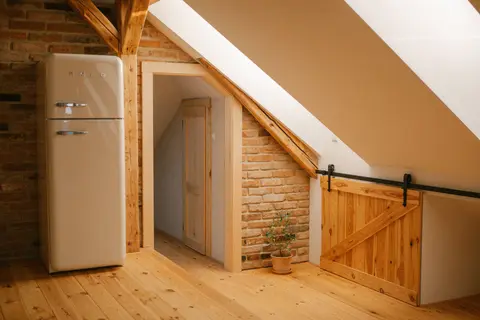
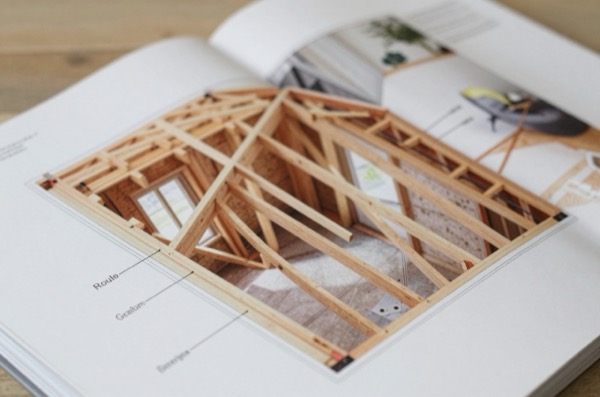
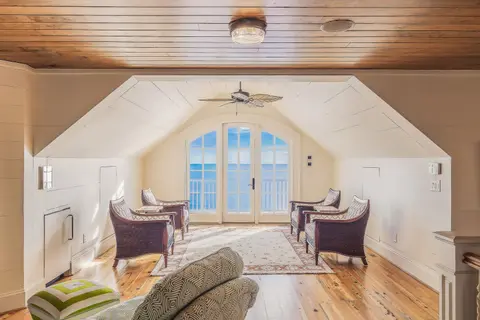
Loft conversions are often the most cost-efficient way to add a bedroom (and usually a bathroom) to a UK house, because the structural shell already exists, you’re fitting out space rather than building from scratch.
| Loft Conversion Type | Cost Range (2026) | Notes |
|---|---|---|
| Velux (rooflight) conversion | £25,000–£40,0004 | Cheapest; no change to roofline; limited headroom in some houses |
| Dormer conversion | £40,000–£60,000 | Most common; creates usable rectangular floor space |
| Hip-to-gable (on semis and detached) | £50,000–£75,0005 | Extends the ridge; adds significant volume |
| Mansard conversion | £55,000–£90,0006 | Near-vertical rear wall; maximum usable space; usually needs planning permission |
A loft conversion typically adds one or two bedrooms and a bathroom, often the exact space that triggers the “extend or move” decision for a growing family. Build period: 8–14 weeks.
Most loft conversions on houses, including hip-to-gable conversions, can be permitted development under Class B of the GPDO, provided the house is not on article 2(3) land such as a conservation area; mansards usually need planning permission.7 The volume limit is 40 m³ for terraced houses and 50 m³ for detached and semi-detached.8 Any addition must not rise above the existing ridge height.8
Value Ceiling: The Factor That Changes Everything
Moving house avoids the value ceiling problem entirely, you’re buying into a street where comparable houses already sell at the level you’re targeting. Extending, by contrast, is constrained by what your existing street will support.
If you live on a road where houses of your type sell for £400,000–£450,000, a £90,000 extension is unlikely to recover its full cost in the sale price, you may achieve £460,000–£480,000, recovering only £50,000–£60,000 of your £90,000 outlay. You’ve effectively bought £30,000 of lifestyle that doesn’t convert to sale value.
Moving to a road where extended family homes sell for £520,000–£560,000 sidesteps this ceiling. You pay transaction costs, but you’re buying into a higher value band that the property can genuinely reach.
The ceiling test: before committing to an extension, research what fully extended comparable properties on your road sell for. Subtract your current value from that figure. If the difference is less than the extension cost, moving is likely to be better value.
Disruption Comparison
| Route | Construction Disruption | Timeline |
|---|---|---|
| Rear extension | Significant (kitchen often unusable for 6–12 weeks) | 12–20 weeks on site, 6–12 months total project |
| Double-storey extension | High (may require temporary rearrangement) | 20–30 weeks on site |
| Loft conversion | Moderate (mainly noise and dust; living areas intact) | 8–14 weeks on site |
| Moving house | 1–3 days of removals; stress of sale + purchase process | 3–6 months from decision to completion |
Moving is often faster in practice than a full extension project, the total elapsed time from “we need more space” to “we’re living in the new house” can be 4–6 months. A double-storey extension from initial brief to completion typically takes 12–18 months including design, planning, and build.
Financial Decision Framework
Use this framework to structure the decision:
Step 1: What’s the ceiling on your road? Research sold prices for fully extended, larger versions of your house type on your road and within 0.5 miles. Use HM Land Registry price-paid data via Rightmove or Zoopla.
Step 2: What’s your current value? Get three estate agent valuations and take the average.
Step 3: What would the extension cost to deliver? Get a scope-of-works estimate from an architect and a build cost from two or three contractors.
Step 4: What would moving cost and deliver? Calculate realistic transaction costs (SDLT, agent, legal, removals) and identify target properties in your budget.
Extend wins when:
- The value ceiling on your road is meaningfully above your current value + extension cost
- You plan to stay for 7+ years (long horizon absorbs build cost more comfortably)
- The extension solves a specific space problem you’d otherwise not resolve
- Transaction costs are prohibitive (high SDLT on the new purchase)
Move wins when:
- You are near the ceiling on your current road
- The space deficit cannot be solved within your house footprint (no roof space, no garden depth)
- You want to be in a different area (schools, commute, lifestyle change)
- The total cost of moving is lower than the extension cost for equivalent space gain
Loft conversion wins when:
- The specific space you need is a bedroom (and possibly an en-suite)
- Your loft has at least 2.2 m of head height from the top of the ceiling joists to the underside of the ridge, and ideally about 2.4 m once floor and ceiling finishes go in9
- You want the least disruption of any build option
- Your ground-floor space is adequate
When Each Route Makes Sense: Summary
| Scenario | Best Route |
|---|---|
| Need 4th bedroom, adequate ground floor space | Loft conversion |
| Need larger kitchen-diner, young family | Single-storey extension |
| Need kitchen-diner AND extra bedroom | Double-storey extension |
| Near ceiling on current road, want more | Move |
| Children leaving in 2–3 years, downsizing possible | Move (or wait and downsize) |
| Strong emotional attachment to area and house | Extend or convert |
| Budget under £40,000 | Loft conversion (rooflight/Velux) |
The Emotional Factor
None of the financial frameworks above capture the non-financial cost of moving: leaving a neighbourhood you know, changing children’s schools, disrupting a social network, or simply the stress of a house sale and purchase in a competitive market. These are real costs.
Equally, the non-financial benefit of having a house that works for the way you live, where the kitchen fits everyone, where there’s a quiet room to work, where the layout makes morning routines manageable, is real and durable.
Our recommendation: run the financial analysis properly before you decide. But once the numbers are clear, weight the decision with honest acknowledgement of what matters most to your household, not just the spreadsheet.
The rules in this note are those that apply in England. Scotland, Wales and Northern Ireland have their own building standards and permitted development rights.
References (9)
Figures in this note were checked against the sources below on 30 September 2026. Superscript numbers in the text point to them. Every source the site cites, by topic.
- 1costfairHomeOwners Alliance.RN-XVS228A price, true at 2026-09. HomeOwners Alliance consumer guide to estate agent fees in 2026; it gives the typical sole-agency fee range of 1.2% to 1.8% including VAT used in the moving-cost table.
- 2costfairHomeOwners Alliance.RN-U2LAK2A price, true at 2026-09. HomeOwners Alliance consumer guide to the cost of selling a home in 2026; it states sale conveyancing usually costs £610 to £950, with extra for leasehold.
- 3technicalvery strongHM Revenue & Customs (GOV.UK), guidance.RN-GLZAMUThe SDLT band table for a single residential property: zero up to 125,000 pounds, 2% on the portion from 125,001 to 250,000 pounds, 5% from 250,001 to 925,000 pounds, 10% from 925,001 to 1.5 million pounds and 12% above 1.5 million pounds. A 5% surcharge is usually added on top of these rates if the buyer already owns another residential property. HMRC's worked example gives 4,750 pounds on a 295,000 pound purchase (0 plus 2,500 plus 2,250). New residential leaseholds pay SDLT on the lease premium at these rates, plus 1% on the portion of the net present value of rent above the 125,000 pound threshold; this does not apply to assigned leases. This is the moving cost that has to be set against an extension or loft conversion budget.
- 4costsupplier figureLCCL Construction.RN-A1R6RIA price, true at 2026-09. a London loft conversion contractor's own published price range for a rooflight conversion, £18,000 to £48,000 in 2026, split into £18,000 to £30,000 for a basic one-room conversion and £28,000 to £48,000 with an ensuite. It is one of the two figures the cost book records for that type, and the two do not agree: the other contractor's floor is £40,000. A contractor publishing its own prices is evidence of what it charges rather than an aggregate of what other people say they charge
- 5costsupplier figureLCCL Construction.RN-AJ5JUJA price, true at 2026-09. a London loft conversion contractor's own published price range for a hip to gable conversion, £45,000 to £75,000 in 2026, which is one of the two figures the cost book records for that type. A contractor publishing its own prices is evidence of what it charges rather than an aggregate of what other people say they charge
- 6costsupplier figureLCCL Construction.RN-L4L9HFA price, true at 2026-09. a London loft conversion contractor's own published price range for a mansard conversion, £60,000 to £120,000 in 2026, which is one of the two figures the cost book records for that type. A contractor publishing its own prices is evidence of what it charges rather than an aggregate of what other people say they charge
- 7technicalvery strongPlanning Portal, guidance.RN-7QVD7IThe Planning Portal on loft conversions: the permitted development volume allowances of 40 cubic metres for a terrace and 50 for a detached or semi-detached house, the rule against extending beyond the front roof plane, the materials condition, and the side-facing window obscure glazing requirement. The source for whether a dormer needs permission, which is the first question every loft conversion turns on.
- 8technicalvery strongThe National Archives (legislation.gov.uk), legislation.RN-KHYKNAClass B permits roof enlargements provided the roof space does not increase by more than 40 cubic metres for a terrace house or 50 cubic metres in any other case (B.1(d)), no part exceeds the height of the highest part of the existing roof (B.1(b)) and the work does not extend beyond the plane of any roof slope forming the principal elevation that fronts a highway (B.1(c)). The right is withdrawn on article 2(3) land, including conservation areas, and for houses created under Classes G, M, MA, N, P, PA or Q (B.1(a), (f) to (h)). Conditions in B.2 require materials of similar appearance, an enlargement set back not less than 0.2 metres from the eaves measured along the roof slope, and side-elevation windows that are obscure-glazed and non-opening unless the opening part is more than 1.7 metres above the floor.
- 9technicalfairFederation of Master Builders, guidance.RN-MK8GBNThe builders' trade body's homeowner guide to loft conversions; it gives 2.2 m as the working head-height figure and says how to measure it.
-
Estate Agent Fees - And How You Can Save In 2026, HomeOwners Alliance, accessed 30 September 2026. Priced at 2026-09 and left there. hoa.org.uk
-
Cost Of Selling A House In 2026, HomeOwners Alliance, accessed 30 September 2026. Priced at 2026-09 and left there. hoa.org.uk
-
Stamp Duty Land Tax: residential property rates, HM Revenue & Customs, accessed 30 September 2026. gov.uk
-
Velux Loft Conversion London 2026: Costs, Planning & Design, LCCL Construction, accessed 21 September 2026. Priced at 2026-09, so no calibration is needed. lcclconstruction.co.uk
-
Hip to Gable Loft Conversion London: Costs in 2026, LCCL Construction, accessed 21 September 2026. Priced at 2026-09, so no calibration is needed. lcclconstruction.co.uk
-
Mansard Loft Conversion London: Costs in 2026, LCCL Construction, accessed 21 September 2026. Priced at 2026-09, so no calibration is needed. lcclconstruction.co.uk
-
Loft conversion: Planning permission, Planning Portal, accessed 30 September 2026. planningportal.co.uk
-
The Town and Country Planning (General Permitted Development) (England) Order 2015, Schedule 2, Part 1, Class B, The National Archives, accessed 14 September 2026. legislation.gov.uk
-
Loft conversions: The ultimate guide, Federation of Master Builders, accessed 30 September 2026. fmb.org.uk