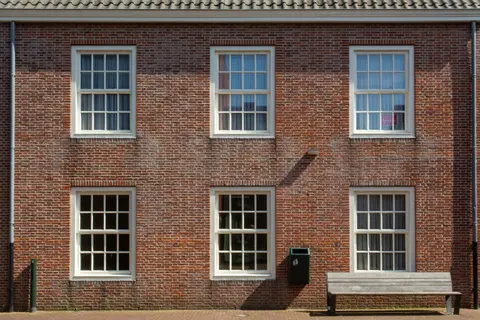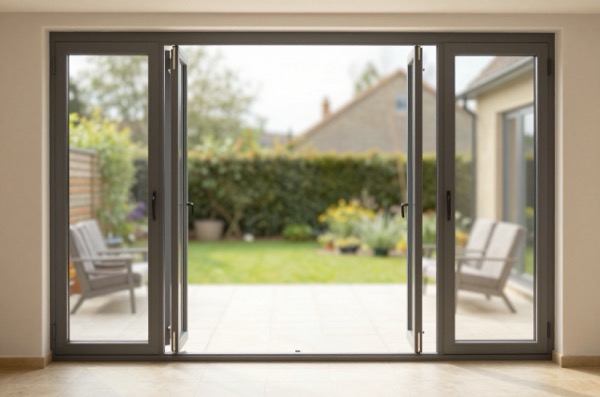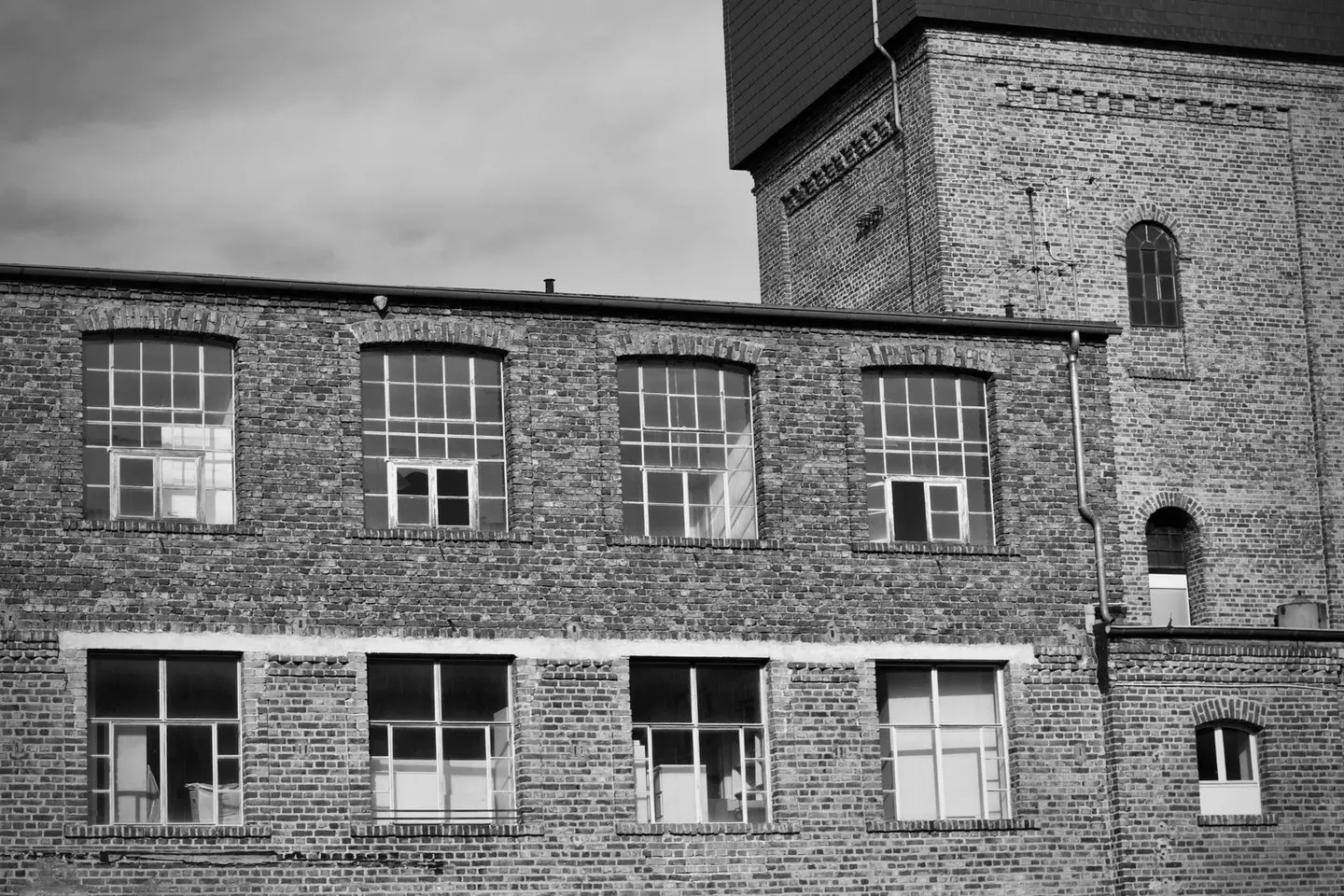
Crittall-style steel windows, characterised by their narrow sight lines, black or dark-grey finish, and grid-pattern glazing, have become a fixture in industrial-aesthetic extensions, orangeries, and kitchen-diner openings. Genuine Crittall or equivalent steel windows are expensive: supply-only costs of £1,500–£3,500 per window are common, and installation adds further. There are now several cheaper alternatives that replicate the look using different frame materials, each with different cost, performance, and compliance profiles.
In 2026, a uPVC slim-profile window can be had for £350–£700 per unit; aluminium slim-profile systems run £600–£1,800; composite (aluminium-faced, thermally broken) systems sit at £700–£2,000. All must comply with Building Regulations in England, primarily Part L for thermal performance. Part Q adds security requirements, but only in a new dwelling.
Why Steel Windows Are Expensive
Genuine Crittall (and similar heritage steel systems such as Jansen or Hope’s) are expensive because hot-rolled or cold-rolled steel is inherently hard to process into thermally broken sections. Early steel windows had no thermal break at all, the frame was a single piece of steel conducting cold straight through to the interior. Modern thermally broken steel systems involve precision manufacturing, are typically bespoke, and come from a small number of specialist fabricators.
That manufacturing complexity is exactly what the alternatives eliminate. By using aluminium, uPVC, or composite profiles shaped to mimic the narrow sightlines of steel, manufacturers can achieve a similar aesthetic at significantly lower cost.
Frame Material Comparison
| Material | Typical Sightline Width | Thermal Break | Typical U-Value (frame) | Supply Cost per Window | Notes |
|---|---|---|---|---|---|
| Genuine steel (Crittall-style) | 25–35 mm | Optional; varies by system | 1.8–5.0 W/m²K (non-broken) | £1,500 – £3,500 | Heritage, listed buildings; poorest thermal performance without break |
| Thermally broken steel | 25–40 mm | Yes | 0.9–1.4 W/m²K | £2,000 – £4,500 | Best aesthetic match; expensive |
| Slim-profile aluminium | 35–55 mm | Yes (polyamide) | 1.0–1.6 W/m²K | £600 – £1,800 | Best cost-performance balance |
| uPVC slim-profile | 50–75 mm | Inherent (multi-chamber) | 1.0–1.4 W/m²K | £350 – £700 | Widest sightlines; closest to standard windows |
| Composite (aluminium/timber or alu/uPVC) | 40–60 mm | Yes | 0.8–1.3 W/m²K | £700 – £2,000 | Good performance; varied aesthetics |
Sightline width is important aesthetically, it is the visible face width of the frame between panes of glass. Genuine Crittall achieves as little as 25 mm. uPVC cannot physically match this; most slim-profile uPVC systems achieve 50–70 mm, which is noticeably chunkier. Aluminium sits in the middle and is the most convincing visual substitute.
Aluminium Slim-Profile Windows
Aluminium slim-profile windows use extruded aluminium sections with a polyamide thermal break, a strip of low-conductivity material that separates the inner and outer aluminium faces, preventing the frame from acting as a cold bridge. This allows them to achieve whole-window U-values of 1.2–1.6 W/m²K when combined with appropriate double or triple glazing.
For the industrial aesthetic, aluminium systems are the most convincing alternative to steel. They are available in any RAL colour, powder-coated, and can be specified in anthracite grey (RAL 7016), black (RAL 9005), or a mid-grey (RAL 7015), the finishes most associated with the industrial look. Sightlines of 35–50 mm are achievable, compared to 25–35 mm for steel, but in most installations the difference is not glaring.
Supply-only costs for aluminium slim-profile windows range from roughly £600 for a modest single casement to £1,800 or more for large fixed-pane or multi-pane units. Installation by a competent window fitter adds £180–£350 per window depending on size and access.
uPVC Slim-Profile Windows
uPVC slim-profile windows are the cheapest route to the aesthetic but make the most visual compromise. The best uPVC systems are reinforced with steel internally and can achieve good thermal performance, but the profiles are physically wider than aluminium. Black or anthracite-grey uPVC foils have improved in quality and are more convincing than they were five years ago.
For a budget extension or a secondary space where the aesthetic matters but cost is the overriding factor, uPVC slim-profile offers a reasonable result at £350–£700 per window. They are also the easiest to source quickly, as many local fabricators carry the profiles in stock.
Composite Systems
Composite windows, typically aluminium-clad timber or aluminium outer with a uPVC inner, bridge the gap between the two. They offer good thermal performance, a slim outer profile in aluminium, and the option to finish the interior in timber for warmth. Costs sit at £700–£2,000 per window, making them closer to aluminium than to uPVC.
Building Regulations Compliance
Part L: Energy Efficiency
In England, Part L of the Building Regulations (2021 edition, currently in force) sets a limiting U-value of 1.4 W/m²K (whole window), or Window Energy Rating Band B, for windows in extensions and in existing dwellings. For replacement windows in existing dwellings (controlled fittings), the same 1.4 W/m²K limit applies. In a brand-new dwelling the limiting value is looser at 1.6 W/m²K, because the whole-house energy target does the work instead.1
All the alternative materials listed above can comfortably meet this threshold with double glazing. To achieve a whole-window U-value of 1.4 or better, the glass unit itself typically needs to be a low-emissivity (low-e) double-glazed unit with an argon gas fill. This is standard specification from most window manufacturers.
Triple glazing is not required for compliance, but is increasingly specified where overheating risk assessments or enhanced fabric performance is sought. Triple-glazed units add noticeably to the glass cost.
Note: Scotland (Section 6), Wales (Part L), and Northern Ireland (Technical Booklet F1) have separate standards with slightly different U-value thresholds.2 Always confirm the requirement with your local authority if in doubt.
Part Q: Security
Part Q applies to new dwellings only, including a dwelling formed by a material change of use such as a barn conversion or a house split into flats.3 An extension to an existing home is outside it. Where Part Q does apply, windows in vulnerable locations (ground floor, or accessible from a flat roof or adjacent structure) must be specified to PAS 24 or an equivalent standard. Approved Document Q still names the 2012 edition of PAS 24.3 The current version of the standard is PAS 24:2022+A1:2024.4 PAS 24 sets minimum requirements for frame strength, glazing retention, and hardware resistance to attack.
Most reputable slim-profile aluminium and uPVC window manufacturers offer PAS 24-compliant products as standard or as an available option. It is worth confirming PAS 24 certification before ordering, particularly with budget uPVC suppliers. Genuine thermally broken steel systems from established manufacturers are also available in PAS 24-certified configurations.
Part Q does not apply to replacement windows in existing buildings, but many homeowners specify PAS 24 regardless for insurance and security purposes.
Planning Considerations
In conservation areas with an Article 4 Direction, or for listed buildings, permitted development rights for window replacement are restricted.5 You will normally need planning permission or listed building consent, and like-for-like or sympathetic replacement will be expected.5 Where the existing windows are thin-profile steel, the planning authority may resist replacement with uPVC on aesthetic grounds, aluminium or thermally broken steel is more likely to be approved.
Installation Costs
| Window Type | Supply per Window | Installation per Window | Total Installed per Window |
|---|---|---|---|
| uPVC slim-profile | £350 – £700 | £150 – £280 | £500 – £980 |
| Aluminium slim-profile | £600 – £1,800 | £180 – £350 | £780 – £2,150 |
| Composite | £700 – £2,000 | £200 – £380 | £900 – £2,380 |
| Thermally broken steel | £2,000 – £4,500 | £250 – £500 | £2,250 – £5,000 |
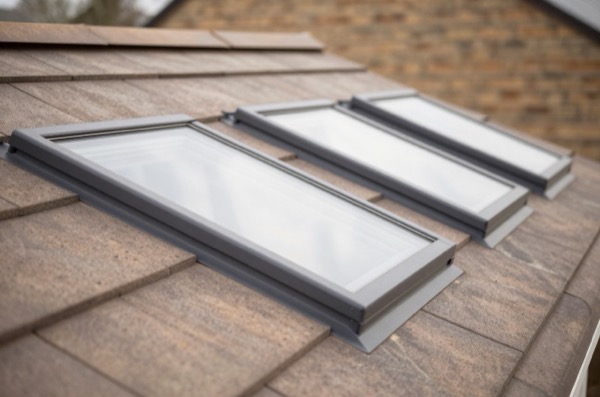
Installation costs assume standard openings in existing masonry or timber-frame walls, with no structural lintels required. Unusually large windows, openings that require structural assessment, or windows in roof structures (rooflights) are priced separately.
How to Choose
Choose aluminium if the look is the priority and budget allows. It is the closest visual match to steel and offers a good combination of slim sightlines, durability, and thermal performance without the cost of genuine steel.
Choose uPVC if cost is the primary driver and the window will be viewed mainly from inside, or in a secondary space such as a utility room or outbuilding.
Choose composite if you want the industrial exterior look combined with a natural timber interior finish, or if the thermal performance spec is ambitious.
Stay with steel only if the planning context demands it, listed buildings, conservation areas where aluminium is not accepted, or where the exact heritage sightline is non-negotiable.
For most residential extension projects in 2026, a slim-profile aluminium system in anthracite grey or black delivers a convincing industrial aesthetic, meets all Building Regulations requirements, and costs roughly half as much as an equivalent genuine steel installation.
References (5)
Figures in this note were checked against the sources below on 30 September 2026. Superscript numbers in the text point to them. Every source the site cites, by topic.
- 1technicalvery strongMinistry of Housing, Communities and Local Government.RN-L0FCJXThe in-force U-value tables a DIY insulation or door note must quote, with the exact numbers. Table 4.2, limiting U-values for new fabric elements in existing dwellings, sets roof 0.15, wall 0.18, floor 0.18, swimming pool basin 0.25, window 1.4 or Window Energy Rating Band B minimum, rooflight 2.2, doors with more than 60 per cent of the internal face glazed 1.4 or Doorset Energy Rating Band C minimum, and other doors 1.4 or Doorset Energy Rating Band B minimum. Table 4.3, for existing elements, gives a roof threshold of 0.35 and an improved value of 0.16, which is the figure a loft insulation note needs: paragraph 4.12 says a retained element whose U-value is higher than the column (a) threshold, for example through a loft or garage conversion, should be upgraded to the column (b) value. Paragraph 4.13 allows a lesser upgrade only where the improved value is not technically or functionally feasible or would not achieve a simple payback of 15 years or less. Paragraph 4.8 requires a replacement element to be no worse than the one it replaces as well as meeting Table 4.2. Paragraph 4.10 gives the heritage exception: where character must be maintained, a centre pane U-value of no more than 1.2 or low-emissivity secondary glazing. Note 9 records that the timber window concession of 1.6 or Band C ended on 14 June 2023. The 2021 edition came into force on 15 June 2022; a 2026 edition exists at https://assets.publishing.service.gov.uk/media/69c122a6cfa346b9d4704a55/ADL1_2026.pdf.
- 2technicalvery strongDepartment of Finance (Northern Ireland).RN-DNUSE8Northern Ireland's equivalent of Approved Document L Volume 1. This edition came into effect on 30 June 2022 and gives guidance on regulations 39 to 47 of the Building Regulations (Northern Ireland) 2012, which set the requirements for conservation of fuel and power in dwellings, including the limiting U-values a replacement window or door must meet in Northern Ireland. It replaced the 2012 version, and the Department publishes an awareness briefing and FAQ setting out the differences. The full text is at https://www.finance-ni.gov.uk/sites/default/files/publications/dfp/TB%20Part%20F1%202022_On-Line%20Publication.pdf. Cite this rather than Approved Document L whenever a note gives a window U-value for a reader in Northern Ireland.
- 3technicalvery strongMinistry of Housing, Communities and Local Government.RN-VGR6O6The security standard for doors and windows, ISBN 978 1 85946 601 8, in force from 5 March 2015 and last updated 22 November 2024. Requirement Q1 applies only to new dwellings, and to easily accessible doors and windows giving access into a dwelling from outside, into a building containing flats from outside, or into a flat from the common parts. Paragraph 1.2 requires secure doorsets tested to PAS 24:2012 or designed to Appendix B, with STS 201 Issue 5:2013, LPS 1175 Issue 7:2010 security rating 2, STS 202 Issue 3:2011 burglary rating 2 and LPS 2081 Issue 1:2015 security rating B accepted as equivalents. Paragraph 1.3 caps a letter plate aperture at 260mm x 40mm and points to DHF technical specification TS 008:2012. Paragraph 1.4 requires a door viewer on the main entrance door unless clear glass or an adjacent window serves the purpose, plus a door chain or limiter. Paragraph 2.2 requires ground floor, basement and other easily accessible windows and rooflights to be tested to PAS 24:2012, with STS 204 Issue 3:2012, LPS 1175 rating 1 and LPS 2081 rating A as equivalents, and paragraph 2.3 requires frames to be mechanically fixed to the structure. Appendix B specifies a doorset in solid or laminated timber to a minimum density.
- 4technicalstrongBSI Knowledge, a standard.RN-LUDU9FThe current version of PAS 24, published 30 September 2024, superseding PAS 24:2022. It specifies test methods and acceptance criteria for doorsets and windows intended to resist the attacks associated with a casual or opportunistic burglar, covering hinged, sliding, pivot and folding windows and single and double leaf hinged, sliding, pivot and folding doorsets. The A1:2024 amendment was made to keep pace with the changing modus operandi of criminals and to update referenced industry documents. It tests the manufactured product before installation and does not specify materials or installation methods. PAS 24 is the specification behind Approved Document Q in England and Wales, appears at clause 4.13 of the Scottish building standards, and certification to it is one route to meeting the police Secured by Design scheme.
- 5technicalvery strongPlanning Portal, guidance.RN-LIPHMWThe Planning Portal on planning permission for doors and windows: usually not needed for repairs, maintenance and minor improvements including replacing windows like for like, with the exceptions that catch people, listed buildings, conservation areas, flats, and where permitted development rights have been removed.
-
Approved Document L, Conservation of fuel and power, Volume 1: Dwellings, 2021 edition incorporating 2023 amendments, Ministry of Housing, Communities and Local Government, accessed 10 September 2026. assets.publishing.service.gov.uk
-
Technical Booklet F1: Conservation of fuel and power in dwellings, June 2022, Department of Finance (Northern Ireland), accessed 30 September 2026. finance-ni.gov.uk
-
Approved Document Q, Security, dwellings, 2015 edition, Ministry of Housing, Communities and Local Government, accessed 10 September 2026. assets.publishing.service.gov.uk
-
PAS 24:2022+A1:2024 Enhanced security performance requirements for doorsets and windows in the UK, BSI Knowledge, accessed 30 September 2026. knowledge.bsigroup.com
-
Doors and windows: planning permission, Planning Portal, accessed 30 September 2026. planningportal.co.uk