Aggregate, sand, and gravel are among the cheapest materials on any build by unit price, yet getting the format and supplier wrong can easily add unnecessary cost or delay. A single pallet of bulk bags ordered from a builders’ merchant can cost twice as much per tonne as a loose tipper load from a local quarry or aggregate yard, and delivery logistics vary enormously between the two.
This guide covers how UK aggregate suppliers are structured, the real cost difference between bulk bags and loose loads, what materials you are likely to need, and how to get competitive pricing.
Types of Aggregate Supplier
The UK aggregate supply chain has several distinct layers, each with different pricing models.
Quarries and primary producers extract and process limestone, granite, flint, and recycled concrete directly. Selling loose by the tonne is their core business. Buying direct from a quarry is usually the cheapest route but requires haulage, minimum order quantities (often 10–20 tonnes), and you need a site that can accept a 10- or 20-tonne articulated tipper.
Independent aggregate yards and skip companies buy from quarries in bulk and resell locally, often operating their own smaller 4-tonne and 8-tonne tippers. They are the most practical source for typical domestic jobs, minimum orders are lower (often 3–5 tonnes), and smaller vehicles can access tighter sites.
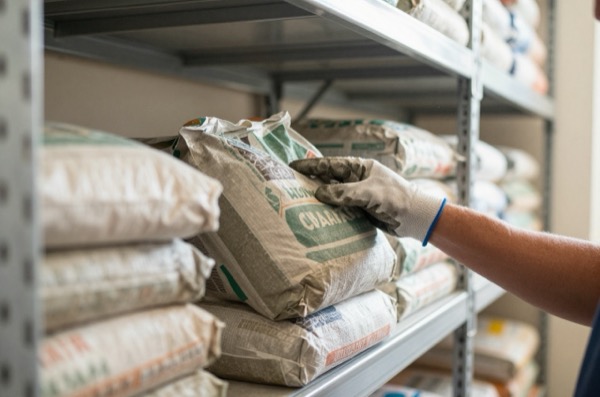
Builders’ merchants (Travis Perkins, Jewson, Buildbase, MKM, and regional equivalents) stock aggregate in bulk bags (typically 850 kg or 1 tonne) on pallets. Convenient if you only need one or two bags alongside other materials, but the price premium is significant.
Garden centres and DIY sheds (B&Q, Wickes) stock small decorative aggregates in 20–25 kg bags at retail margins. These are only practical for very small quantities.
Bulk Bags vs Loose Tipper Loads
The format you choose should be driven by quantity and site access.
| Format | Typical unit | Typical cost | Best for |
|---|---|---|---|
| Small bag (20–25 kg) | Per bag | £5–£10 | Under 100 kg; retail |
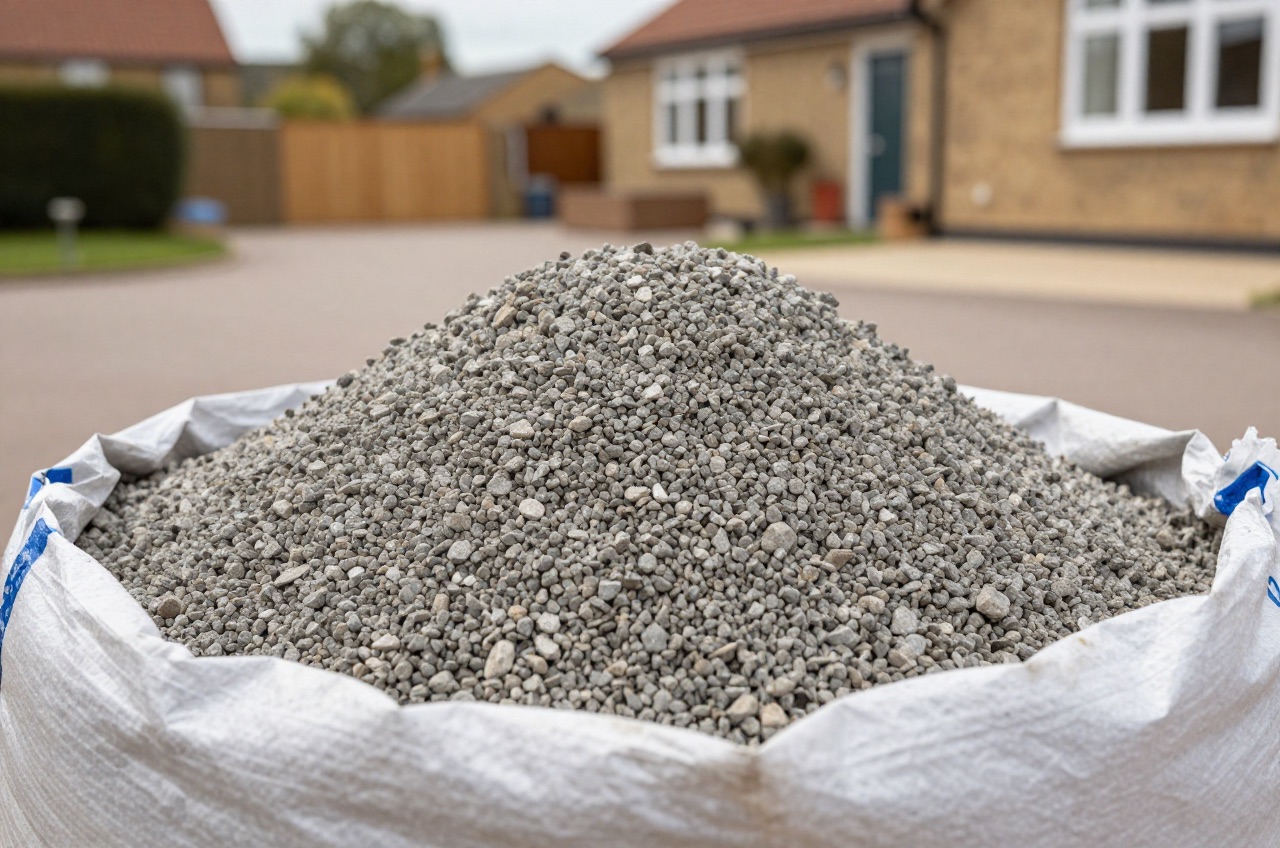
| Bulk bag / jumbo bag (850 kg–1 t) | Per bag | £45–£95 delivered | 1–10 tonnes; restricted access |
| 4–6 tonne tipper load | Per tonne | Usually between the bulk bag and full-load rates | Medium volumes |
| 10–20 tonne tipper load | Per tonne | £38–£59 delivered | Large volumes; good access |
Prices vary considerably by material, region, and fuel surcharge at the time of order. The figures above are indicative ranges for common materials (building sand, MOT Type 1, 20 mm gravel) in 2026. As a guide, a bulk bag works out at roughly £75–£80 per tonne, against roughly £38–£59 per tonne for a loose 10–20 tonne load. Specialist aggregates, pea gravel, crushed granite, decorative slate chippings, carry a premium.
Bulk bags are often the right call for a typical garden project or small foundation pour where site access is tight or you cannot take a loose tipper delivery. For anything above roughly 5–6 tonnes, a tipper load from a local yard almost always works out cheaper per tonne, even after accounting for the fact that loose material is harder to handle precisely.
Common Materials and What They Are Used For
Sharp sand (concreting sand) is angular-grained and used in concrete mixes, mortar, and render. Do not use soft/building sand in structural concrete.
Soft/building sand is finer and used for bricklaying mortar and general pointing. It is sometimes called “brickies sand.”
MOT Type 1 (crushed limestone, granite or recycled concrete) is the standard sub-base material for driveways, patios, paths, and foundations.1 The grading ensures good compaction. The Specification for Highway Works grades Type 1 from fines up to a nominal 31.5 mm (it is often sold as “40 mm down”), and the fines help it lock together when compacted.1
Type 2 and Type 3 sub-base materials are less commonly specified on domestic jobs but are available from the same suppliers. Type 2 may be made from natural sands and gravels as well as crushed material.1 Type 3 is an open-graded crushed material with fewer fines, so water can drain through it.1
Ballast (all-in aggregate) is a pre-blended mix of sand and gravel used for mixing concrete on-site. Sold as “all-in ballast” and commonly mixed at around 5 to 6 parts ballast to 1 part cement for general concrete; follow the cement maker’s guidance for the strength you need.
Decorative aggregates, pea gravel, flint, slate chippings, coral, quartzite, are sold through garden centres, specialist landscaping suppliers, and some builders’ merchants. They carry a significant premium over construction aggregates.
Landscaping Suppliers vs Builders’ Merchants
For driveways, patios, and garden landscaping, a dedicated landscaping or drainage supplier often offers better range and pricing than a general builders’ merchant, particularly for:
- Decorative gravel and stone chippings
- Paving slabs and edging
- Drainage aggregate and pipe
- Topsoil and soil improver
Many skip hire companies and aggregate yards have expanded into landscaping supply and can deliver multiple materials in one run. It is worth getting a combined quote if your project needs both Type 1 sub-base and a decorative surface aggregate.
Delivery: What to Check Before Ordering
Aggregate delivery is where cost surprises often appear. Key questions to ask any supplier:
What vehicle will deliver? A standard bulk bag arrives on a flatbed or curtain-sider with a HIAB crane arm. A loose tipper load needs the vehicle to reverse in and tip. A 20-tonne artic needs substantial clearance; a 6-tonne rigid can access most residential driveways.
Is there a delivery minimum charge? Many suppliers charge a flat delivery fee regardless of quantity (often £30–£80 for bulk bags; £60–£150 for tippers). For small quantities this can dwarf the material cost.
What is the lead time? Local aggregate yards often deliver next-day. Bulk bag deliveries via builders’ merchants can take 3–5 working days.
Will they place the material where you need it? HIAB deliveries allow some placement flexibility. Tippers tip at the back of the vehicle, wherever it stops.
Is VAT included? Most aggregate suppliers quote ex-VAT to trade. Always confirm whether the price quoted includes 20% VAT before comparing.2
Getting the Best Price
Aggregate pricing is not fixed. Even at merchants where shelf prices are posted, the delivered price on a repeat or large order is negotiable.
- Ring local aggregate yards and quarries directly; they often beat merchant prices significantly without requiring a trade account.
- Ask for a “per tonne delivered” price and compare it to the bulk bag price per tonne, remember a bulk bag is typically 850 kg, not a full tonne.
- If you need multiple materials, ask for a combined delivery to reduce the per-drop charge.
- If you have a trade account with a builders’ merchant, ask your rep whether the yard can match a local aggregate yard’s delivered price, they sometimes can on larger orders.
- Timing matters: aggregate yards are busy in spring and summer; you may get a keener price in autumn or winter.
For large landscaping or groundworks projects, getting three written quotes for a tipper load is straightforward and often produces a meaningful price difference between suppliers.
References (2)
Figures in this note were checked against the sources below on 30 September 2026. Superscript numbers in the text point to them. Every source the site cites, by topic.
- 1technicalvery strongNational Highways (Standards for Highways), guidance.RN-2BAKGJThis is the specification that the term MOT Type 1 actually comes from: Clause 803 of Series 800 of the Specification for Highway Works. Clause 803.1 states Type 1 unbound mixture shall be made from crushed rock, crushed slag, crushed concrete, recycled aggregates, manufactured aggregates or well burnt non-plastic shale, and may contain up to 10 per cent by mass of natural sand passing the 4 mm test sieve, with crushed gravel permitted only where contract Appendix 7/1 allows. Clause 803.2 requires the mixture to meet BS EN 13285 and Table 8/1, with grading summarised in Table 8/6a, which sets 100 per cent passing 63 mm, 75 to 99 per cent passing 31.5 mm, 43 to 81 per cent passing 16 mm, 23 to 66 per cent passing 8 mm, 12 to 53 per cent passing 4 mm, 6 to 42 per cent passing 2 mm, 3 to 32 per cent passing 1 mm and 0 to 9 per cent passing 0.063 mm. Table 8/6b applies only to trench reinstatements and narrow widenings less than 1 m. Note this PDF is the November 2021 revision and carries a superseded watermark, so quote the clause and revision date together.
- 2technicalvery strongHM Revenue & Customs (GOV.UK), guidance.RN-4W7T33Sets the three UK VAT rates: standard 20% on most goods and services, reduced 5% on some goods and services such as children's car seats and home energy, and zero 0% on zero-rated goods such as most food and children's clothes. The standard rate rose to 20% on 4 January 2011 from 17.5%. Some supplies are exempt rather than rated, including postage stamps and financial and property transactions. This is the reference for converting a merchant's ex-VAT trade quote into the figure a homeowner actually pays.
-
Manual of Contract Documents for Highway Works, Volume 1, Series 800: Road pavements, unbound, cement and other hydraulically bound mixtures, National Highways (Standards for Highways), accessed 30 September 2026. standardsforhighways.co.uk
-
VAT rates, GOV.UK, accessed 30 September 2026. gov.uk