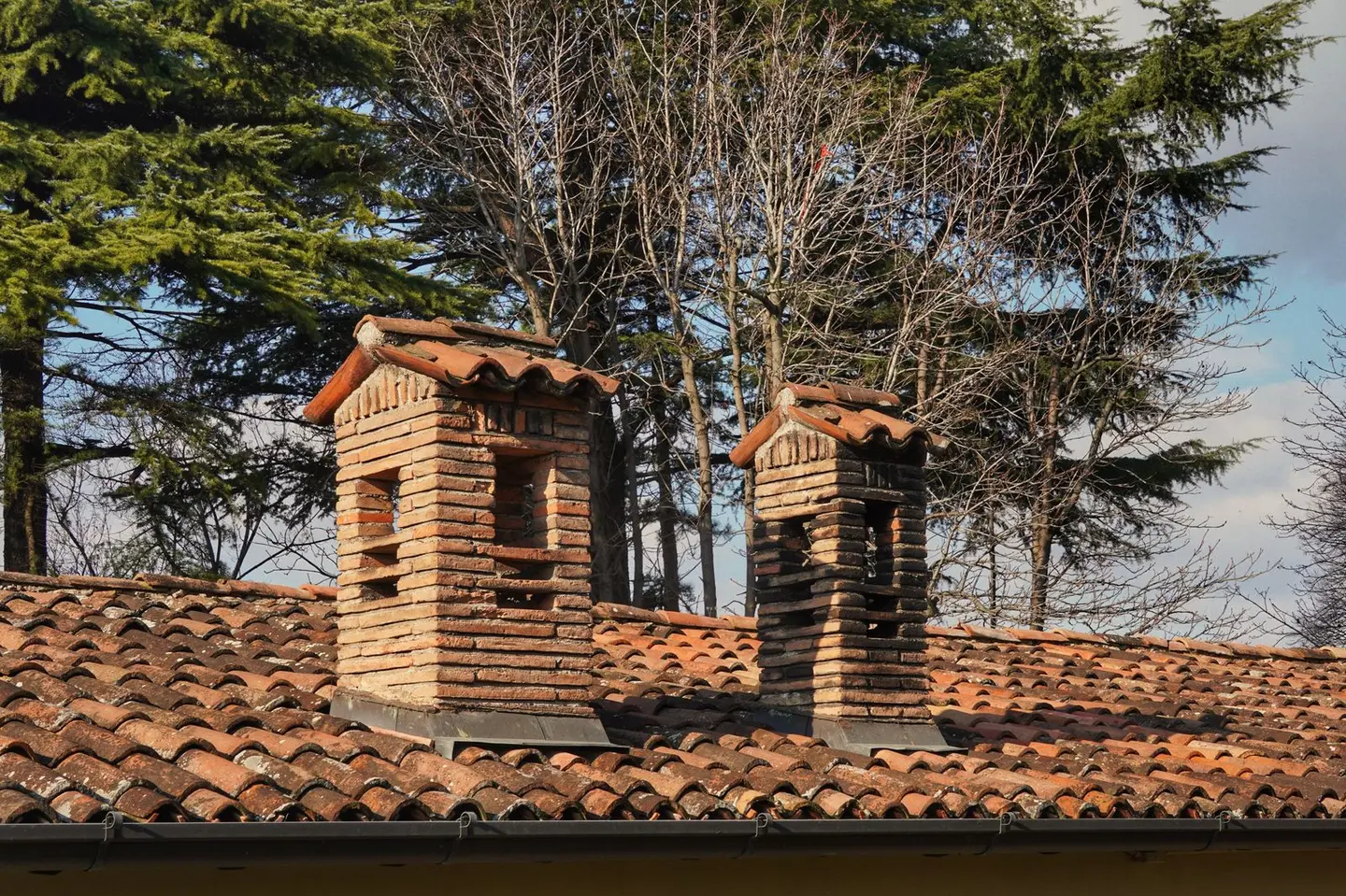
A chimney sweep costs between £60 and about £135 per flue in the UK, depending on the type of appliance and whether any additional work is needed. Most sweeps include a visual inspection and issue a certificate on completion, essential if your home insurer requires evidence of annual maintenance.
The busiest time for a chimney sweep is September to November, so booking in spring or early summer usually gets you a slot sooner, though at the same standard rates.1
Chimney Sweep Cost Breakdown
The table below shows typical 2026 prices for the most common sweep types. These are ballpark figures for mainland England and Wales. HETAS’s 2026 survey of its approved sweeps puts the average stove sweep at £82 in London and £60 in the East Midlands, against a UK average of £72. All three are per flue.1 Some rural areas may carry a call-out surcharge.
| Service | Typical 2026 cost, per flue |
|---|---|
| Wood-burning or multi-fuel stove, lined flue | £60–£85 |
| Open fire or inglenook | £95–£135 |
| Gas fire sweep | £70–£100 |
| AGA or Rayburn sweep | £90–£130 |
| CCTV camera inspection (add-on) | £50–£100 |
| Bird’s nest or blockage removal (surcharge) | £100–£200 |
| Heavy soot or creosote (power sweeping) | £50–£100 extra |
| Second flue sweep (same visit) | £30–£50 extra |
HETAS puts a standard sweep of a stove on a lined flue at £60–£85 in 2026.1 Open fires and inglenooks cost £35–£50 more, because they are usually larger, sootier and more complex to sweep.1 A CCTV inspection adds £50–£100.1 Clearing a bird’s nest or a blocked flue adds £100–£200.1
What Drives the Price?
Appliance type is the biggest variable. A stove on a lined flue is the cheapest sweep. Open fires and inglenooks are larger and sootier, and AGA and Rayburn ranges have complex flue routes and need more time on site, hence the higher rates.
Location matters. Urban areas with parking restrictions and congestion charges add to a tradesperson’s costs, and these tend to be passed on. Some sweeps add a call-out or travel charge for longer journeys.
Access difficulty can add time. A swept flue that runs through two or more bends, or one that enters the chimney stack via a back boiler, will take longer to clear. HETAS puts the extra for difficult access, such as a tall property or a chimney with restricted access, at £30–£100.1
Additional services such as a CCTV inspection, smoke draw test, or carbon monoxide alarm check will add to the bill but are often worth including, particularly before buying a property or recommissioning a long-dormant fireplace.
Multiple Flues
Most chimney sweeps operate as sole traders and price per job rather than per day. If you need several flues swept, common in period properties, ask for a price for the whole visit, as sweeps often discount additional chimneys swept on the same visit.1
Worked Example: Victorian Semi with Two Open Fires
A homeowner in the East Midlands with two open fireplaces books a HETAS-registered sweep in July 2026:
- First flue sweep (open fire): £95
- Second flue sweep (same visit): £40
- CCTV inspection of one flue (suspected crack): £60
- Total: £195
The sweep identified a displaced flue liner on the CCTV footage, allowing the homeowner to get repairs quoted before the heating season, a potentially costly problem caught early.
How Often Should You Have Your Chimney Swept?
The frequency depends on what you burn:
- Solid fuel (wood, coal, smokeless fuel): HETAS recommends at least twice a year when burning wood and at least once a year on smokeless fuels, with one sweep just before the heating season starts. Daily-use wood-burning stoves sit firmly at the twice-a-year end.2
- Gas fires: annually, alongside the appliance service. Approved Document J’s model commissioning notice for a gas fire specifies an annual service by a Gas Safe registered engineer.3
- Oil-fired appliances: annually.4
- Solid fuel AGA or Rayburn: annually as a minimum; twice yearly for continuous-use installations.
These are minimum recommendations. Your home insurer may specify a particular frequency, check your policy documents, as failure to maintain a chimney can invalidate a fire claim.
When to Use a HETAS or NACS Registered Sweep
Several bodies register chimney sweeps in the UK. HETAS runs an Approved Chimney Sweep scheme for members of four recognised associations (APICS, the Guild of Master Chimney Sweeps, NACS and Sweep Safe), who must also complete HETAS training.5 The two names you will see most often are:
- HETAS, the competent person scheme for solid-fuel heating: its approved sweeps belong to an association that trains, assesses and monitors its members.5
- NACS (National Association of Chimney Sweeps): its code of conduct requires every member to hold valid insurance, and all its sweeps have completed its training course.4
Using a registered sweep matters for several practical reasons. A HETAS Chimney Sweeping Certificate records the work and any findings, and your home insurer may ask for it if you ever need to make a claim.1 If you are installing a wood-burning stove, Building Regulations (Part J in England, Section 3 in Scotland) apply to the appliance and its flue, but the compliance certificate comes from whoever installs it, not from your sweep. HETAS is an authorised competent person scheme in England and NACS is not, so an installer outside a scheme has to notify building control instead.6
For listed buildings, any work to a chimney may require listed building consent from the local planning authority before it proceeds. Always check with your local conservation officer if in doubt.
Off-Season Booking
Demand for sweeps peaks from September to November. Booking in spring or early summer means shorter waits, at the same standard rates.
DIY Chimney Sweeping: What Not to Do
Chimney sweep rods and brushes are available from DIY retailers, and some homeowners attempt to sweep their own flues. This is not recommended for several reasons: without proper dust sheets and a closed-throat fireplace, soot will spread through the room; you cannot perform a proper draw test; and you will not receive a sweep certificate. For rental properties, a certificate from a registered sweep is particularly important in demonstrating compliance with your duty of care as a landlord.
Getting Quotes
When contacting sweeps for quotes, give them:
- The type of appliance (open fire, stove, gas fire, AGA)
- The fuel type
- When the flue was last swept
- Whether you have noticed any smoke spilling into the room or unusual smells
This information lets a sweep give an accurate price upfront and flag any services, such as a CCTV inspection, that may be advisable given your situation.
References (6)
Figures in this note were checked against the sources below on 30 September 2026. Superscript numbers in the text point to them. Every source the site cites, by topic.
- 1technicalstrongHETAS.RN-596Y0WHETAS's 2026 survey of approved chimney sweep prices. It puts a standard sweep at £60 to £85, with a UK average of about £72 and London at about £82.
- 2technicalstrongHETAS, guidance.RN-37TLPFHETAS consumer advice on sweeping frequency. States the chimney should be swept at least twice a year when burning wood and at least once a year when burning smokeless fuels, and that the best times are just before the start of the heating season and after the stove has been out of use for a prolonged period; where sweeping twice, the second sweep should follow the peak of the main heating season. Frequency also depends on how heavily the appliance is used. This is the only citable tier 2 statement of UK sweeping intervals; the commonly quoted Guild of Master Chimney Sweeps table is not from a body on the permitted source tiers.
- 3technicalvery strongMinistry of Housing, Communities and Local Government.RN-IU0X2MThe 2022 amendments took effect 1 October 2022 and extended the carbon monoxide alarm provisions. Table 2 sets the minimum flue sizes: 200mm diameter for a fireplace with an opening up to 500mm by 550mm, 125mm diameter for a closed appliance up to 20kW burning smokeless or Clean Air Act compliant fuel, 150mm for other closed appliances up to 30kW and 175mm for those above 30kW and up to 50kW. Diagram 17 gives the flue outlet clearances: at or within 600mm of the ridge the outlet must be at least 600mm above the ridge, elsewhere on a roof it must be at least 2300mm horizontally from the nearest weather surface and either 1000mm above the intersection or as high as the ridge, and it must be 1000mm above the top of any openable rooflight or dormer within 2300mm. Bends must be no more than 45 degrees to the vertical and paragraph 1.49 limits a sweepable flue to four changes of direction.
- 4technicalfairNational Association of Chimney Sweeps (NACS), guidance.RN-TM46UGThe NACS home page, whose sweeping-frequency guide recommends sweeping oil and gas flues once a year. NACS is the largest UK chimney sweep trade association.
- 5technicalstrongHETAS, guidance.RN-9EE8EDHETAS's page on its Approved Chimney Sweep scheme, naming APICS, the Guild, NACS and Sweep Safe as the recognised associations and requiring HETAS training.
- 6technicalvery strongMinistry of Housing, Communities and Local Government.RN-SAMO3MThe official list of competent person schemes whose members can self-certify certain building work instead of getting building regulations approval, published 4 April 2013 and last updated 12 March 2018. Named schemes with contact numbers include ATTMA, APHC, Assure Certification, Blue Flame Certification, the British Board of Agrement, BESCA, Capita Gas Registration and Ancillary Services trading as Gas Safe Register, CIGA, Certass, Certsure LLP trading as NICEIC, the Elmhurst Airtightness Scheme, Fensa Limited, HETAS Limited, NAPIT Registration Limited, the National Federation of Roofing Contractors trading as CompetentRoofer, and OFTEC. Two footnotes matter: the Gas Safe Register is not technically a competent person scheme although in practice its installers carry the same building regulations responsibilities, and Benchmark Certification Limited ceased to operate as a competent person scheme on 10 February 2017, becoming part of NAPIT Registration Limited that day. Installers joining an electrical scheme are added to the single electrical competent person register.
-
How much does a chimney sweep cost? UK prices 2026, HETAS, accessed 30 September 2026. hetas.co.uk
-
When Should I Get My Chimney Swept?, HETAS, accessed 10 September 2026. hetas.co.uk
-
Approved Document J, Combustion appliances and fuel storage systems, 2010 edition incorporating 2010, 2013 and 2022 amendments, HM Government (GOV.UK), accessed 10 September 2026. assets.publishing.service.gov.uk
-
The National Association of Chimney Sweeps, National Association of Chimney Sweeps (NACS), accessed 30 September 2026. nacs.org.uk
-
Approved Sweep status with HETAS is changing, HETAS, accessed 30 September 2026. hetas.co.uk
-
Competent person scheme: current schemes and how schemes are authorised, HM Government (GOV.UK), accessed 10 September 2026. gov.uk